-
Program:
Hospitality
-
Status:
Concept & Schematic Design
-
Area:
1 712 m²
- Location:
-
Located in Valle de Guadalupe, Ensenada, Baja California, Mexico, this Concept & Schematic Design is embedded within a productive vineyard landscape and a network of eco-tourism routes. Its siting follows the terrain with a restrained architectural presence and a rural scale, shaping an experience of hospitality and gathering within a carefully crafted atmosphere.
In the heart of Valle de Guadalupe, the project proposes an architecture conceived for premium wine tourism and private events. The site is integrated into an agricultural setting, in close proximity to wineries and key destinations across the valley, and aims to establish itself as a memorable destination for both domestic and international visitors.
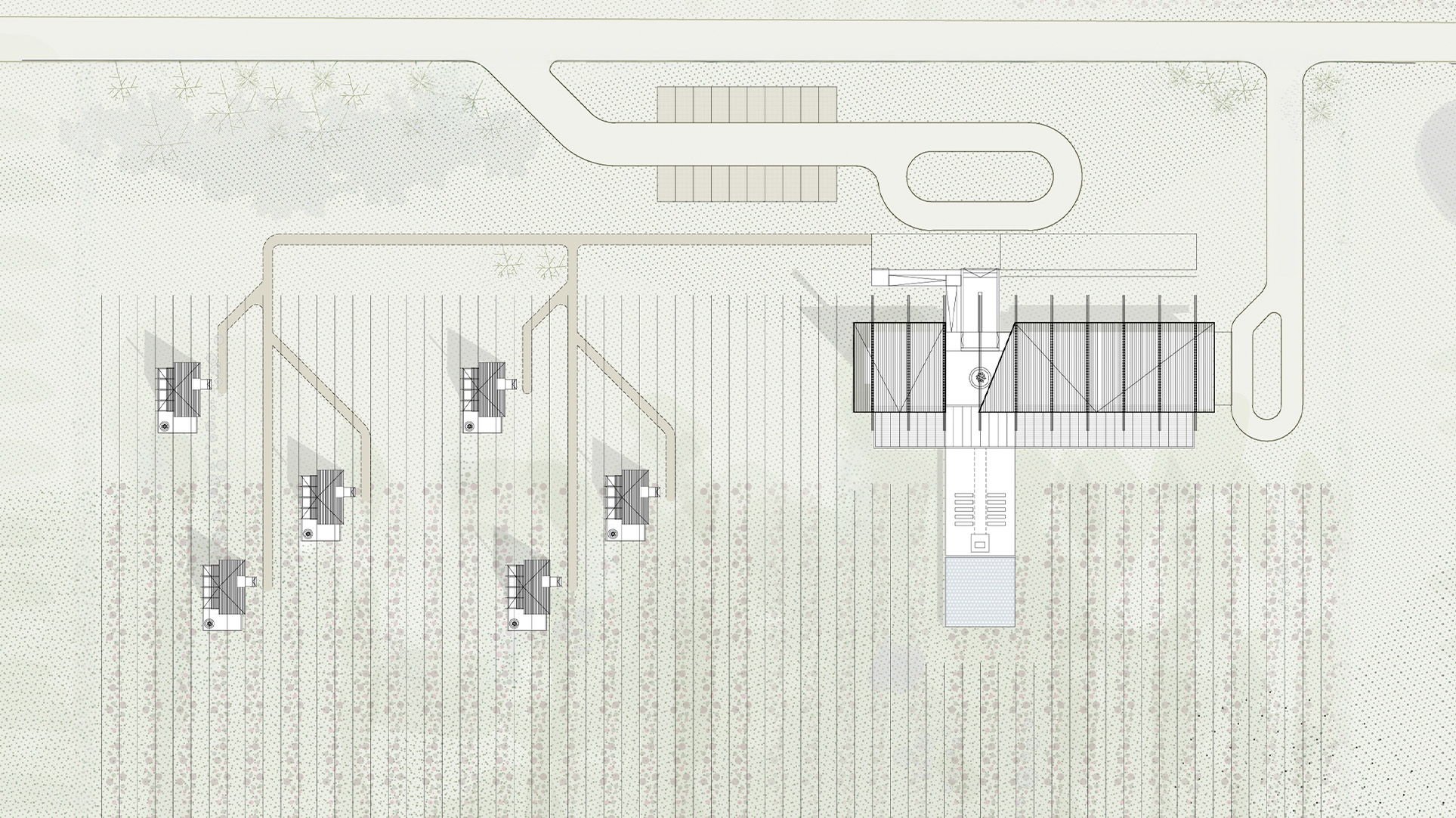
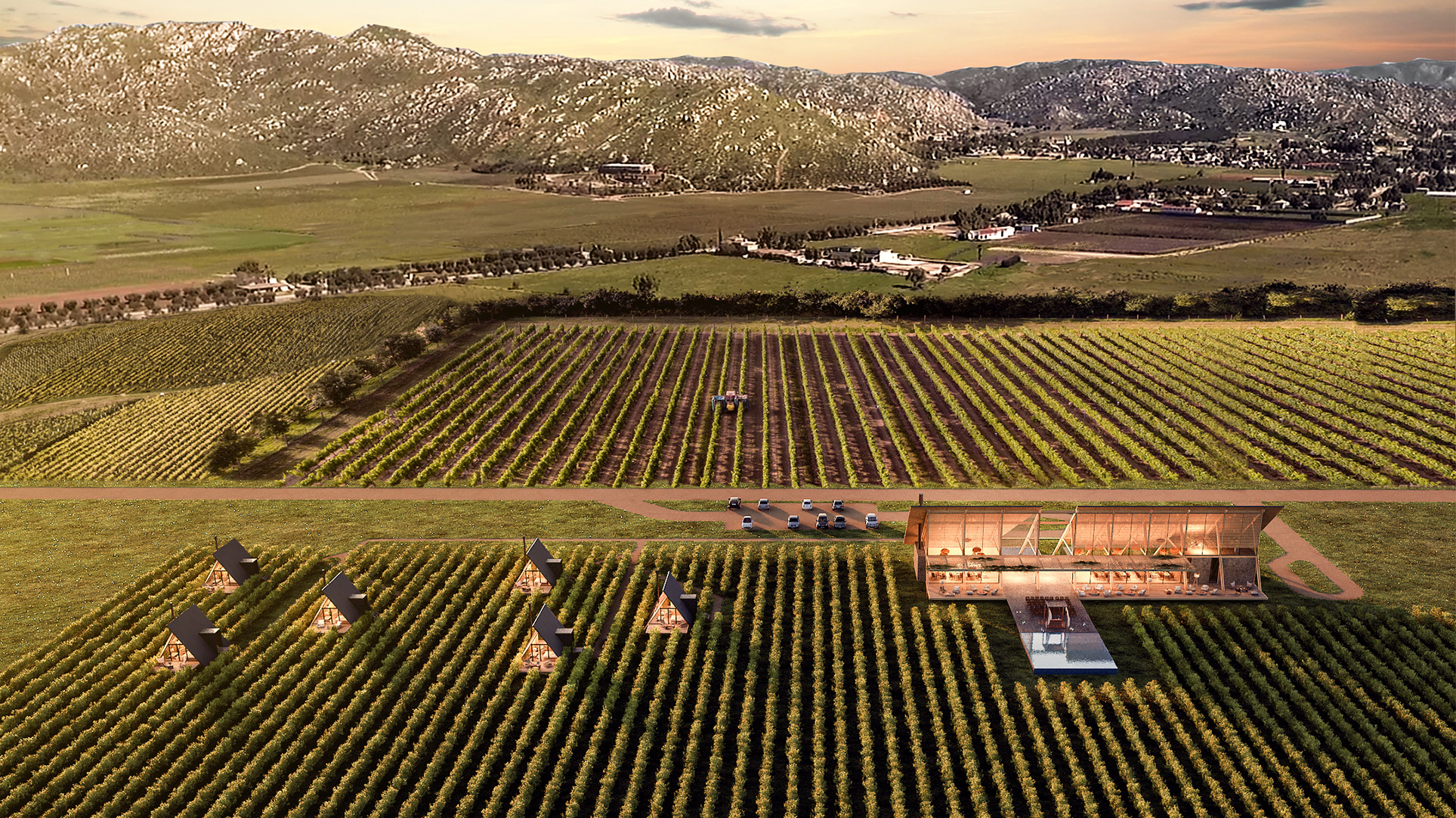
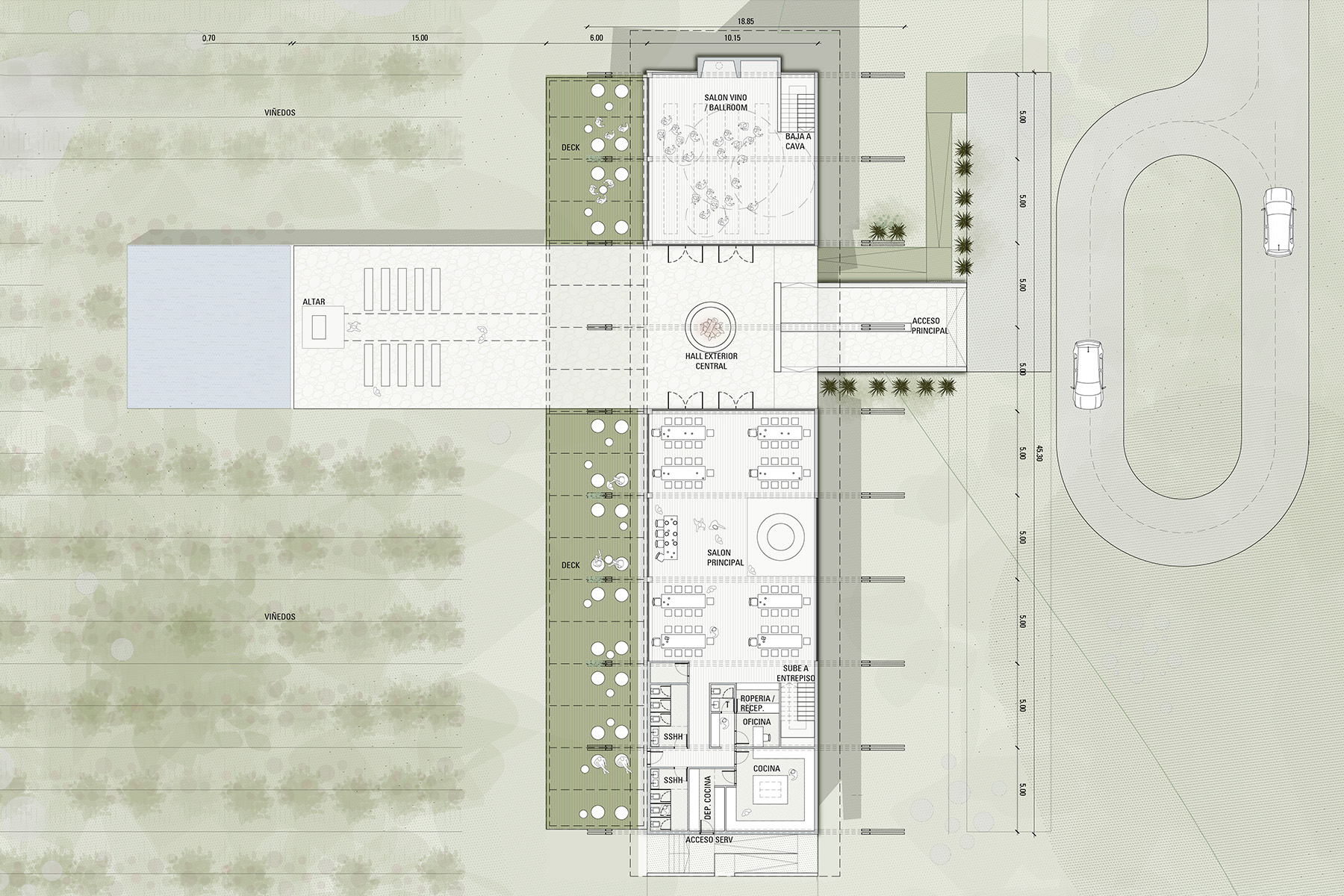
The masterplan is organized around two complementary components: an events hall and clubhouse and a hospitality cluster of premium cabins.
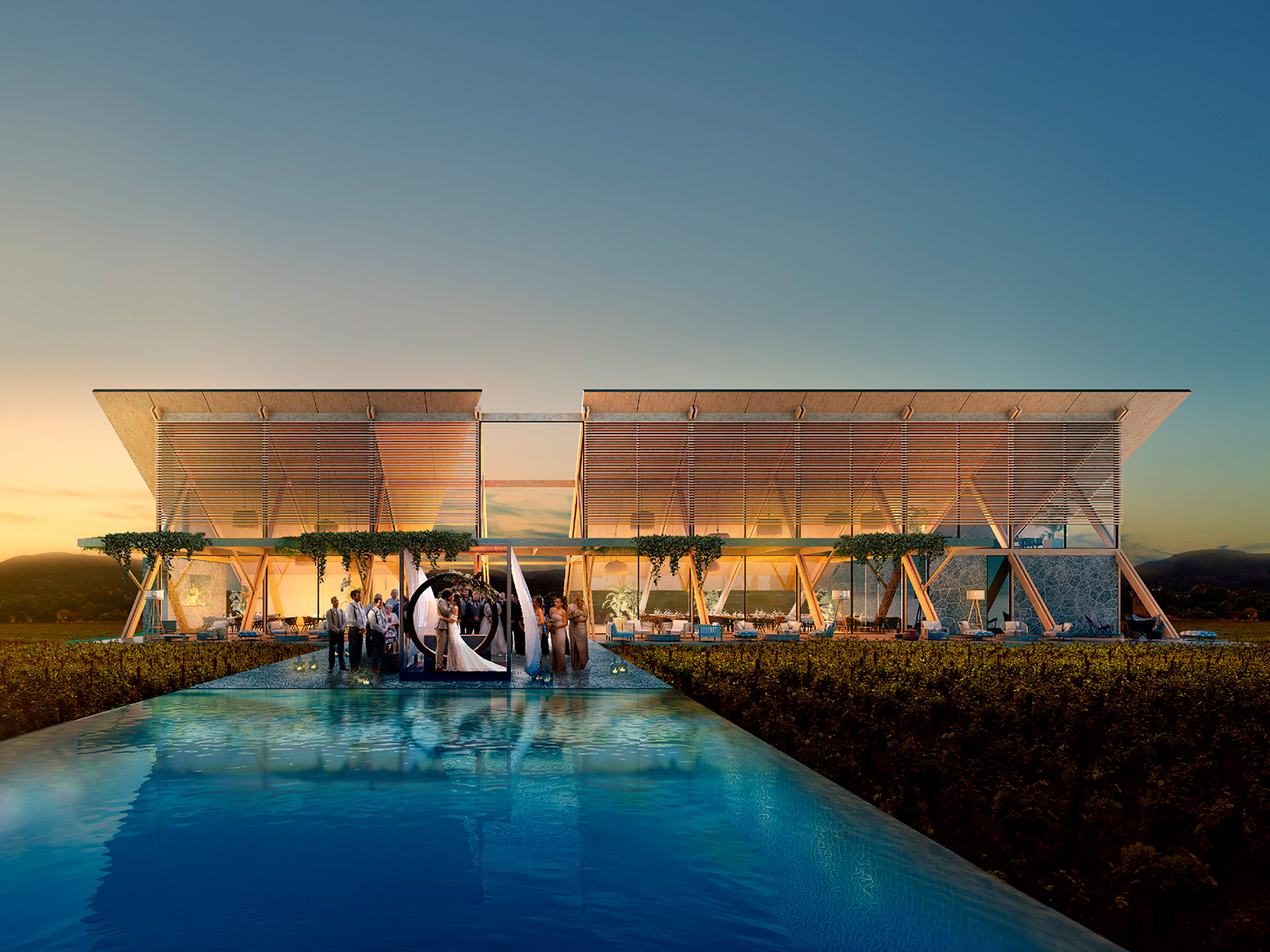
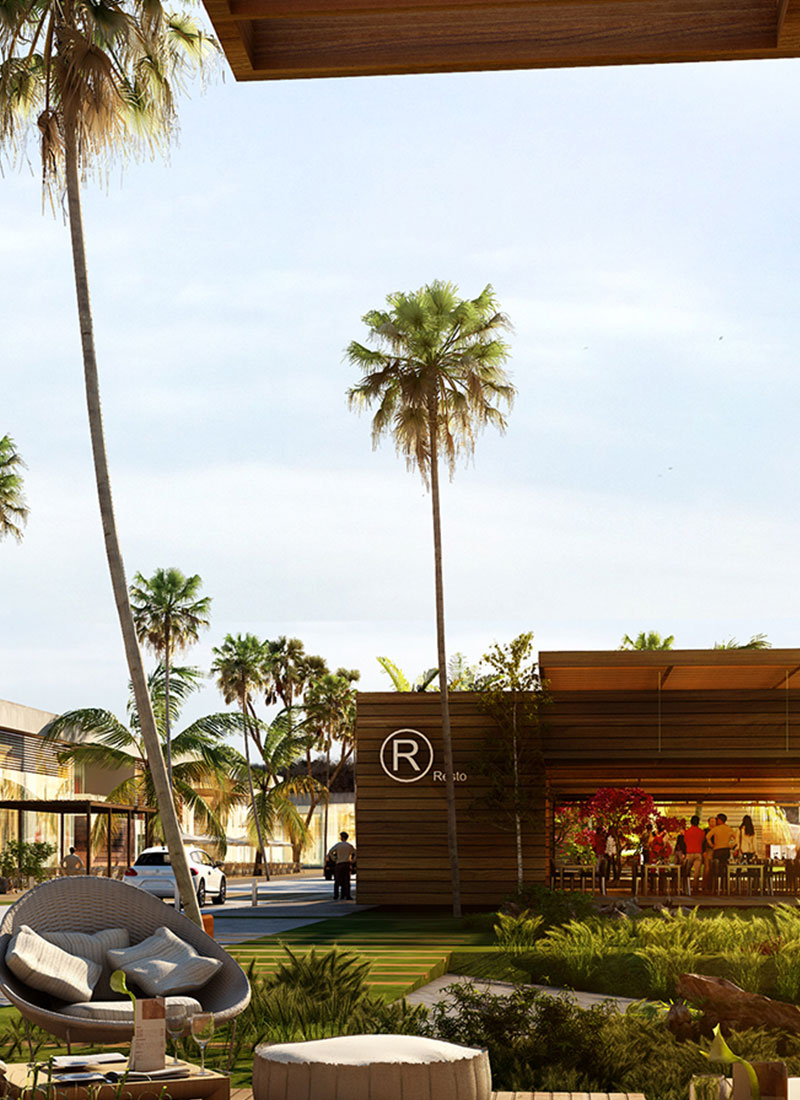
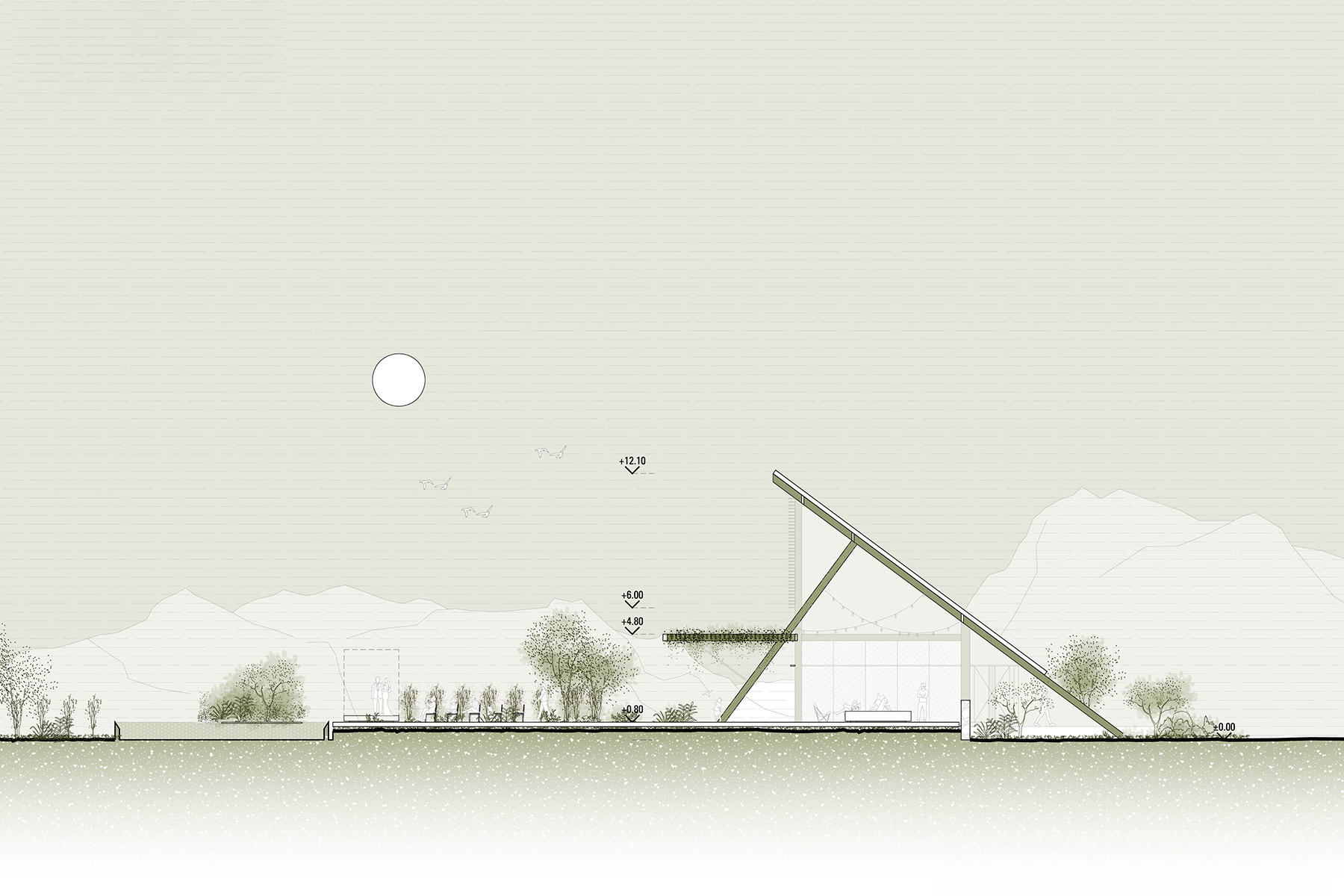
The clubhouse operates as the development’s “heart”: it welcomes guests, structures arrival, consolidates services, and opens to the landscape through a light, transparent architectural language. Its massing is intentionally low and horizontal, incorporating solar control and a direct relationship with the outdoors.
This component also functions as the event venue, conceived as an iconic volume that integrates the main hall, wine lounge, mezzanine level, support spaces, and a basement, complemented by a generous outdoor area that extends capacity into the landscape and becomes the valley’s “great room.”
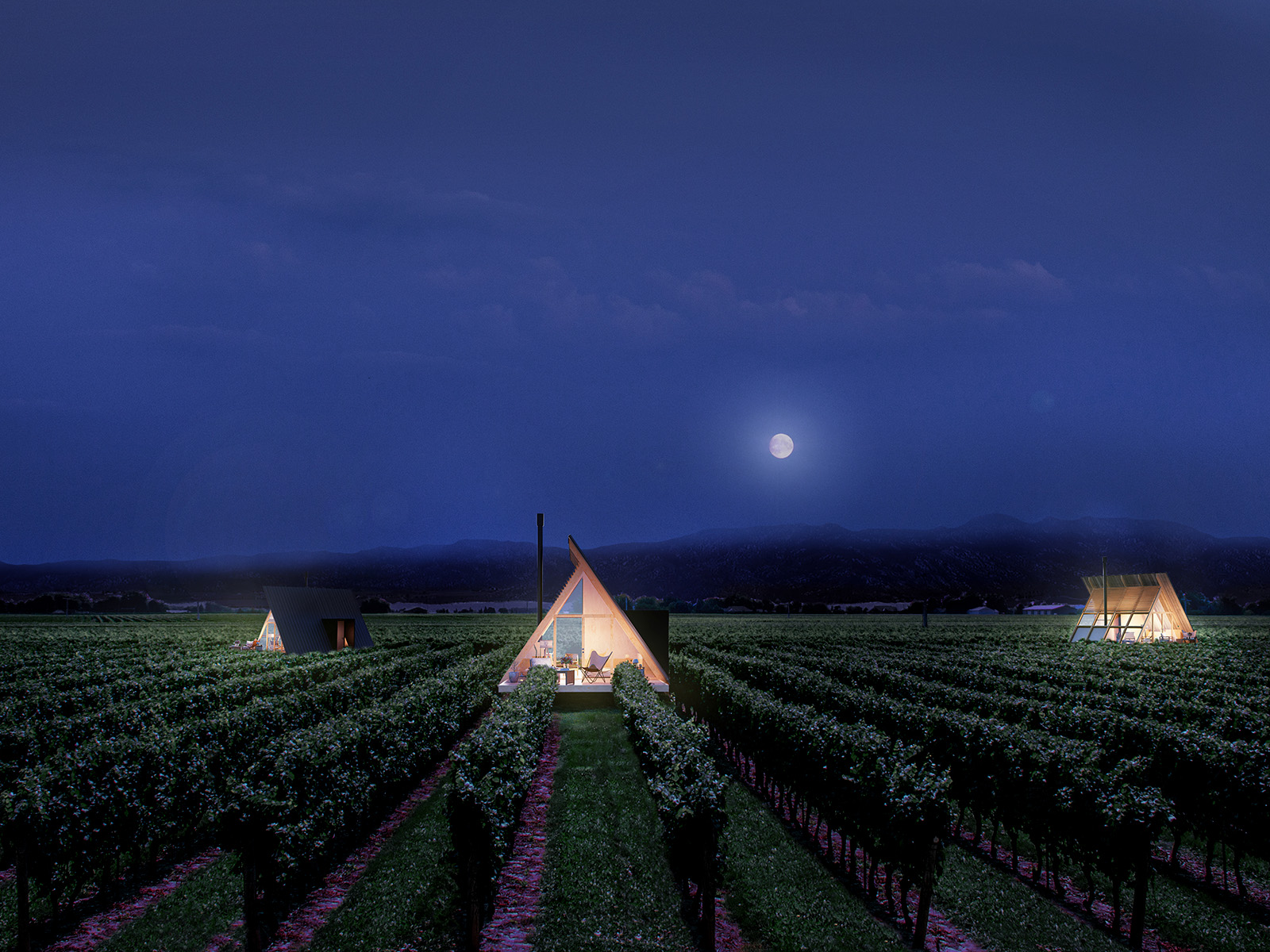
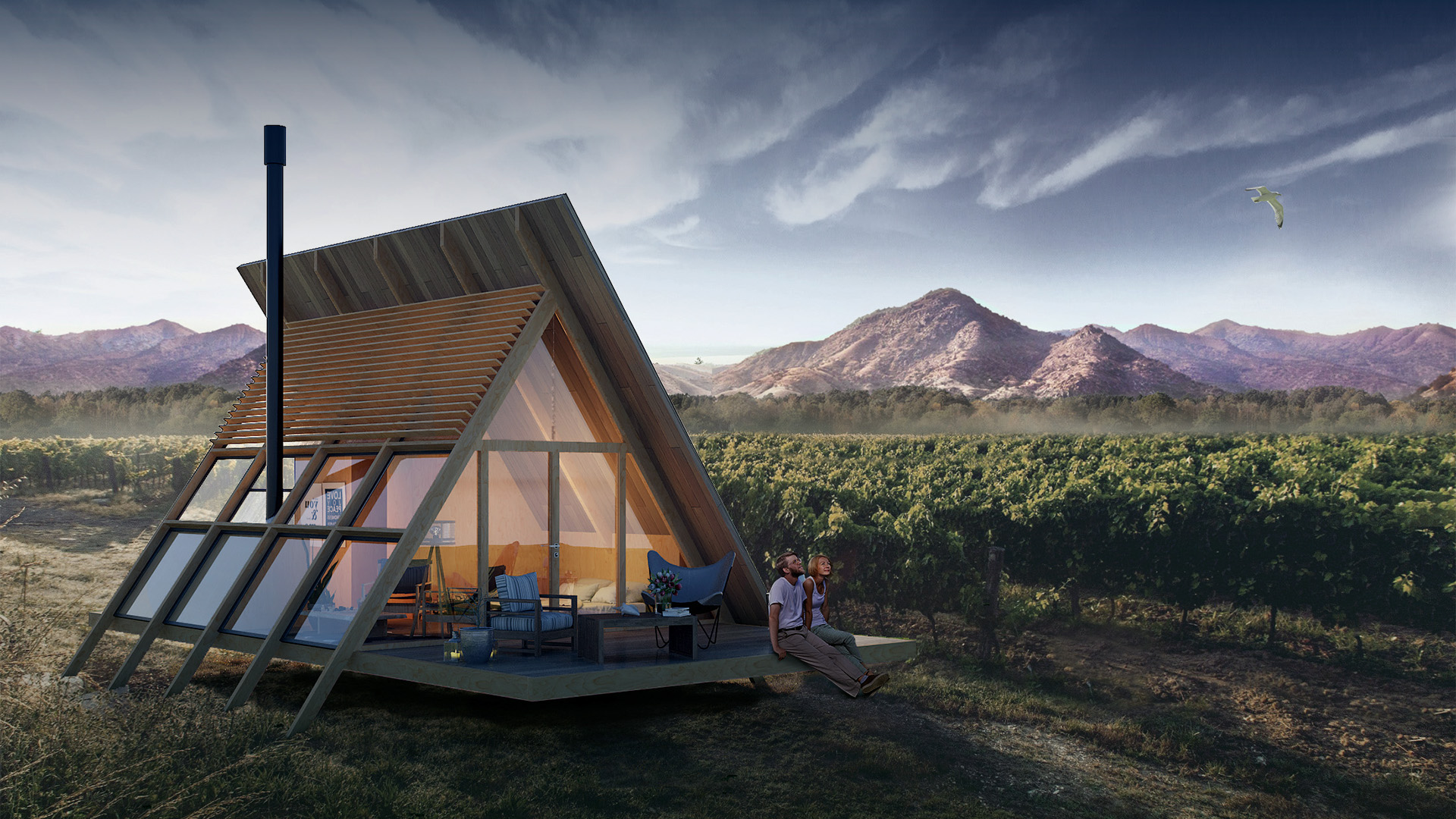
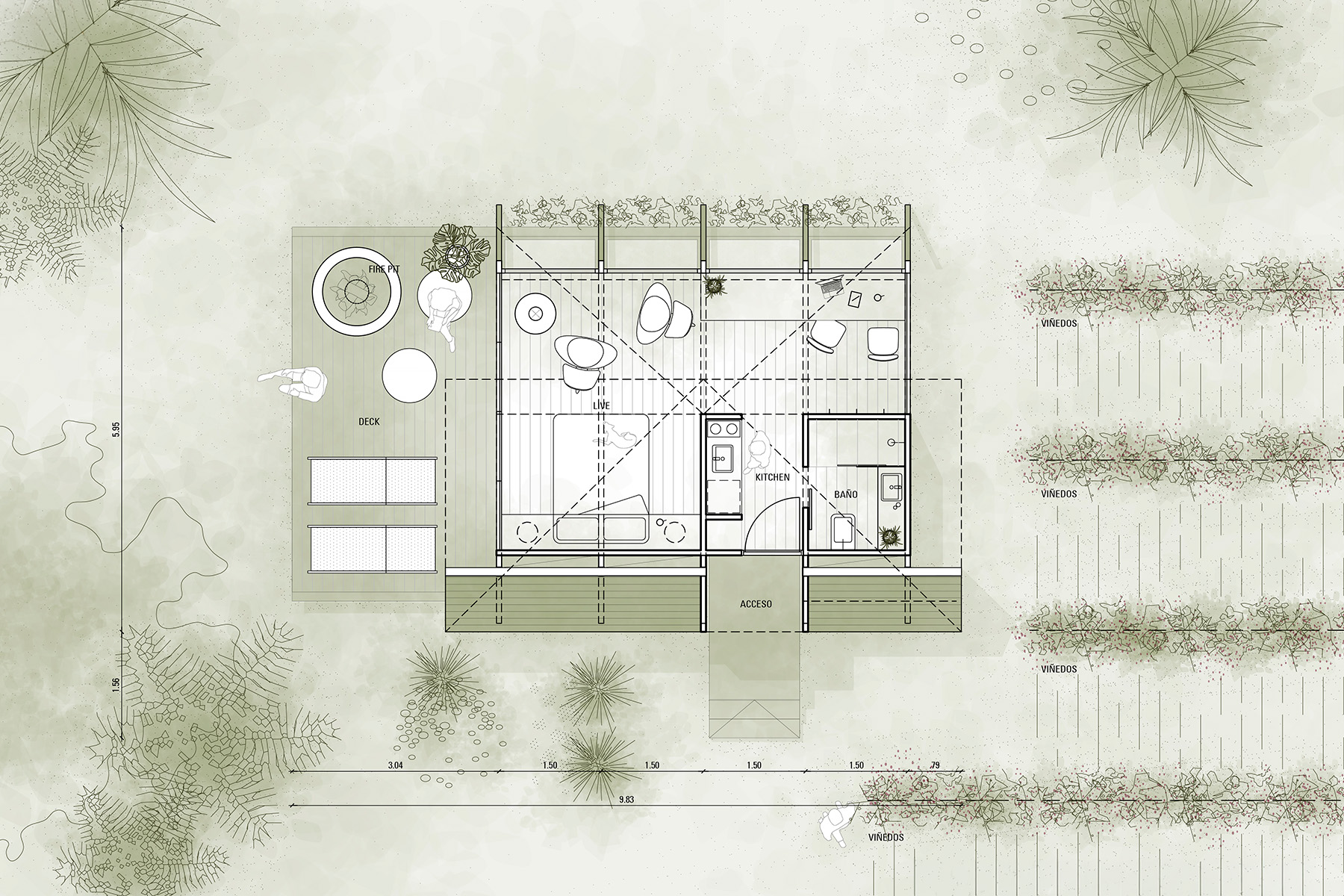
Accommodation is resolved through a set of six cabins—compact 48.5 m² units—integrating interior space, terrace, and entry threshold. Inserted between vineyard rows, they frame the vines and surrounding mountains as a private, immersive experience.
The project’s triangular geometry is articulated as a territorial reading: the cabins adopt a triangular plan that engages the vineyard grid and the angled configurations produced by cultivation and circulation logics. At the same time, this form condenses the project’s guiding triad—nature, architecture, and people—understood as a system: the landscape as support, the built form as mediator, and inhabitation as the catalyst for wine tourism and leisure. This results in a low-impact footprint that remains coherent with the surrounding environment.
This combination of program elements allows the development to host a select number of guests while simultaneously activating the property through events. The main building acts as a gathering and support piece, consolidating a center of activity without compromising the rural scale.
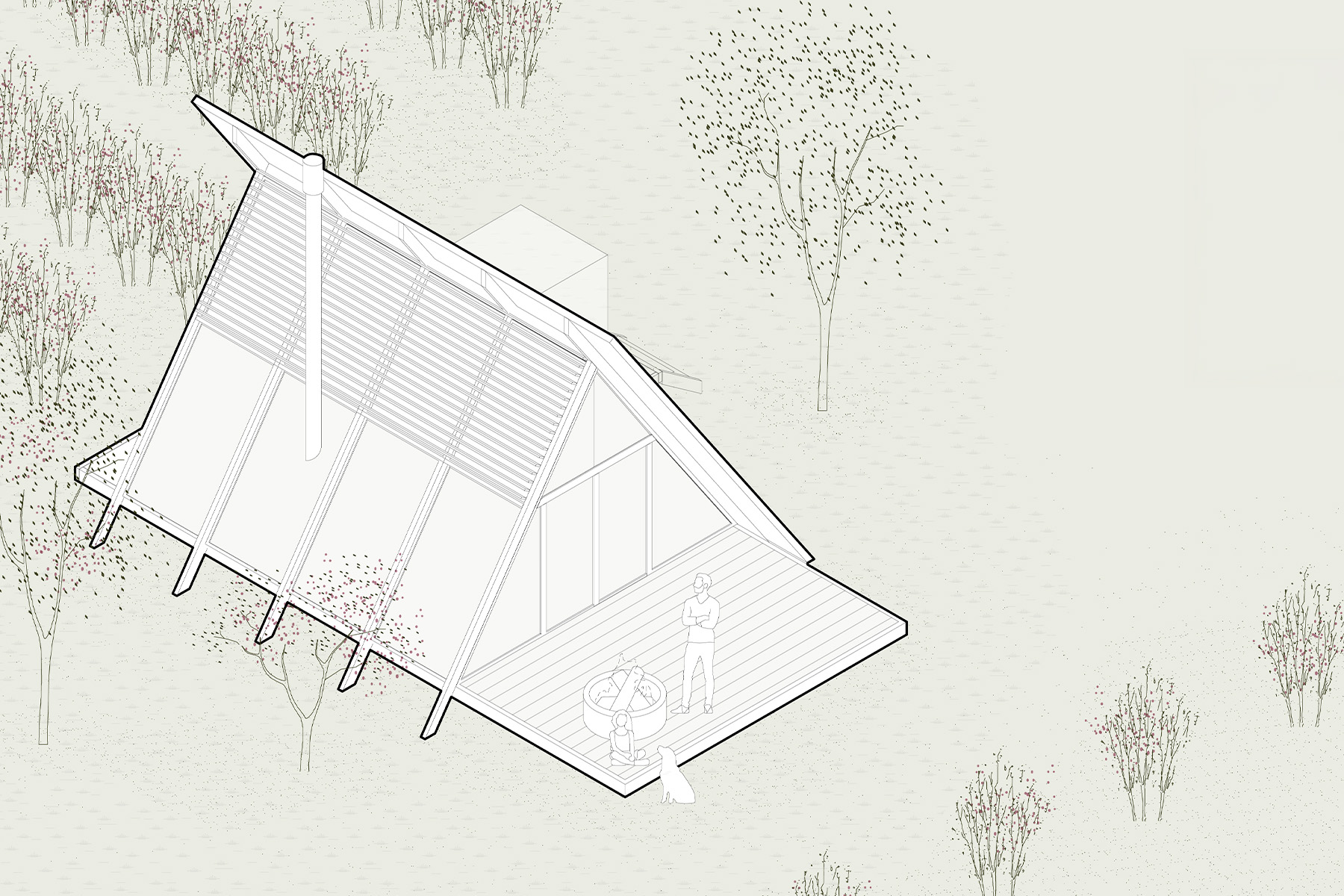
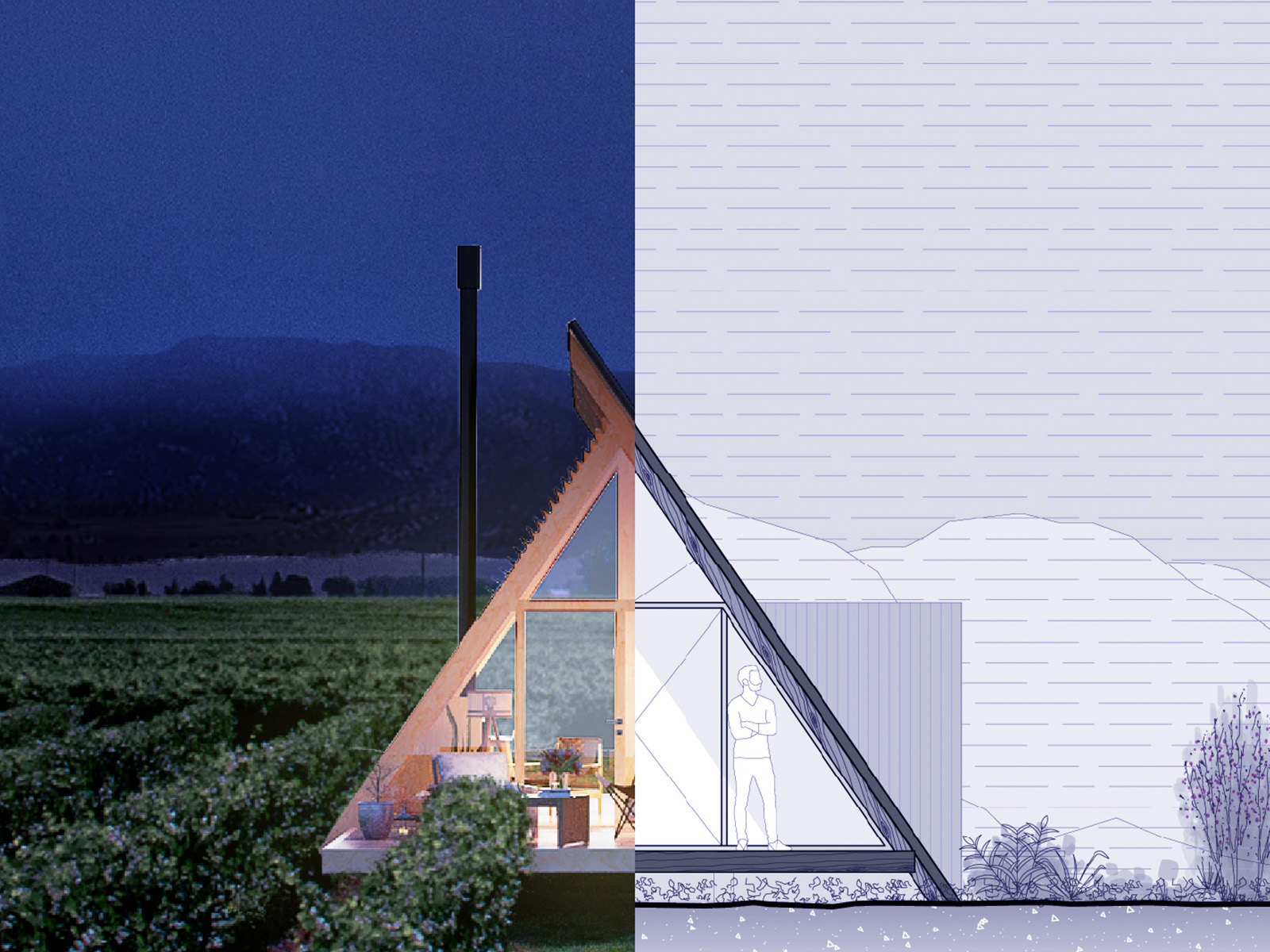
The site strategy offers a clear reading of place: the cabins are dispersed among cultivated rows to prioritize views and privacy. The masterplan defines differentiated access points (main, private, and service) and a system of pedestrian and vehicular flows that enables event operations without encroaching on the privacy of the lodging area.
Among the project’s key drivers are landscape integration and the construction of a premium wine-tourism experience. Design guidelines reinforce a restrained identity: permeable boundaries, a rural character, careful stewardship of native vegetation, and controlled exterior lighting. The proposal incorporates low-impact criteria to preserve the valley’s environmental quality: exterior lighting is managed to protect the night sky and avoid unnecessary spill into the landscape, while maintaining an open, unobstructed reading of the site.
In this way, Valle de Guadalupe balances private use, a strong relationship to its setting, and flexible phased implementation. Taken together, these decisions shape an architecture that is discreet and fully aligned with its context.