-
Program:
Residential Development
-
Status:
Under construction
-
Area:
80 ha.
-
Client:
Estudio Luis E. Lecueder, La Buonora y Asociados
- Location:
-
Photography:
Santiago Chaer, Courtesy of Los Olivos de los Horneros
-
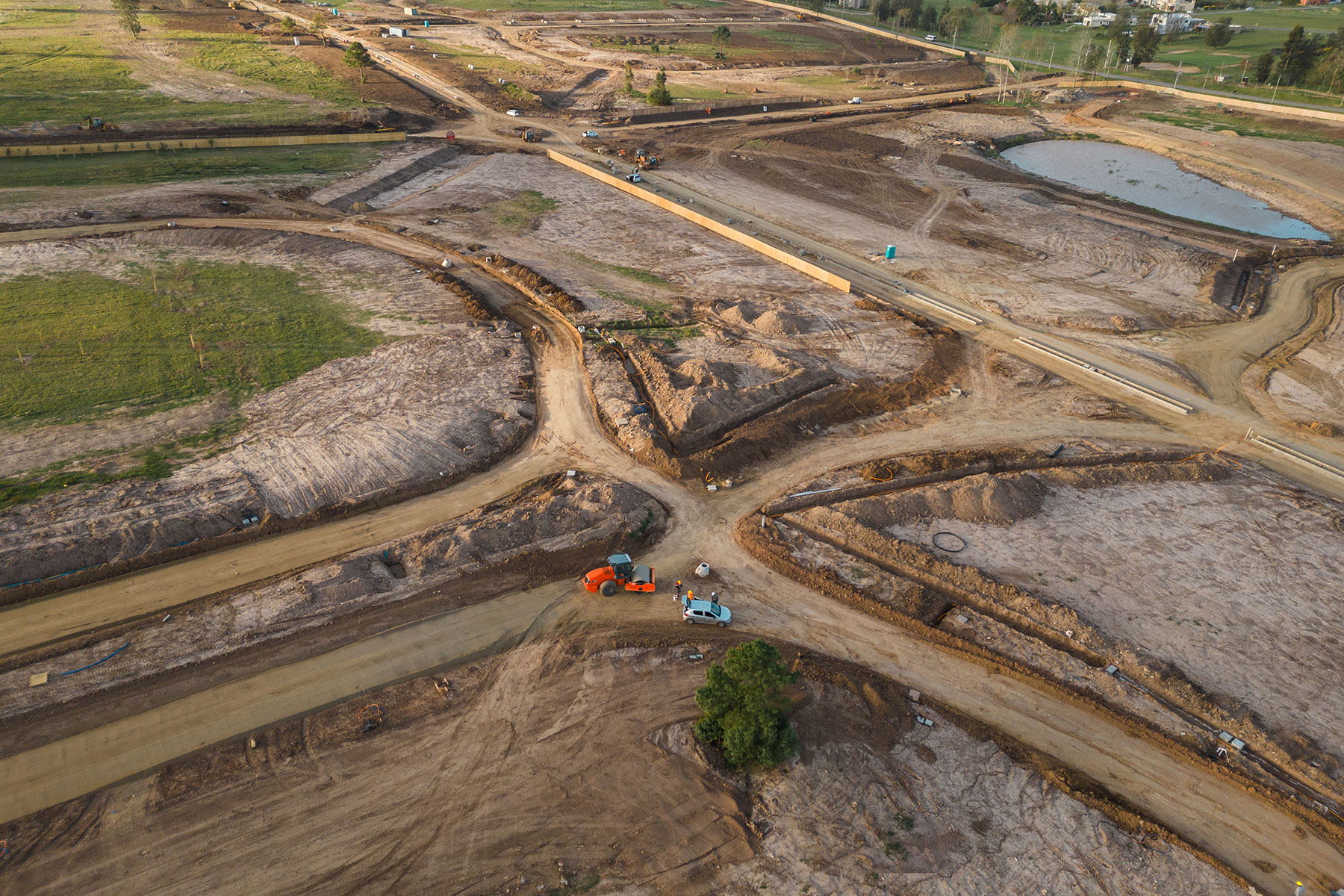
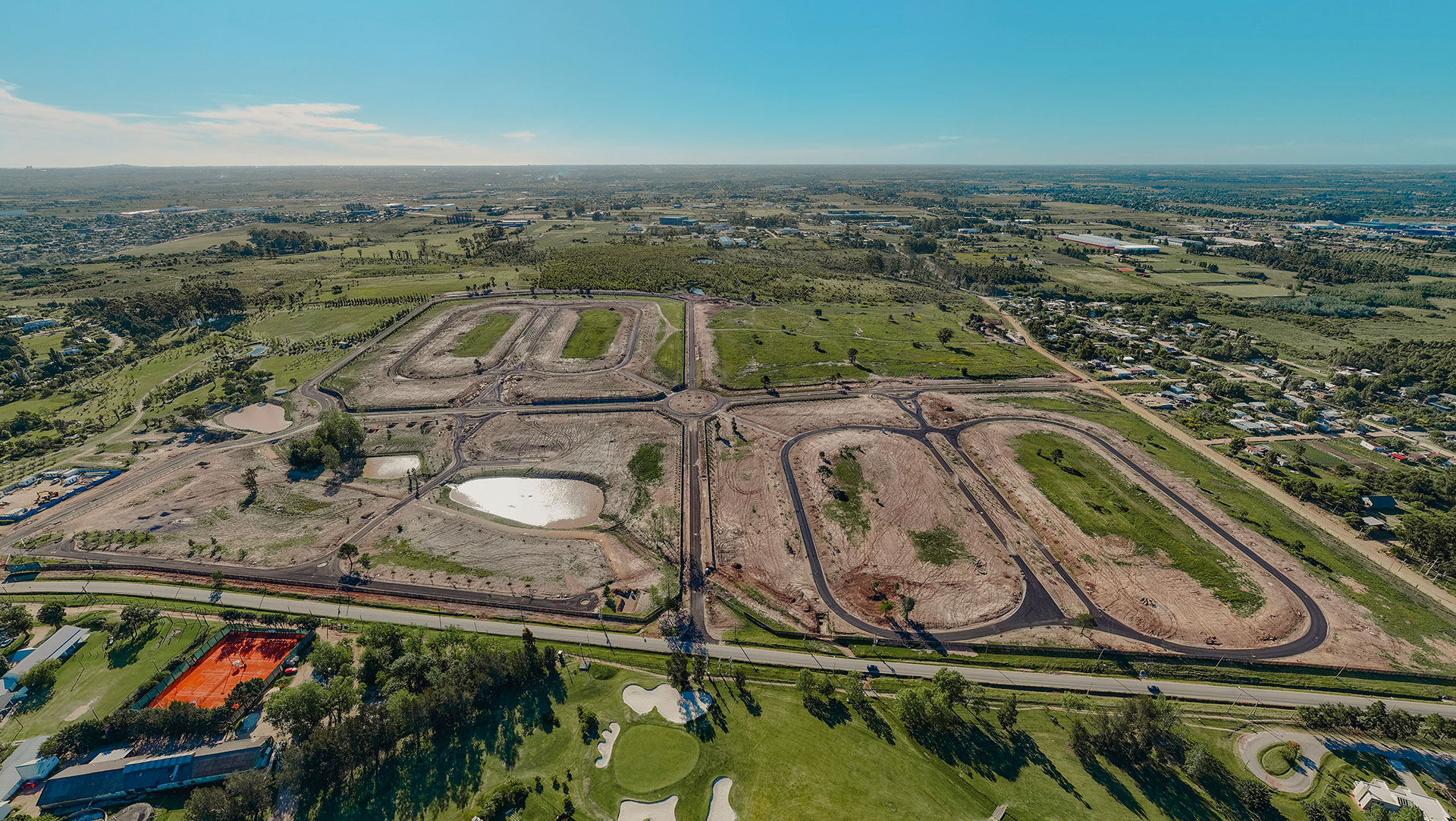
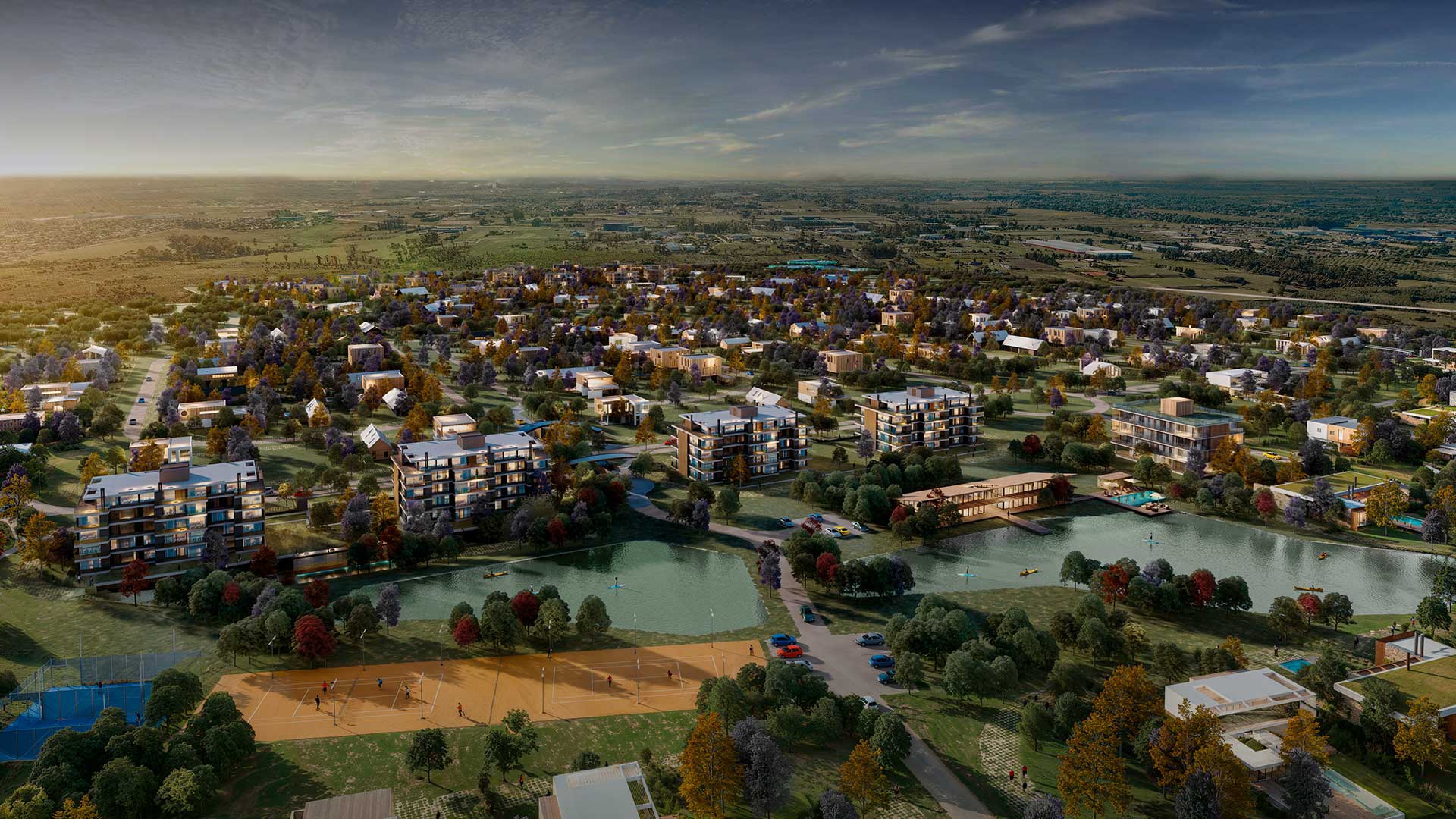
Los Olivos de los Horneros is a mixed residential project developed by La Buonora y Asociados and Estudio Luis E. Lecueder. A comprehensive, 80-hectare estate along Camino de los Horneros in Canelones, Uruguay, the development sits in an area that has witnessed a major real estate growth in recent years.
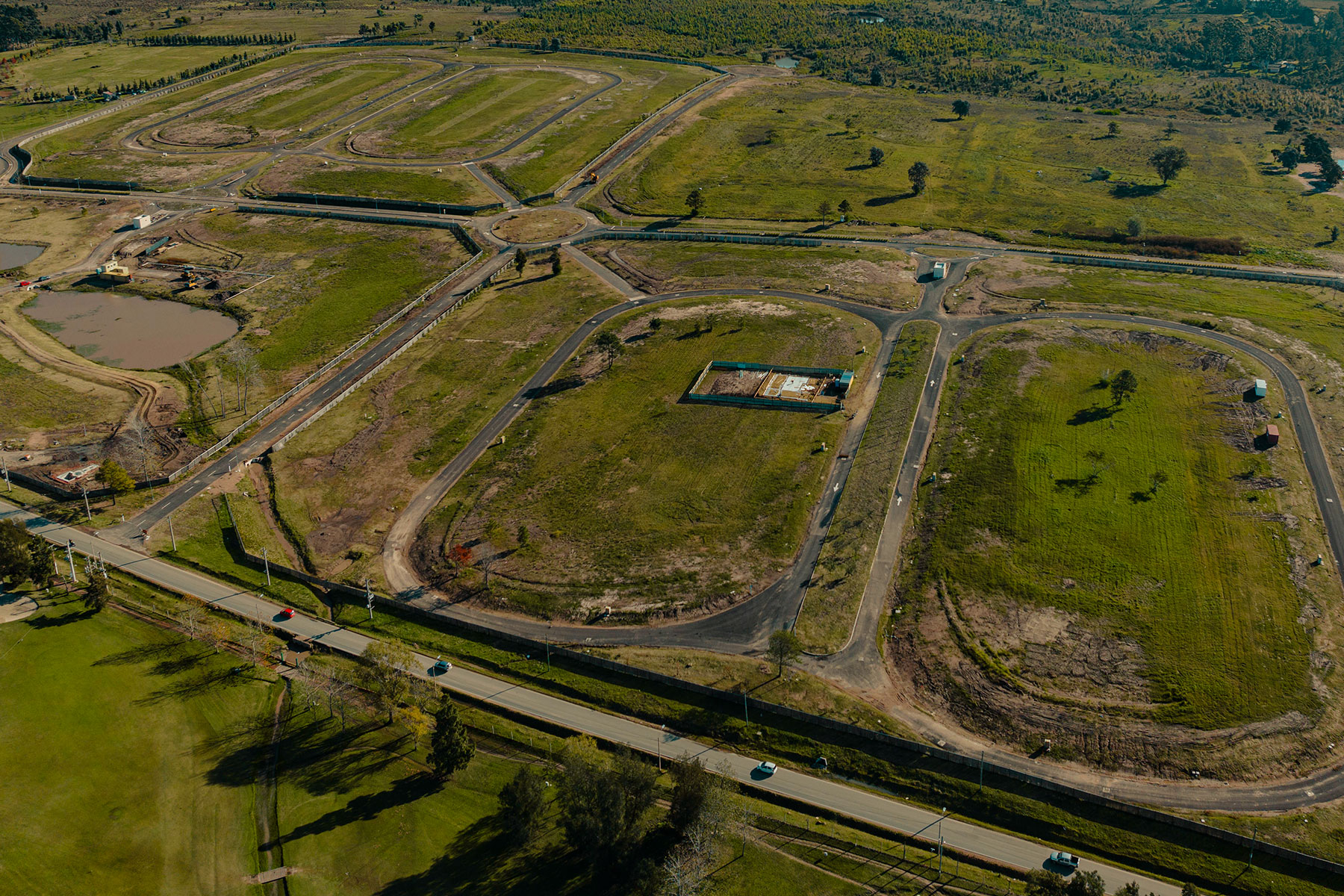
The project consists of over 400 plots of land ranging from 800 to 1,000 m², and is conceived as an articulating element capable of building relationships between its residents, the community, and the natural landscape. The integration between the different programs expresses itself throughout the various layers of the project.
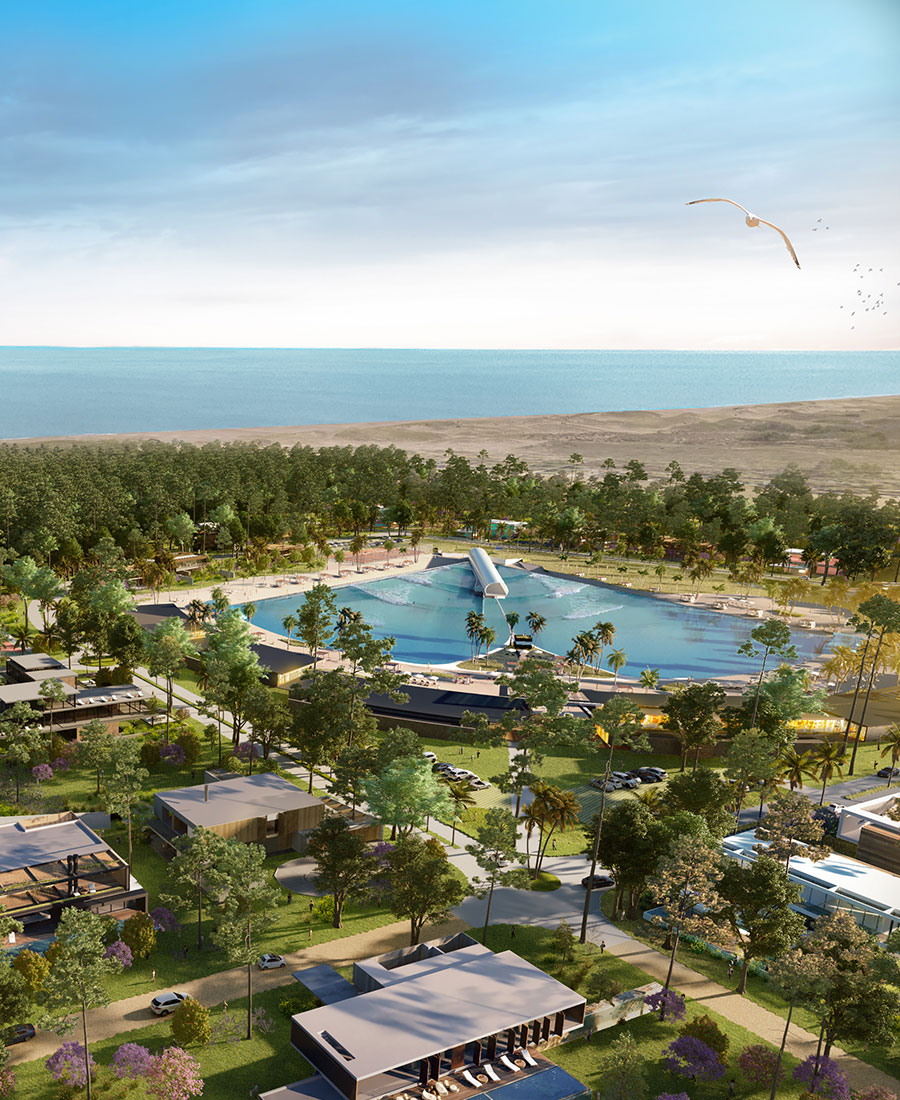
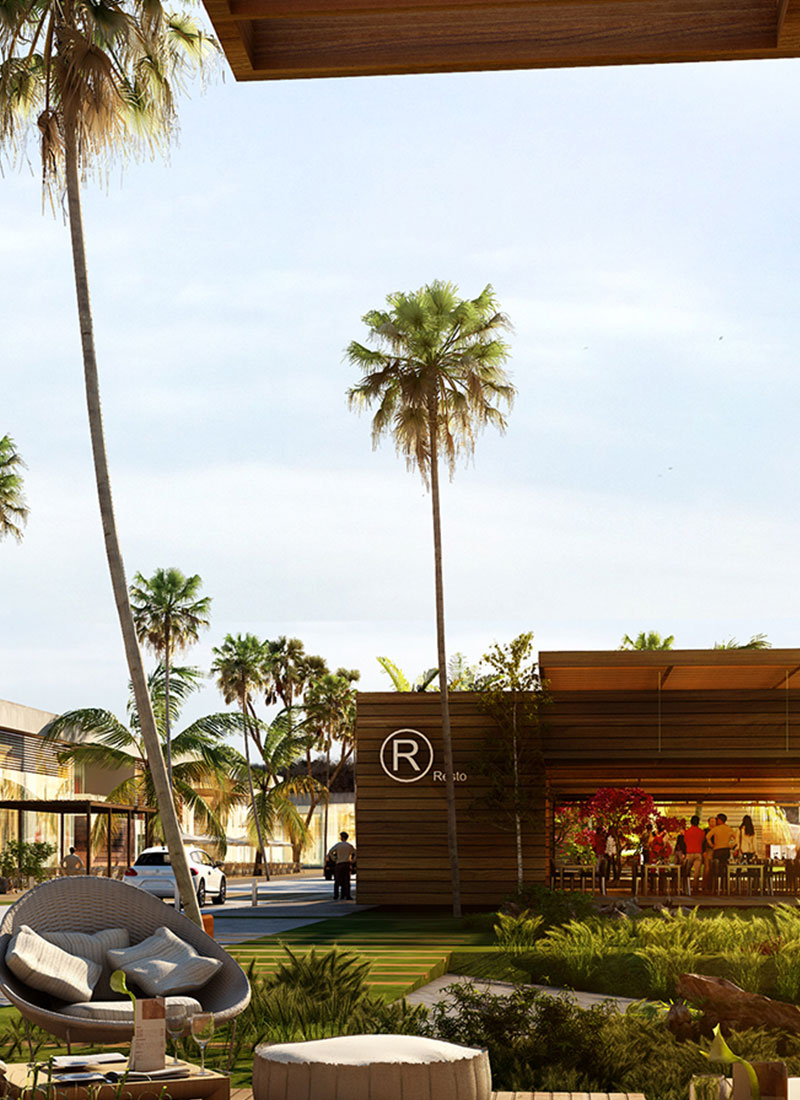
The program, mainly low-density housing and tourism-related activities, is further supported by a variety of services which include a boutique hotel, themed food court, themed gardens, a clubhouse offering sports and leisure activities, and even an olive tree museum.
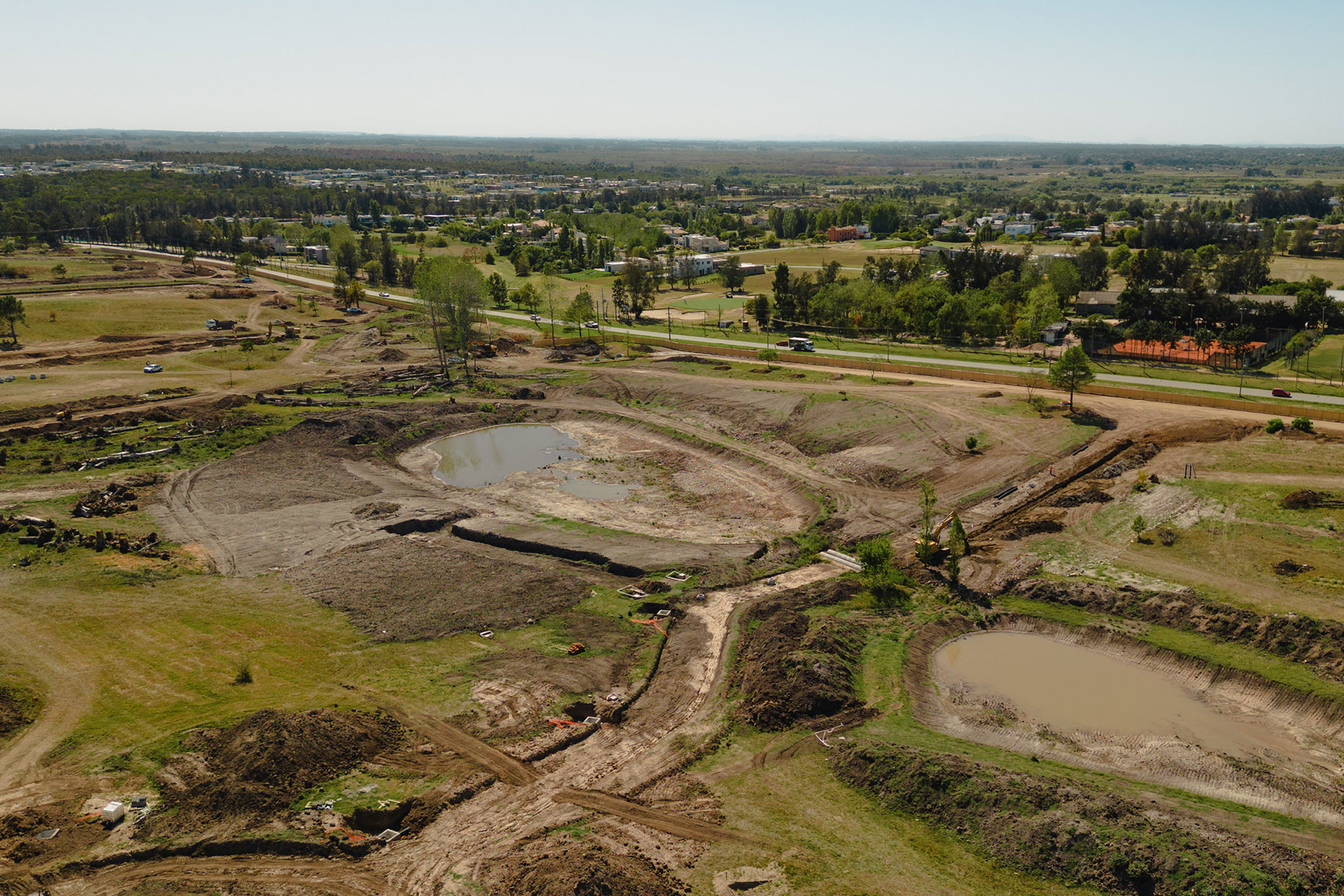
In relation to the natural landscape, the multi-level terrain configures basins and low valleys that give way to creeks and the presence of indigenous trees. The proposal seeks to value the preexisting scenery, turning natural spaces into parks for common use by all homeowners, offering visual corridors where nature may both dictate and give structure, at once inhabiting and preserving the ecosystem.
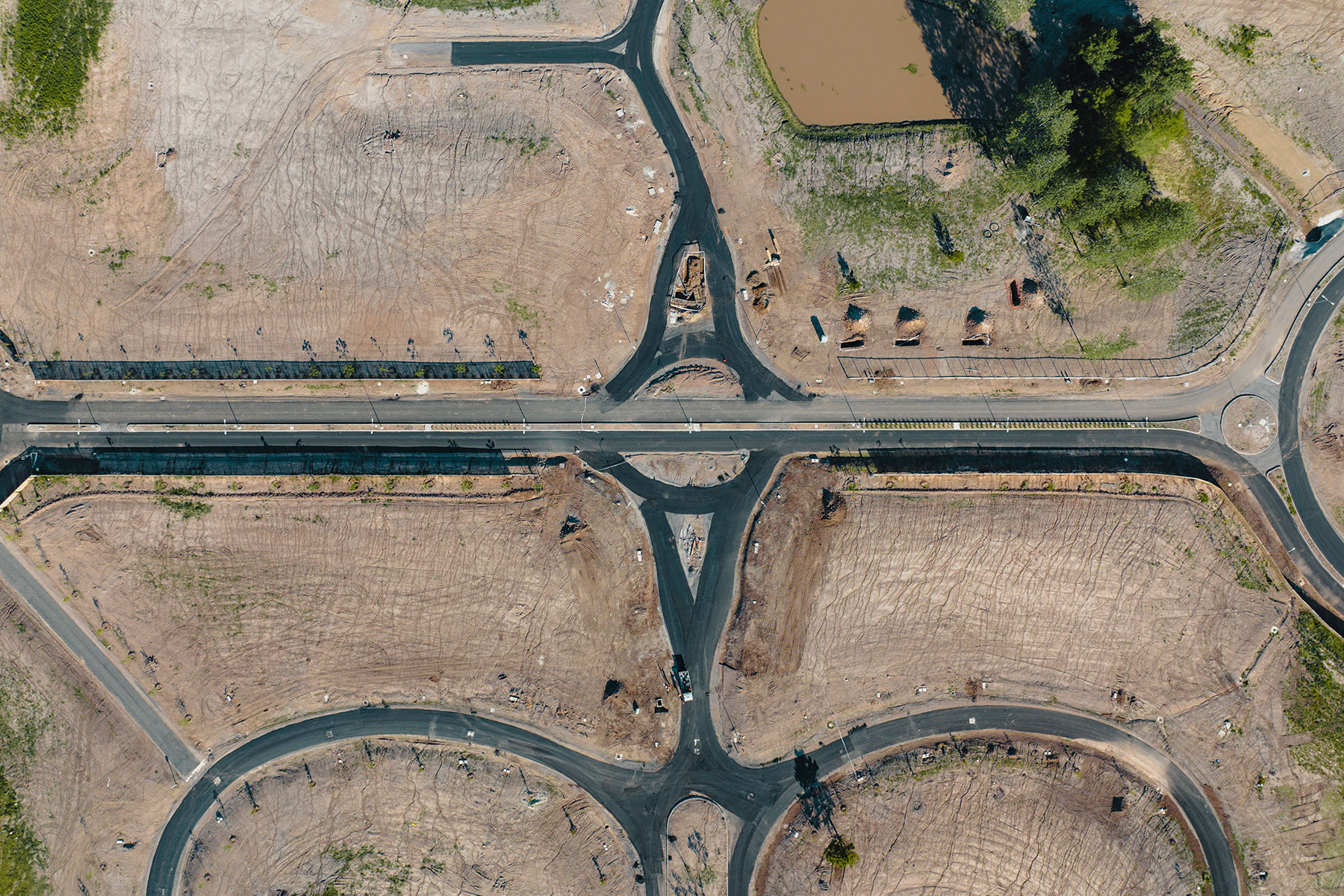
An allowance of 6.5 meters has been specified for Camino de Los Horneros, to widen the lateral road next to Los Olivos, as well as 30 meters for expanding the roadway and incorporating a pedestrian path and bicycle path. The new public road network organizes the design around two streets: the main avenue, 20 meters in width and containing a central garden, connects Camino de los Horneros with Camino Paso de Escobar; the second road, with a width of 17 meters, intersects the development from east to west.
The subdivisions establish a system of macro-plots, comprised by plots of variable surface ranging from 800 to 1000 m² for isolated residential units, as well as plots of special dimensions, for those over 2000 m² destined for medium-density buildings.
The presence of the olive trees in every macro-plot deserves special attention. Each common-use area will have its own olive orchard to encourage educational and training activities where local schools may take part in the learning process on how to work the land and strive towards environmental sustainability.
Encounter as a Design Principle
The Los Olivos de los Horneros clubhouse is conceived as a central community facility, designed to articulate architecture, landscape, and social life, reinforcing the identity of the development and its overall value proposition. Its presence establishes a clear point of reference within the urban structure, accompanying and enhancing the masterplan’s shared spaces.
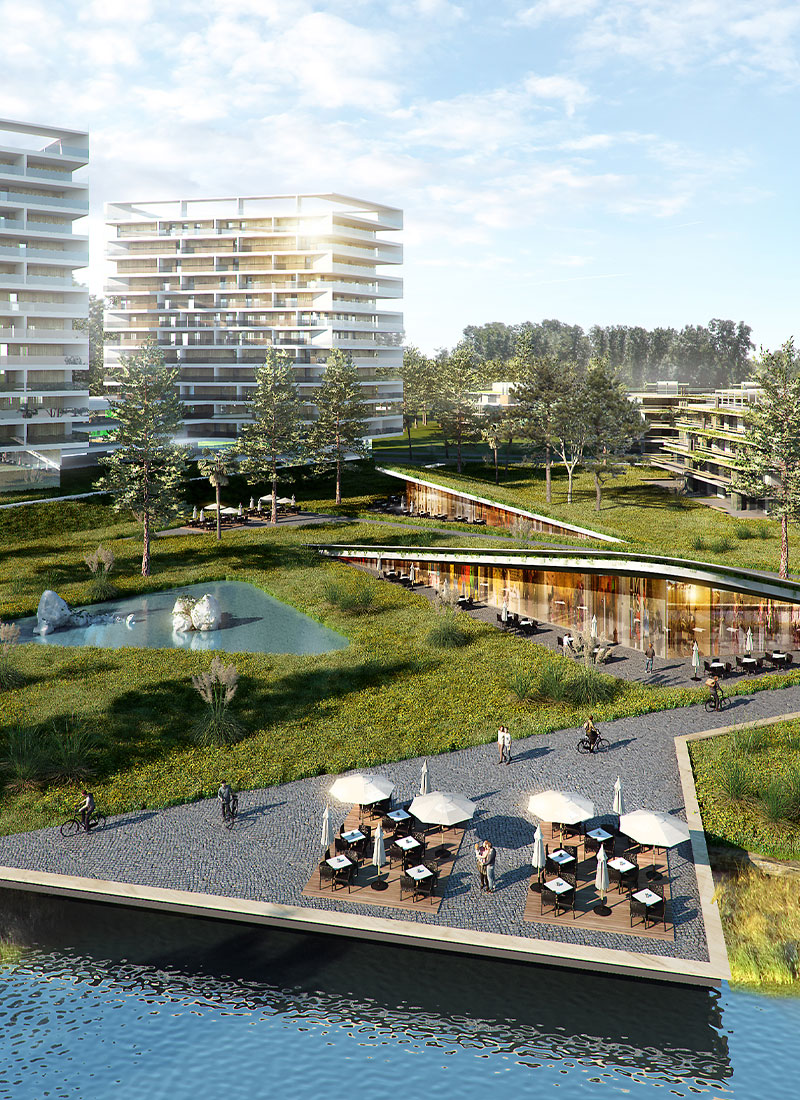
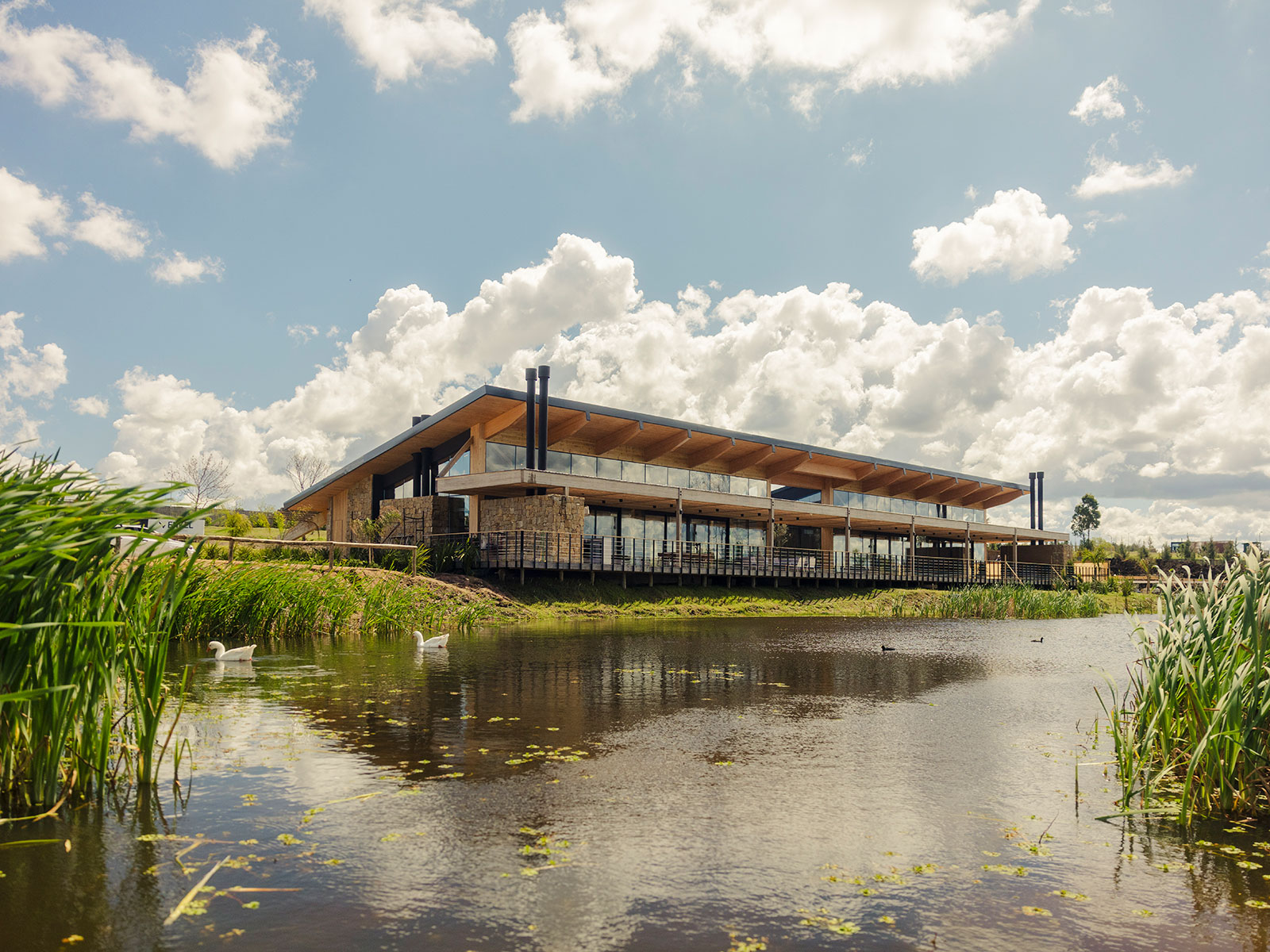
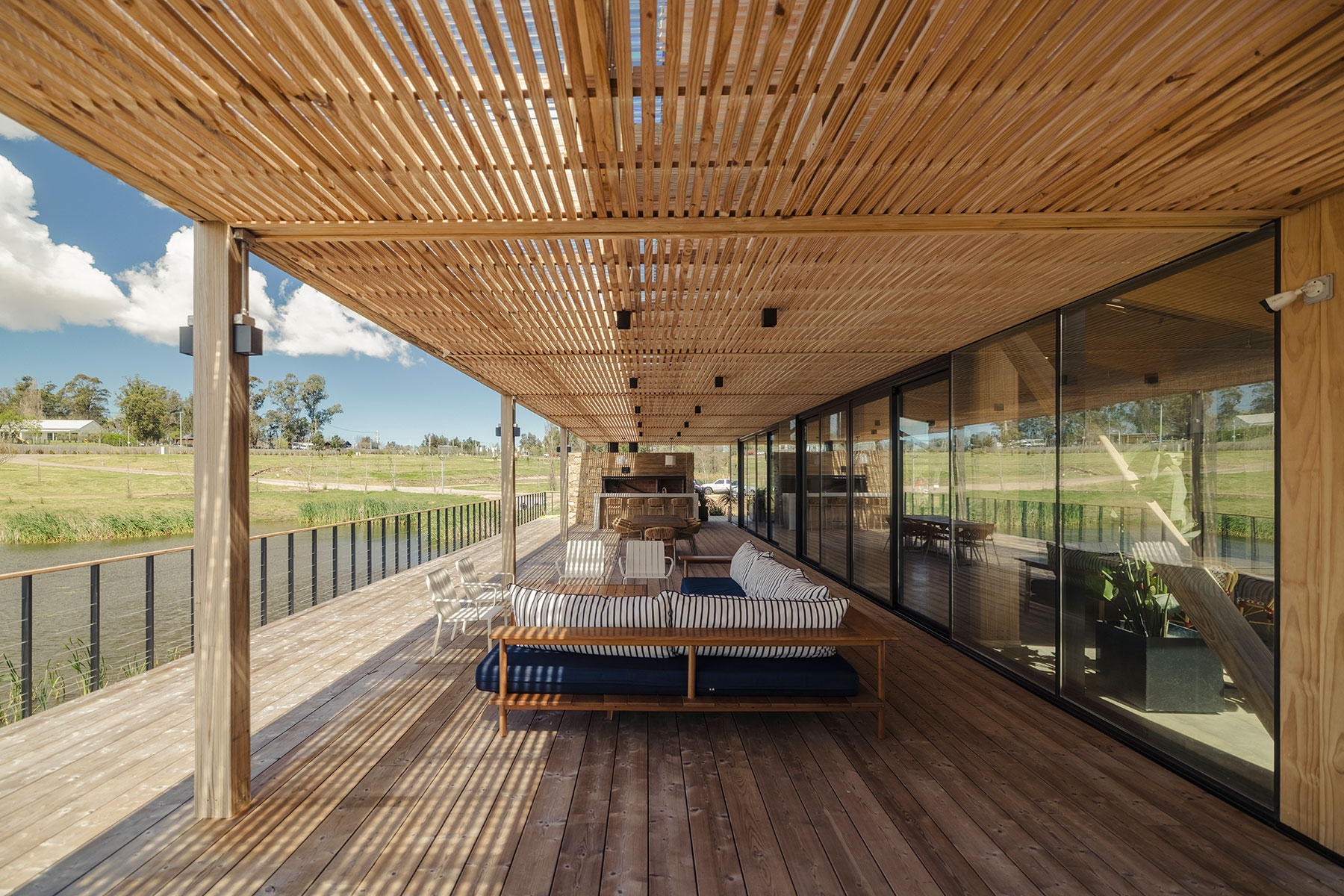
The building is laid out horizontally, adapting to the site’s natural topography and minimizing its visual impact on the surroundings. It takes the form of a low, linear volume that follows the edge of the water feature, reinforcing its role as an articulating element between architecture, landscape, and public space. The relationship with water becomes a key design resource, enhancing long views, environmental quality, and the integrated reading of the project as a whole.
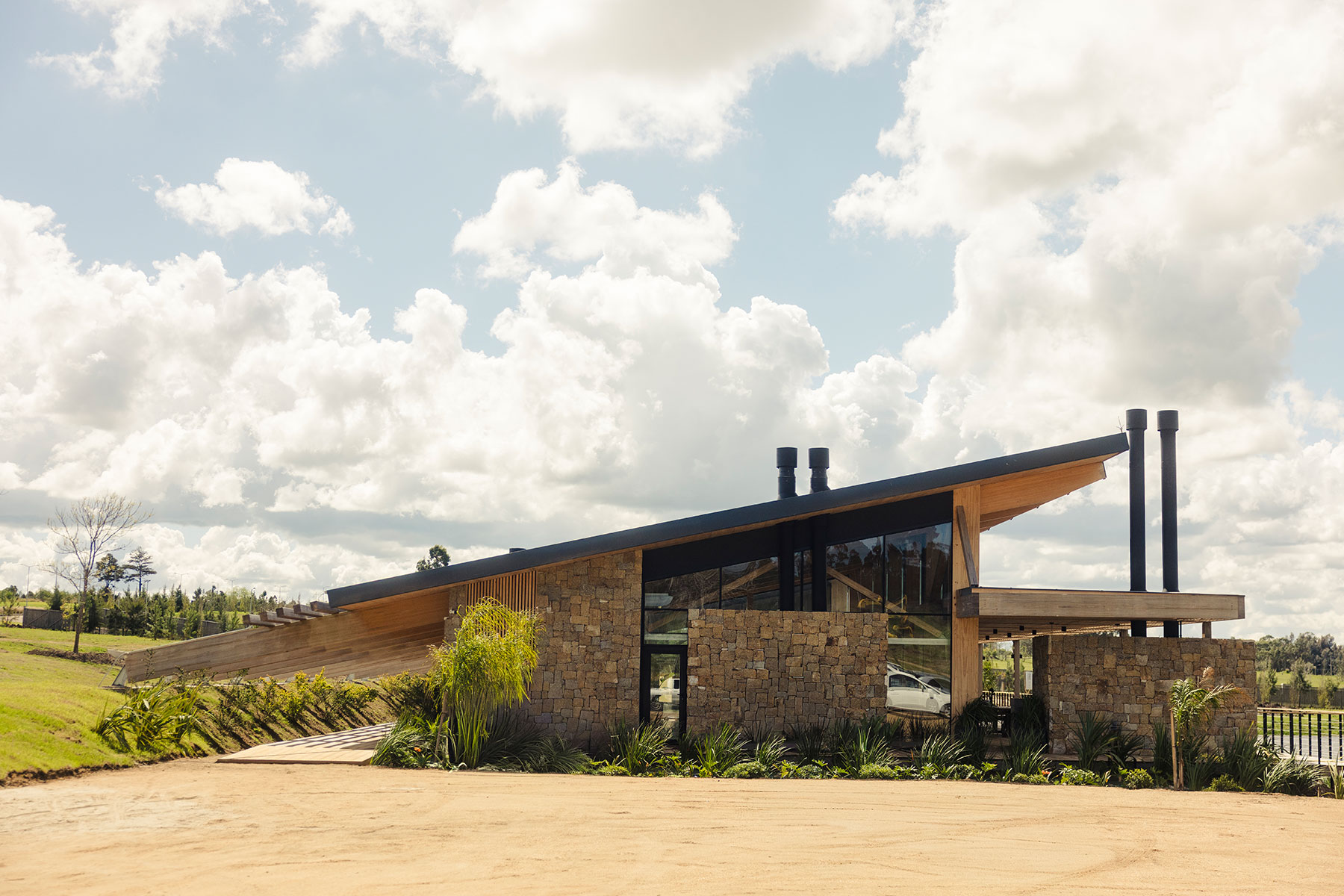
A pitched roof of significant span unifies the proposal and defines a contemporary, easily recognizable image from the main access. Its wide overhang emphasizes the horizontal character of the volume and enables the creation of galleries and semi-covered areas that extend the building’s use and strengthen the transition between interior and exterior spaces.
From a material standpoint, the project combines stone bases and solid planes — providing permanence, durability, and a strong connection to the ground — with lightweight structures, exposed timber, and large glazed enclosures. This material balance achieves an interplay between solidity and lightness, promoting transparency toward the landscape and a direct relationship with the development’s green areas.
Semi-covered expansion areas are conceived as high-value intermediate spaces, designed for gathering, leisure, and flexible use. Galleries and terraces operate as natural extensions of the interior spaces, allowing the building to be continuously appropriated under different climatic conditions.
Landscape integration, the treatment of the water’s edge, and the surrounding vegetation reinforce the continuity between natural and built space, consolidating the clubhouse as a facility of high spatial and environmental quality, where architecture acts as a support for community life and collective use.
From the very onset, Los Olivos de los Horneros has sought to take into account the environmental dimension in a comprehensive manner, considering the soil, infrastructure, mixed equipment and landscape, all in one place.
The project comprises all the basic and complementary components to offer a friendly experience, one that is optimized for the enjoyment of audiences, residents and visitors alike.