HABITAR 2026: Punta del Este’s Evolution from Seaside Resort to City
From October 8–10, 2026, the Punta del Este Convention Center hosted the inaugural edition of HABITAR, a forum on urban development and investment opportunities. The three-day event brought together business leaders, industry professionals, and public officials to explore how to guide and support urban transformation.
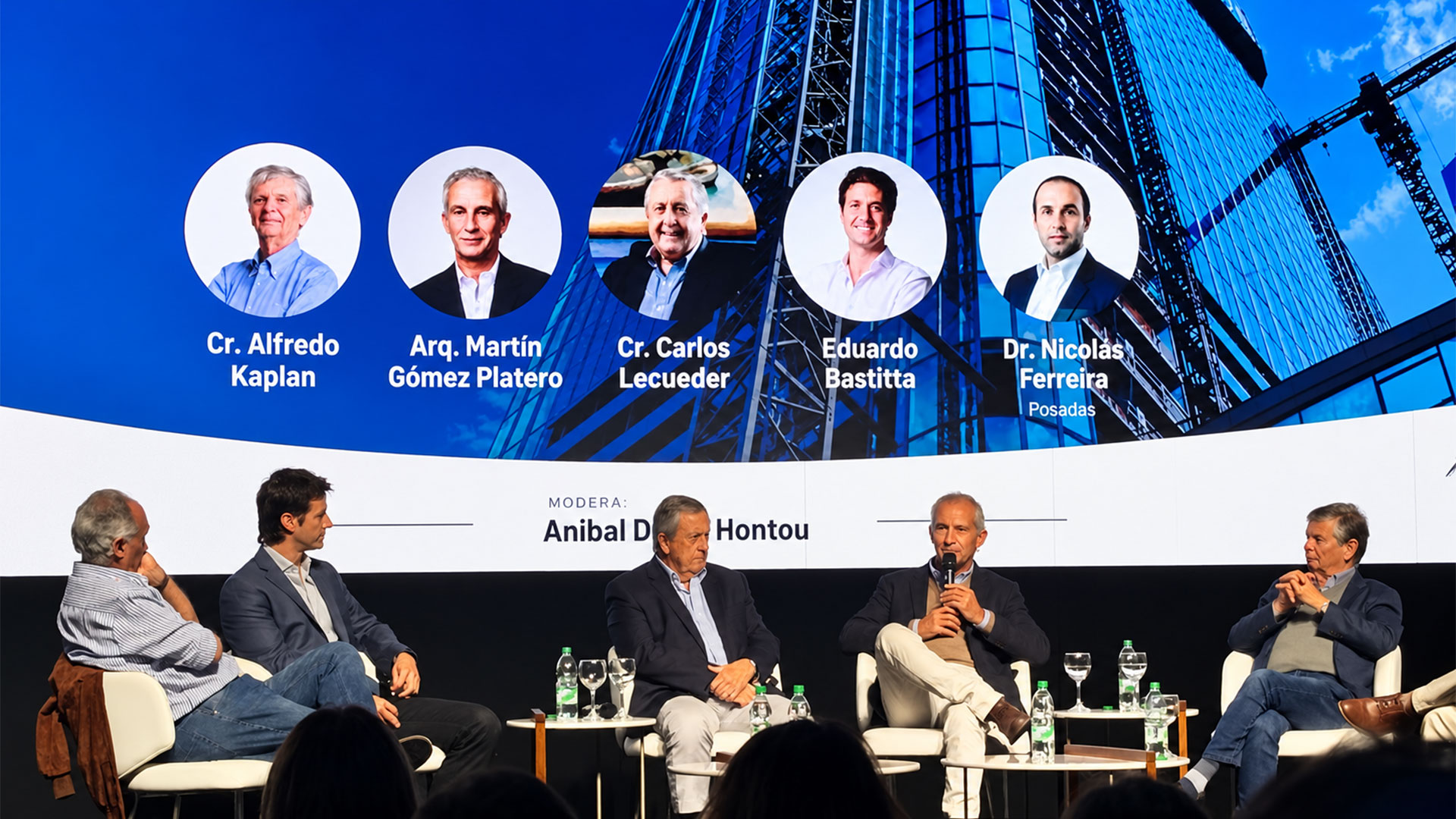
As part of the program, Martín Gómez Platero, Founder & Executive Chairman of Gómez Platero Arquitectura & Urbanismo, took part in the “Private-Sector Construction Investment” panel, moderated by the Uruguayan Association of Private Construction Developers (APPCU). The session brought together construction and real estate industry leaders to discuss a key driver of growth in Punta del Este and the surrounding area.
The event explored the decisions shaping this transformation: where to invest, how to plan for growth, and what infrastructure and services new residents need. Alongside the talks and panel discussions, a trade exhibition and networking sessions created opportunities for developers, investors, businesses, and public and private institutions to connect.
Planning for a City That Lives Year-Round
A central theme at HABITAR was Punta del Este’s emergence as a year-round residential destination and the new demands that come with that shift.
Martín Laventure, who served on the organizing committee alongside Gonzalo Cortinas and Aníbal Durán, described how a destination historically defined by a 45- to 60-day peak season has diversified into a place with year-round activity. “We needed to come together to examine this transformation—a process spanning more than 25 or 30 years, during which we gradually moved beyond being a seasonal seaside resort, diversified our tourism offering, and invested in becoming a university city,” he explained.
According to Laventure, the pandemic accelerated a shift already underway. The arrival of new residents broadened the conversation beyond housing to encompass education, healthcare, entertainment, and the local economy. The purpose of the event, he said, was to examine these changes and “keep thinking together about how we grow.”
At the opening session, Miguel Abella, head of the Maldonado departmental government, emphasized the importance of dialogue between public authorities and the private sector in guiding development. He called for greater openness to “those who invest, those who work, and those who come to live in our area,” connecting investment opportunities with the needs of the community.
Urban Development: Infrastructure, Innovation, and the Environment
HABITAR’s program explored development at multiple scales, from regional trends to tools for building design. Key topics included:
- Infrastructure and mobility. Economist Laura Raffo and Andrés Alcalá, a Principal Executive at CAF—the Development Bank of Latin America and the Caribbean—discussed infrastructure, mobility, and their role in creating development opportunities.
- Technology and environmental design. Architect and researcher Jonathan Natanian, of Israel’s Technion, presented digital tools for better buildings and urban development, focusing on the integration of environmental performance into the design process.
- Regional perspectives. The program included a panel featuring Enrique Iglesias, former President of the Inter-American Development Bank; Senator Sergio Abreu; Marcos Vinicius Campos, Head of Airport Affairs & BR Infrastructure; journalist Martín Aguirre; and Álvaro Villegas, Secretary General of the Maldonado departmental government.
- The environment and land-use planning. Specialists and institutional representatives, including Virginia Villarino, Director of Environment for the Maldonado departmental government, brought environmental considerations into the discussion on urban expansion.
The event also recognized Enrique Iglesias and Sergio Abreu on the 40th anniversary of the GATT Uruguay Round, launched in Punta del Este in 1986, which established the city’s place in the history of multilateral trade negotiations.
By bringing these perspectives together, HABITAR connected real estate investment with the foundations of sustainable urban growth: infrastructure, services, planning, and environmental quality. These issues are particularly relevant to a city welcoming new residents and developing a more diverse, year-round economy.
_____________________________________________________________________________________________
Punta del Este grows and new ways of living are shaping the city year-round.
Discover some of our projects here.
______________________________________________________________________________________________