Gómez Platero at CRET Summit 2026: designing profitability
CRET Summit 2026 brought together some of the most relevant voices in Commercial Real Estate in San José, Costa Rica, at the Convention Center on March 25 and 26, followed by a Project Tour on March 27. Focused on investment, corporate occupiers, and the forces reshaping the sector, the event also featured Gómez Platero as a speaker.
Reading time: 5 minutes
Over the past few years, CRET Summit has become a key platform for connecting the region’s Commercial Real Estate ecosystem — developers, investors, consultants, and corporate occupiers who are actively shaping decisions around location, product, and capital across Latin America. This year’s edition reinforced that role, pairing a high-level conference agenda with on-site visits designed to examine projects and operations firsthand.
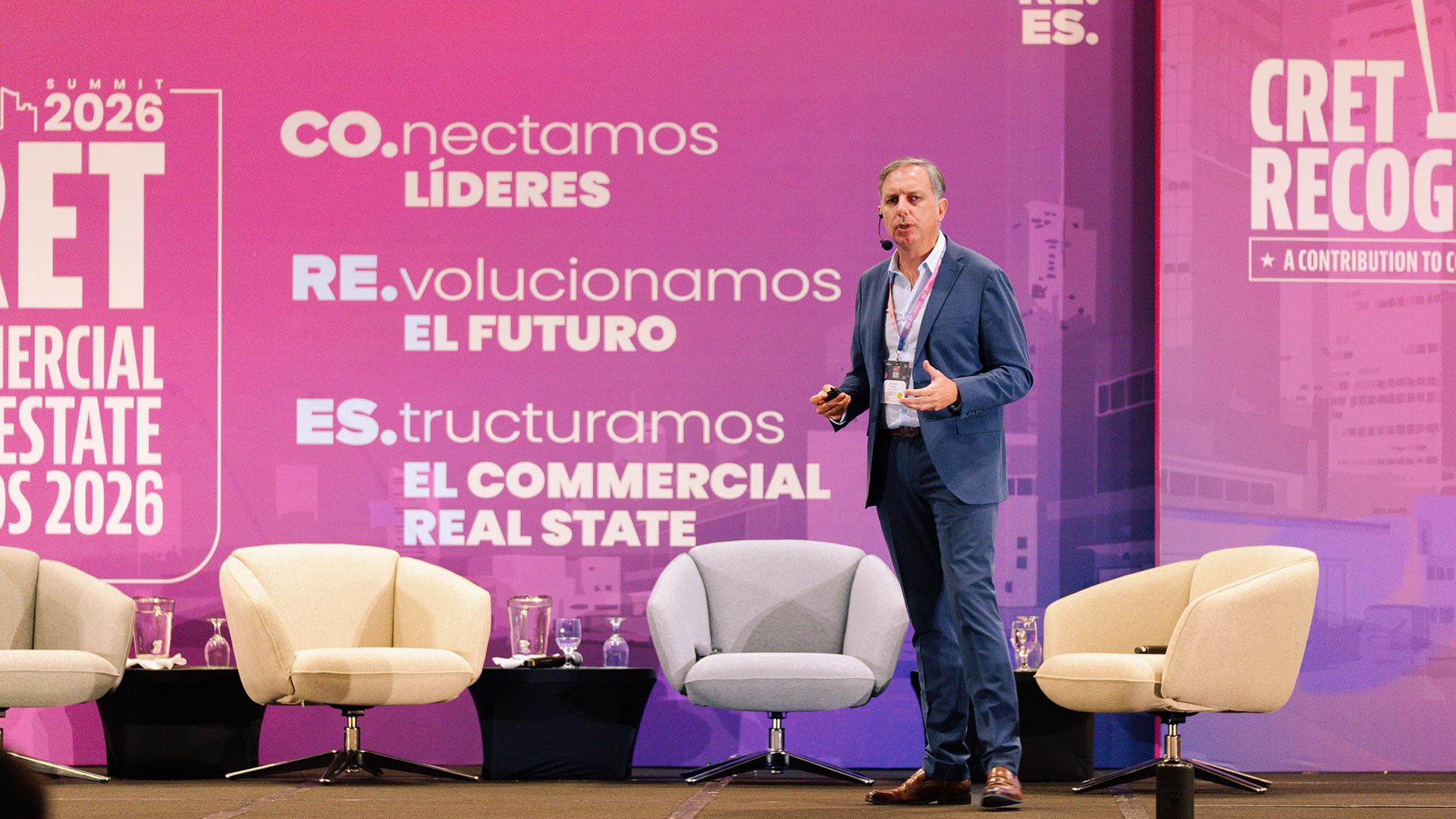
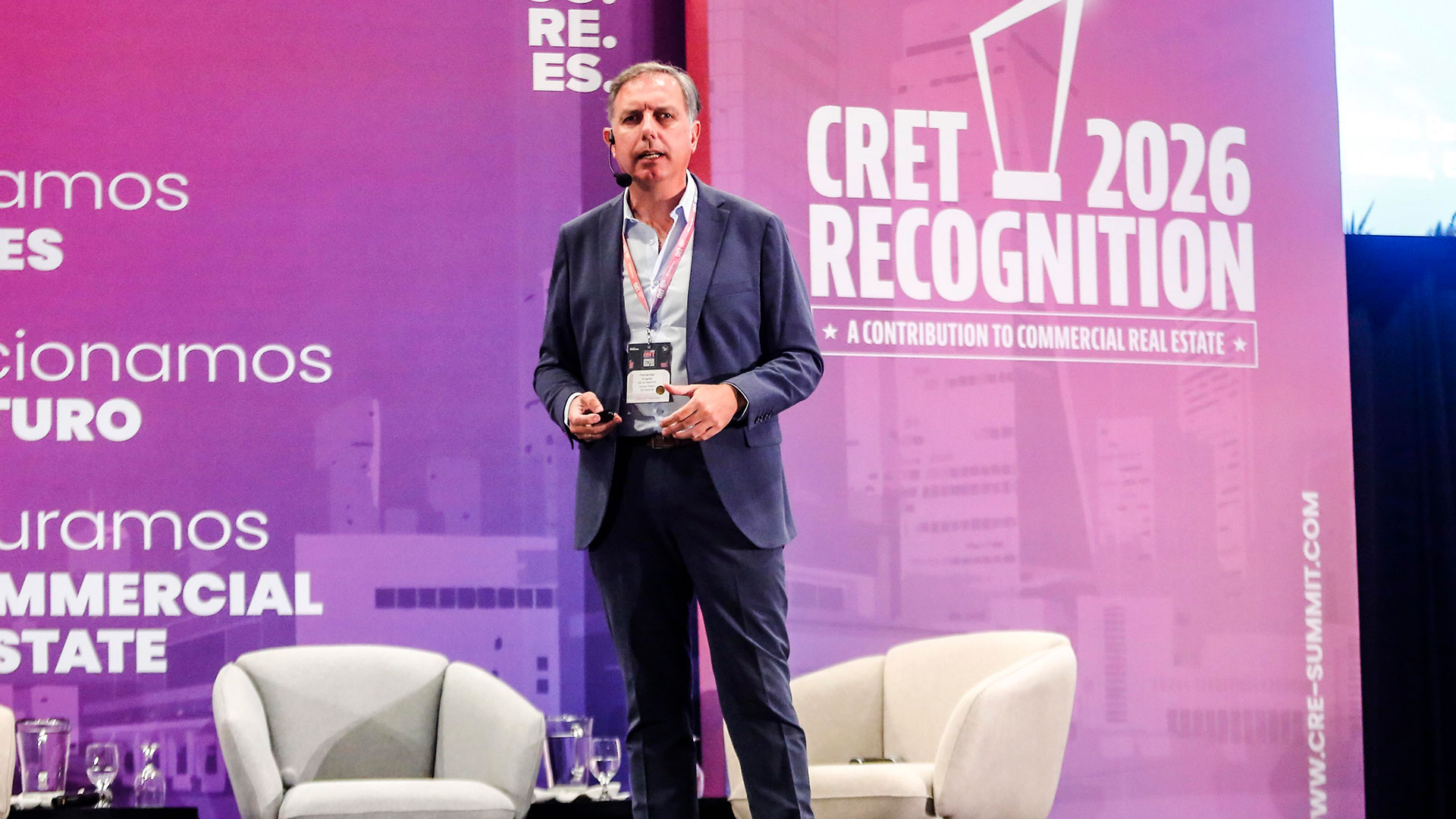
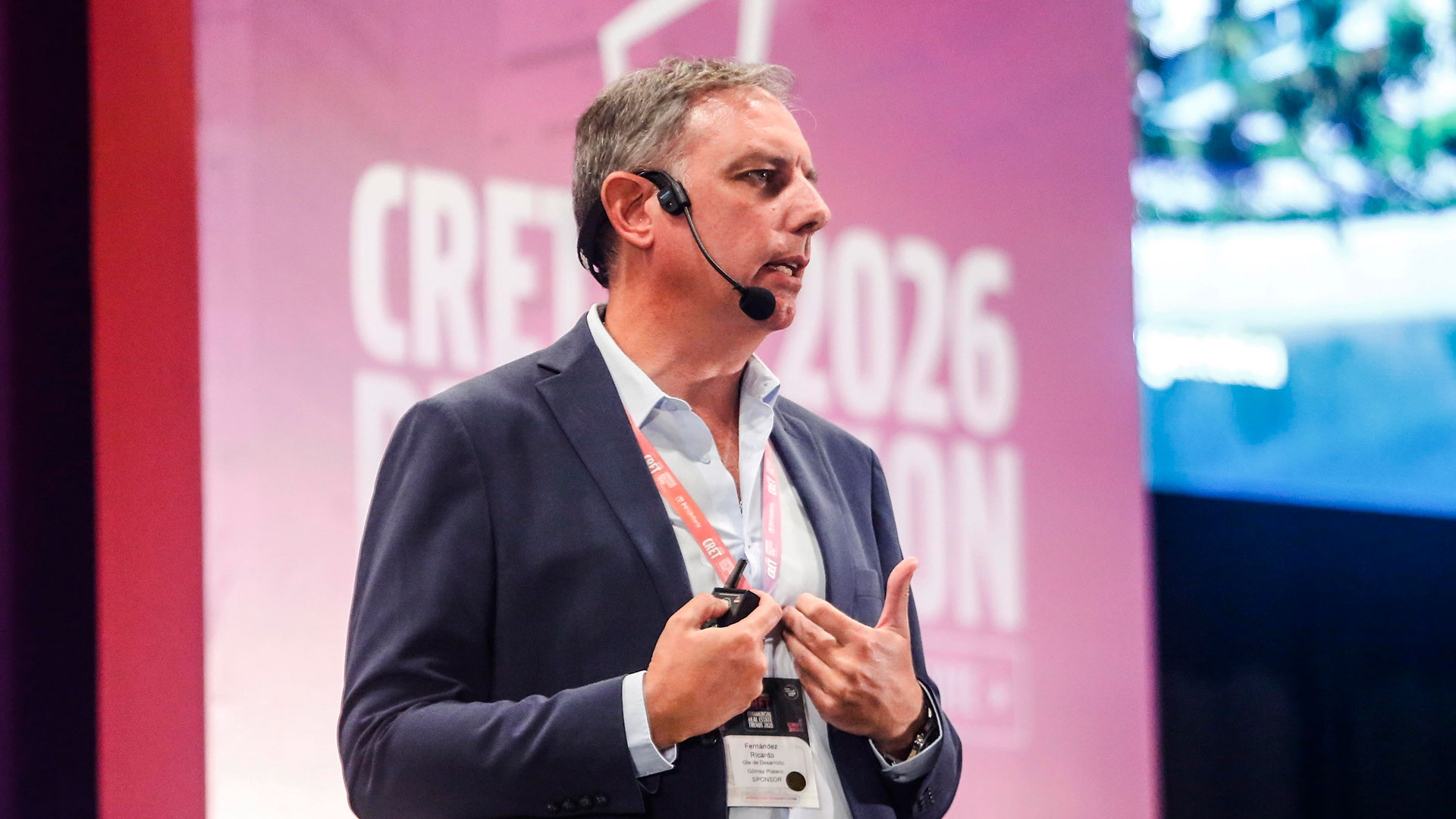
Within that context, Gómez Platero Architecture & Urbanism took part with the talk “Architecture as a Value Generator in Real Estate Development: Design Strategies That Enhance Returns,” presented by Ricardo Fernández, the firm’s Business Development Manager for the Americas. Delivered on Thursday, March 26, at 5:25 PM (local time), the presentation centered on a clear premise: in an increasingly selective real estate cycle, decisions made at the earliest stages of design have a direct impact on measurable outcomes — from commercial absorption and asset appreciation to operational efficiency and market positioning. In that equation, architecture emerges not simply as form, but as a strategic tool for value creation and stronger returns.
The Summit agenda combined keynotes, panels, and conversations grounded in real decision-making. Among the main themes were capital and investment, corporate office strategy, the evolution of the industrial and logistics segment, hospitality and retail, the role of data in market interpretation, the acceleration of digital infrastructure, and the growing weight of ESG in access, competitiveness, and long-term relevance.
Featured international and corporate speakers included:
• Luis Morejón, Head of Global Workplace Operations at Uber, on how multinational companies are redefining their corporate footprint and real estate decisions.
• Malisa Maynard, Chief Sustainability Officer at Mohawk Industries, on the ways ESG, carbon reduction, and circular economy principles are directly affecting industrial and corporate Real Estate.
• Alex Foshay, Executive Vice Chairman at Newmark Capital Markets, with a perspective on global capital and investment flows into Latin America.
• Steve Sasse, VP of Business Development & Latin America at datacenterHawk, on how technological expansion and artificial intelligence are reshaping corporate and industrial Real Estate.
• Rodrigo Bondesio, Director of Real Estate Development at Walmart Mexico and Central America, offering the corporate occupier’s perspective on growth, efficiency, and strategic development.
• Ibrahim Khadra, Senior Director, Project Delivery – MedTech Program Lead at Johnson & Johnson, on project delivery, operational expansion, and real estate decision-making in highly regulated environments.
CRET Recognition 2026
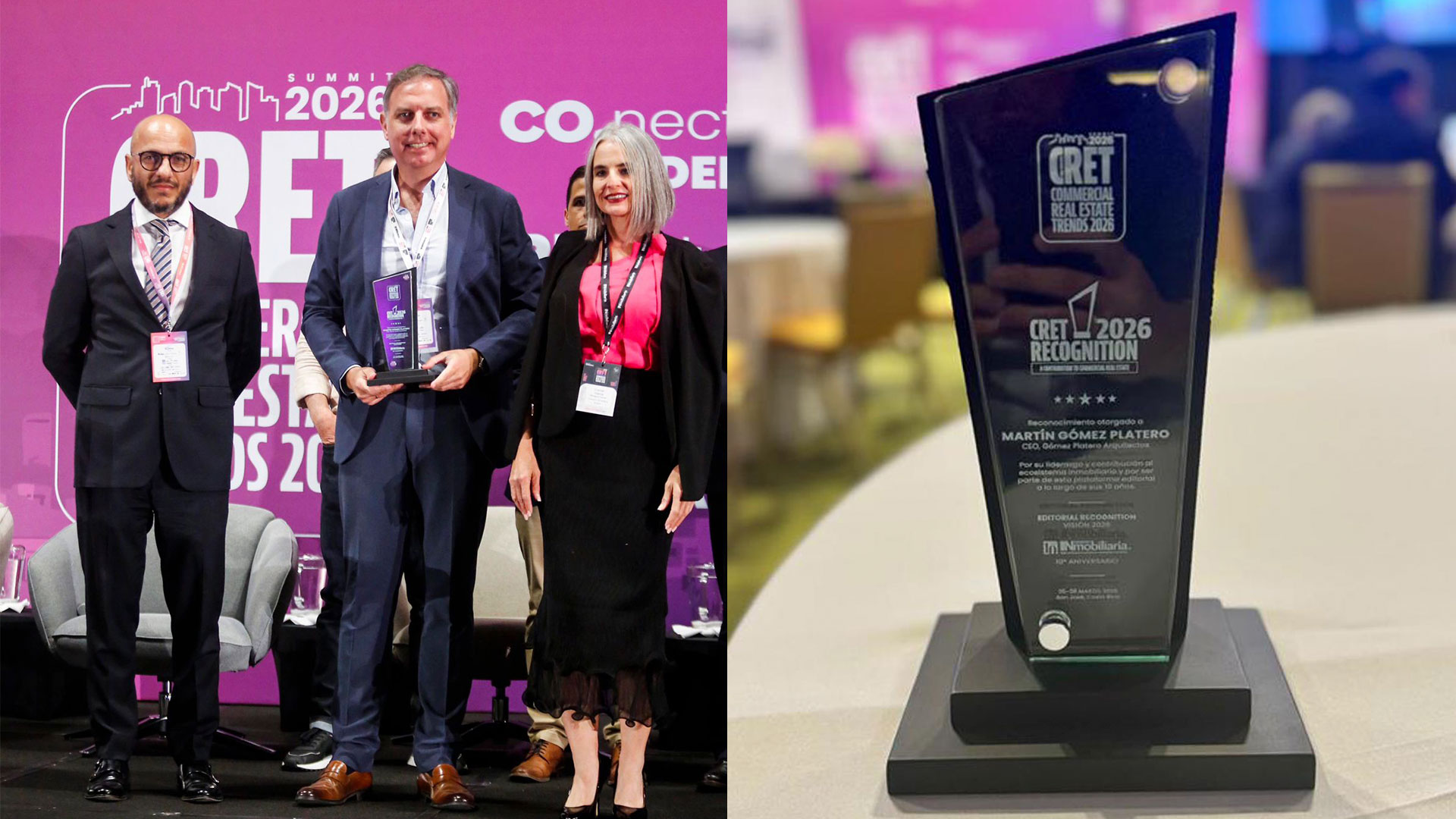
As part of CRET Summit 2026, Martín Gómez Platero, Founder and C.E.O of Gómez Platero Architecture & Urbanism, received a CRET Recognition 2026. Under the motto “Real Estate is changing, and leadership is too,” the distinction — awarded among more than 500 industry leaders — honors those shaping the future of the sector across the region. Candidates are evaluated across a broad spectrum of fields, including development, investment, corporate Real Estate, industrial and logistics parks, hospitality, operations, consulting, architecture, and strategic leadership. In that context, this recognition speaks to a form of leadership that continues to influence how architecture, development, and the city are understood in relation to one another.
A new map for Commercial Real Estate
What sets competitive projects apart today is no longer location alone. Product, performance, and execution capacity have become just as decisive. At CRET, the conversation is increasingly shaped by three core questions: where to expand, what kind of asset to develop or occupy, and how to ensure feasibility and delivery on schedule. What emerged from the Summit was a clearer picture of the market now taking shape: projects gain an edge when they integrate business strategy, urban context, and execution from the outset — turning early decisions around program, site planning, materiality, energy, and mobility into lasting competitive advantages.
Costa Rica: Real Estate trends for 2026
• Industrial & Logistics at record levels: In 2025, close to 290,000 m² of industrial and logistics space was absorbed, while nearly 280,000 m² of new supply entered the market.
• A growing 2026 pipeline: Market projections point to more than 300,000 m² expected to come online in 2026 for the industrial and logistics segment.
• Offices: gradual recovery, increasingly split by quality: Vacancy fell from 17.9% in 2024 to 17.3% by the end of 2025, with markedly different performance between prime and secondary assets.
• Corporate activity and SSC expansion remain key drivers: In 2025, 19 new FDI projects and 48 reinvestments were recorded, while the multinational sector now employs more than 195,000 people.
• Foreign trade continues to support logistics demand: According to Procomer, goods exports reached US$22.855 billion by the end of 2025 — a historic high and a 14% year-on-year increase.
• Free trade zones remain a structural platform: For every US$1 in tax exemptions granted to companies operating in free trade zones, an estimated US$2.9 is generated for the Costa Rican economy, based on 2024 data.
• Hospitality shows mixed signals: STR reports softer occupancy in 2025 and a decline in ADR in Costa Rica compared to 2023 peaks, with variations depending on destination and segment.