-
Program:
Hospital
-
Status:
Built
-
Area:
45 814 m²
- Location:
-
Located next to the San Patricio Metropolitan Hospital in Quito, the San Patricio Medical Office Building integrates a large-scale outpatient program within a broader complex dedicated to healthcare services. The project combines typological efficiency, connectivity with the hospital, and high-quality professional spaces, with a siting strategy that leverages the topography to bring in natural light, landscaped courtyards, and differentiated access points, strengthening the relationship between architecture, healthcare, and the environment.
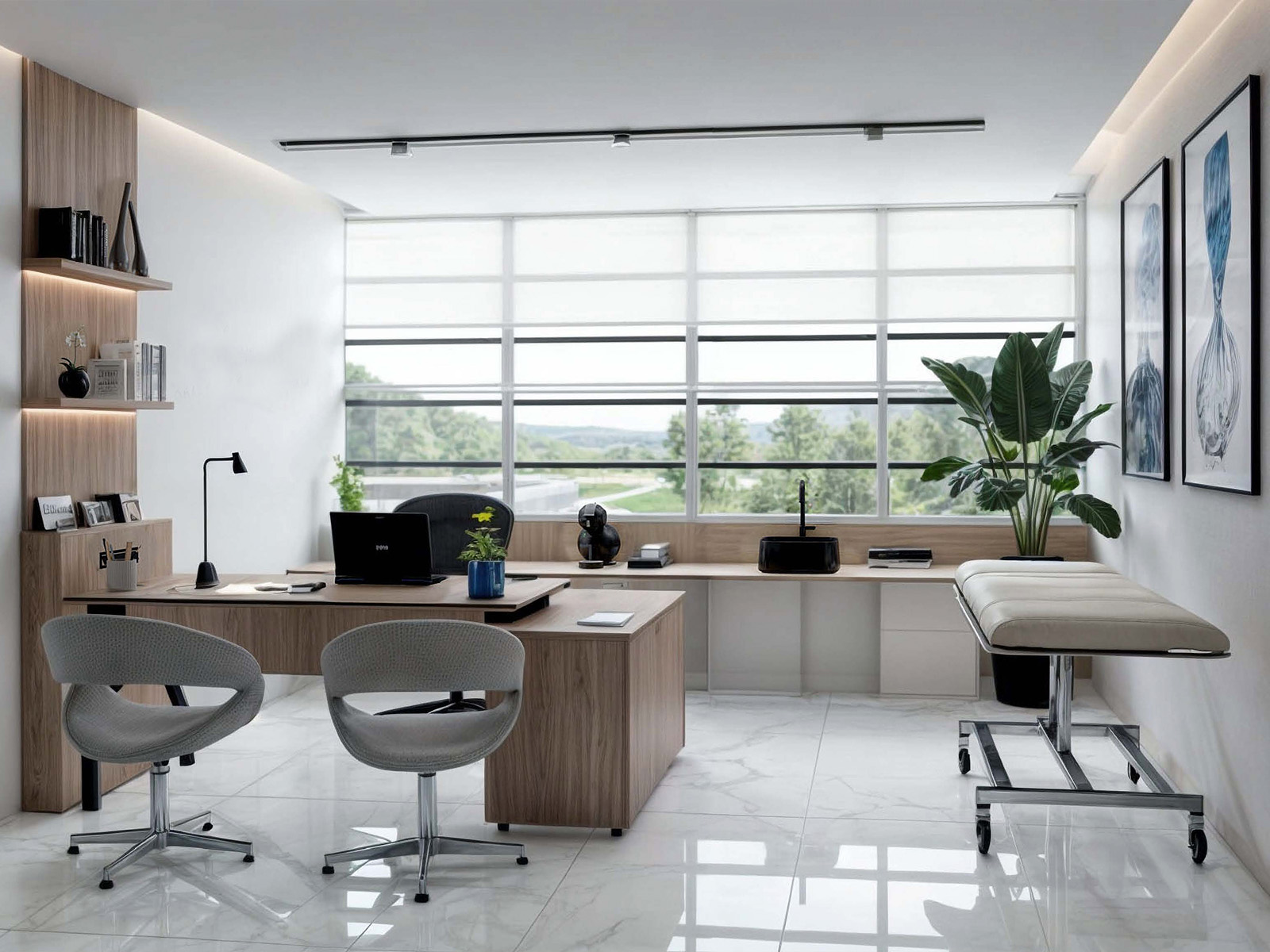
The San Patricio Medical Office Building is part of the San Patricio Metropolitan hospital complex, a group of buildings dedicated to providing high-complexity healthcare services, set within an area of urban expansion in Cumbayá, on the outskirts of Quito. Located next to the main hospital and internally connected through shared basements and a publicly accessible elevated bridge, the building expands the complex’s outpatient capacity and reinforces its integrated operation.
With a total area of 45,814 m², the project houses 301 medical offices—39 of them double units—organized under a modular typological logic that prioritizes repetition and resource optimization. The floor plan is structured around central cores that free up the perimeter for locating offices, ensuring a clear, controllable, and efficient circulation. Retail spaces associated with medical services are included at ground level, contributing urban activity and convenience for both practitioners and patients.
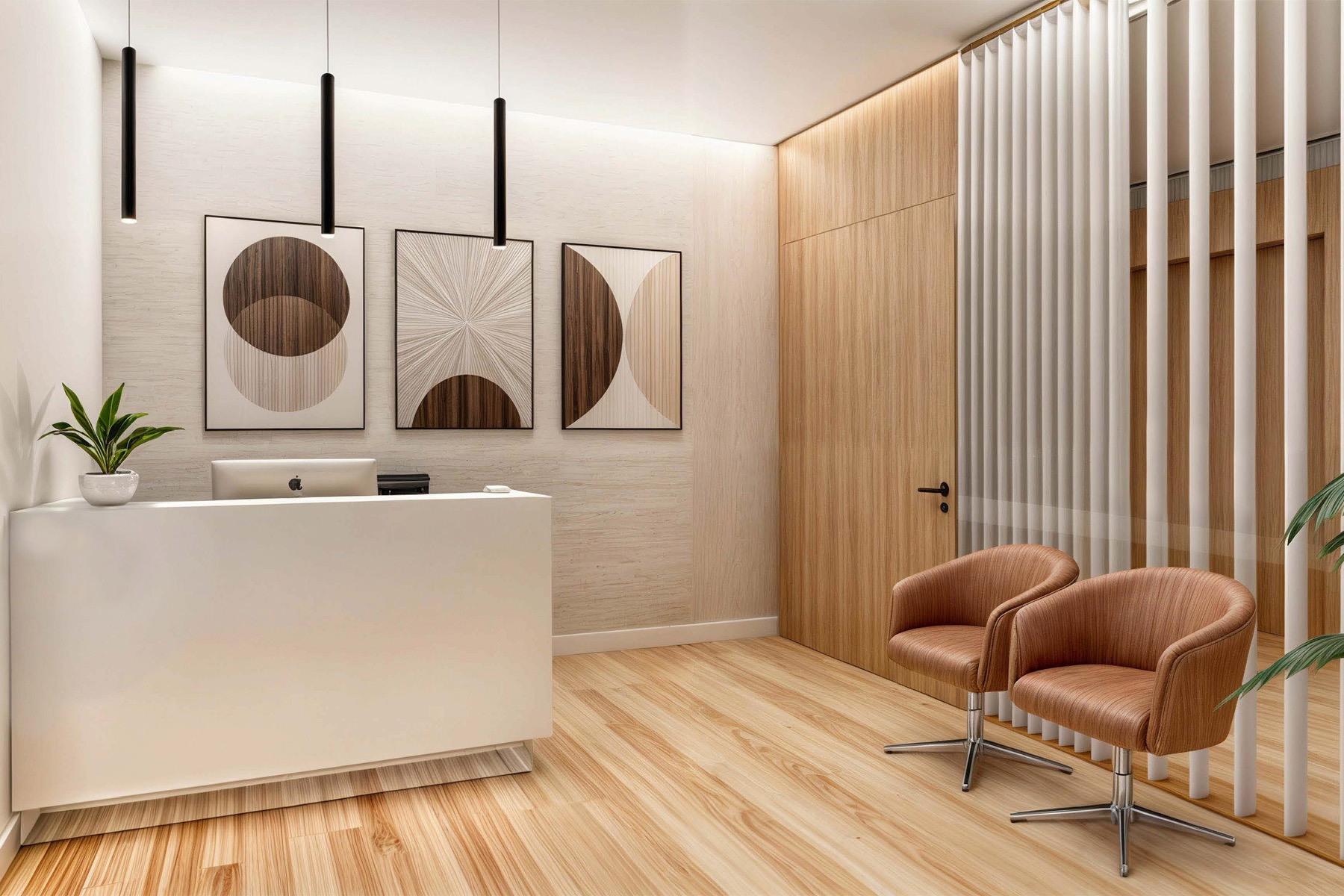
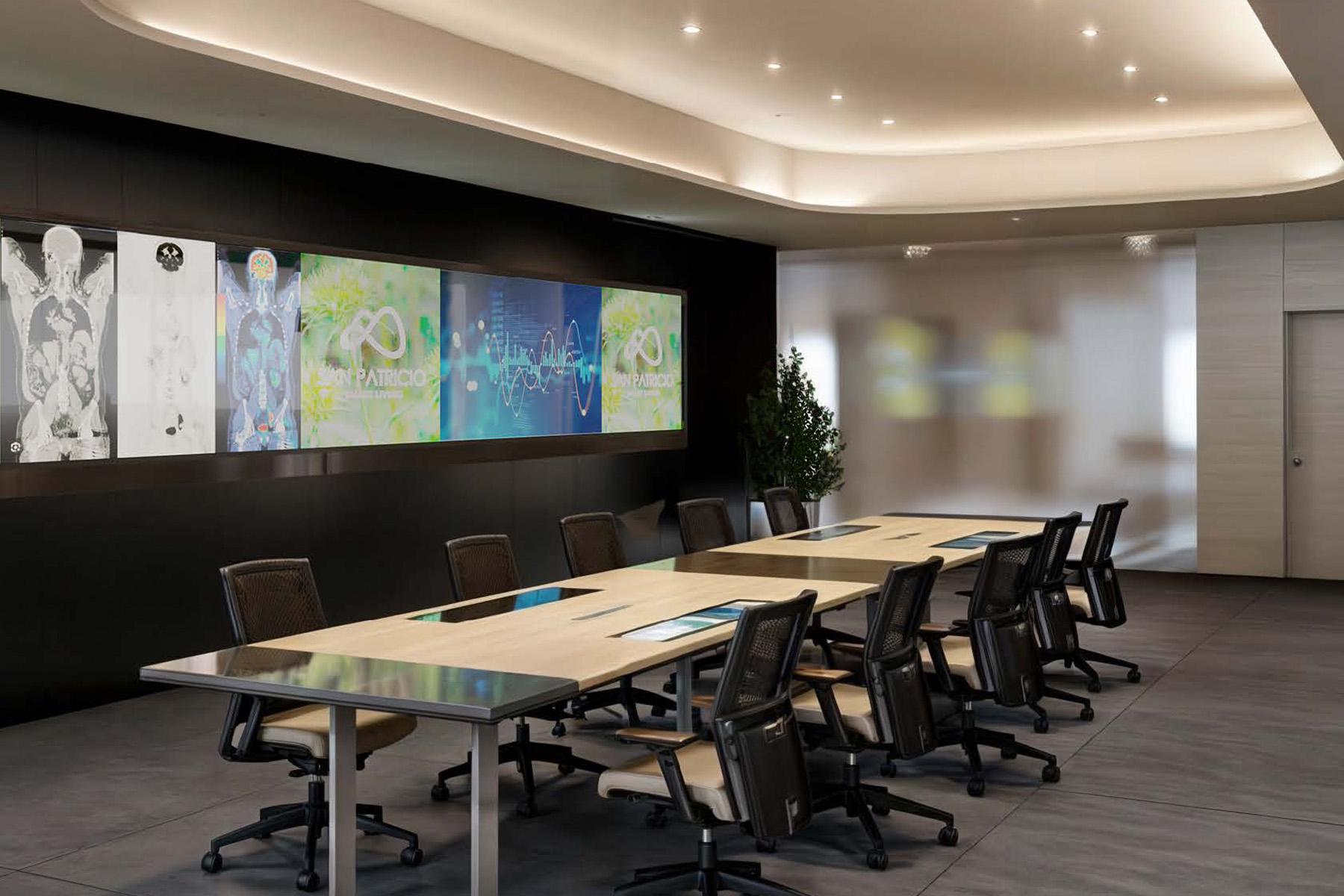
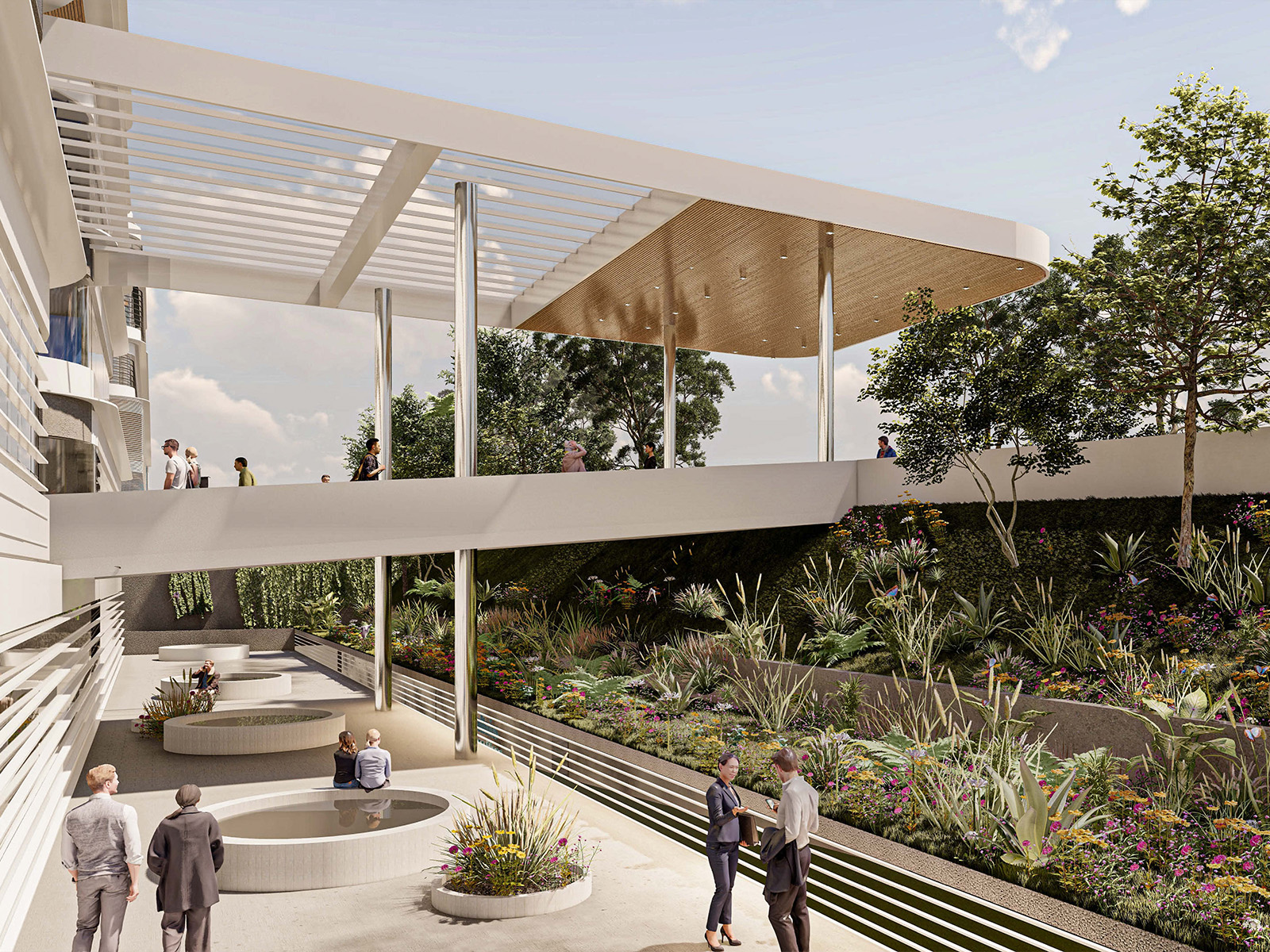
The site strategy responds to a topography with significant slopes, which is leveraged to create differentiated access points and semi-underground levels. Its location in a seismically active area requires specific considerations. Structurally, while the hospital building incorporates seismic isolators due to its programmatic complexity and the demands of hospital infrastructure, the medical office building is resolved through a highly regular reinforced concrete frame system. At the organizational level, the more rational, symmetrical floor layout allows for better management of potential movements and deformations.
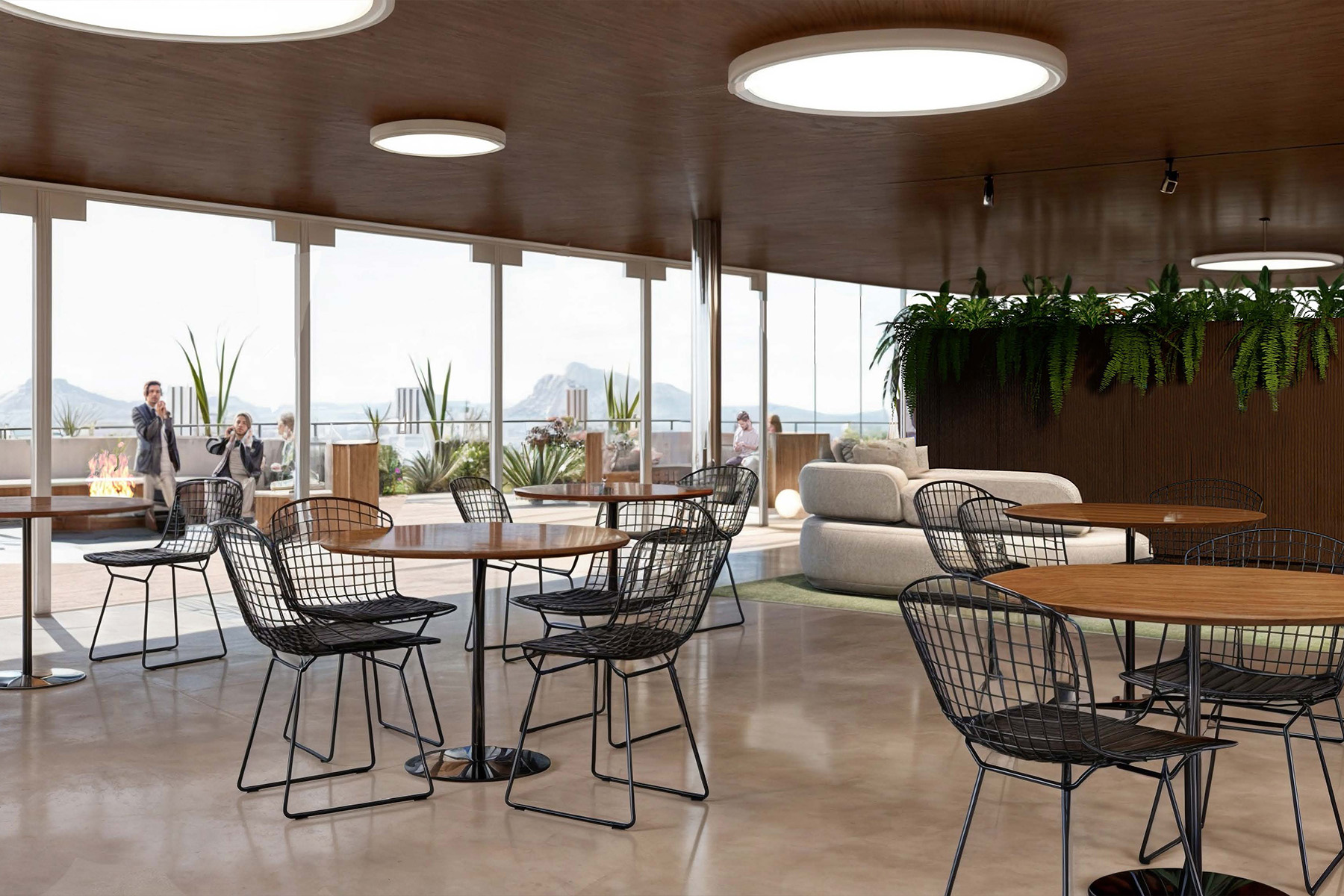
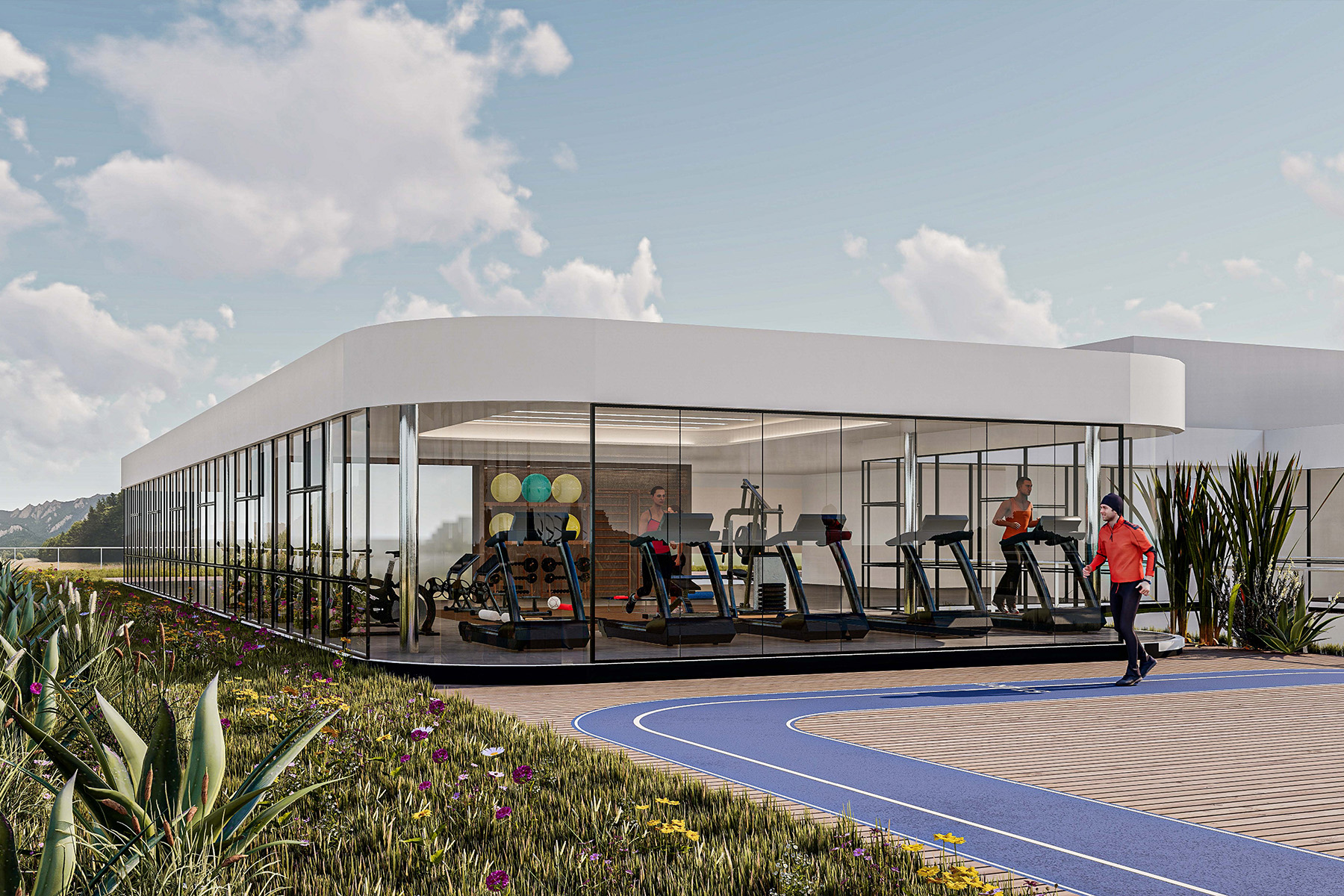
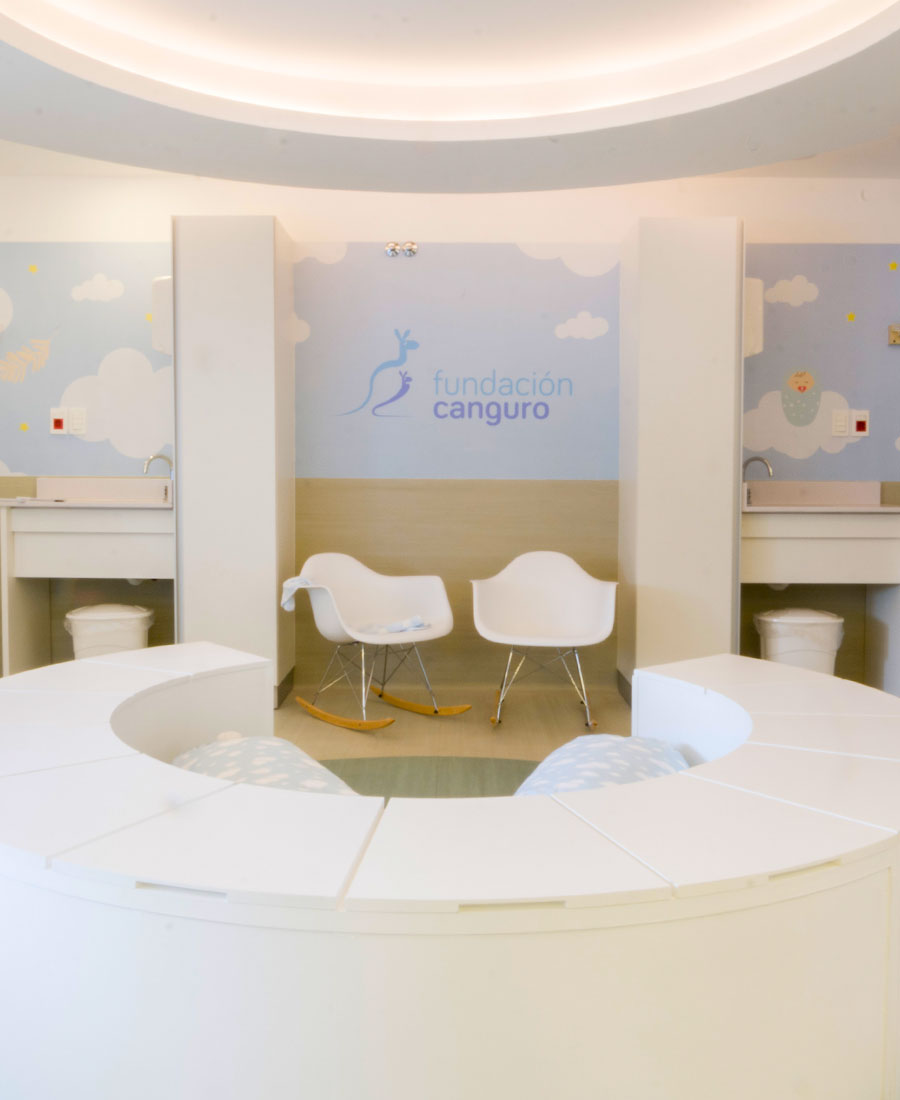
In addition to the medical office program, the building incorporates support spaces for the medical community, including meeting areas and a café connected to the hospital via a bridge. At roof level, an exclusive floor for the use of the medical professionals working in the building is provided for the building’s medical staff, featuring a gym, wellness areas, social spaces, and an outdoor track surrounded by greenery. This fosters opportunities for leisure, interaction, and the well-being of the healthcare team. The building also integrates landscaped light wells and skylights that bring natural light and ventilation to the underground areas, improving environmental comfort and enhancing the everyday experience of users and staff.
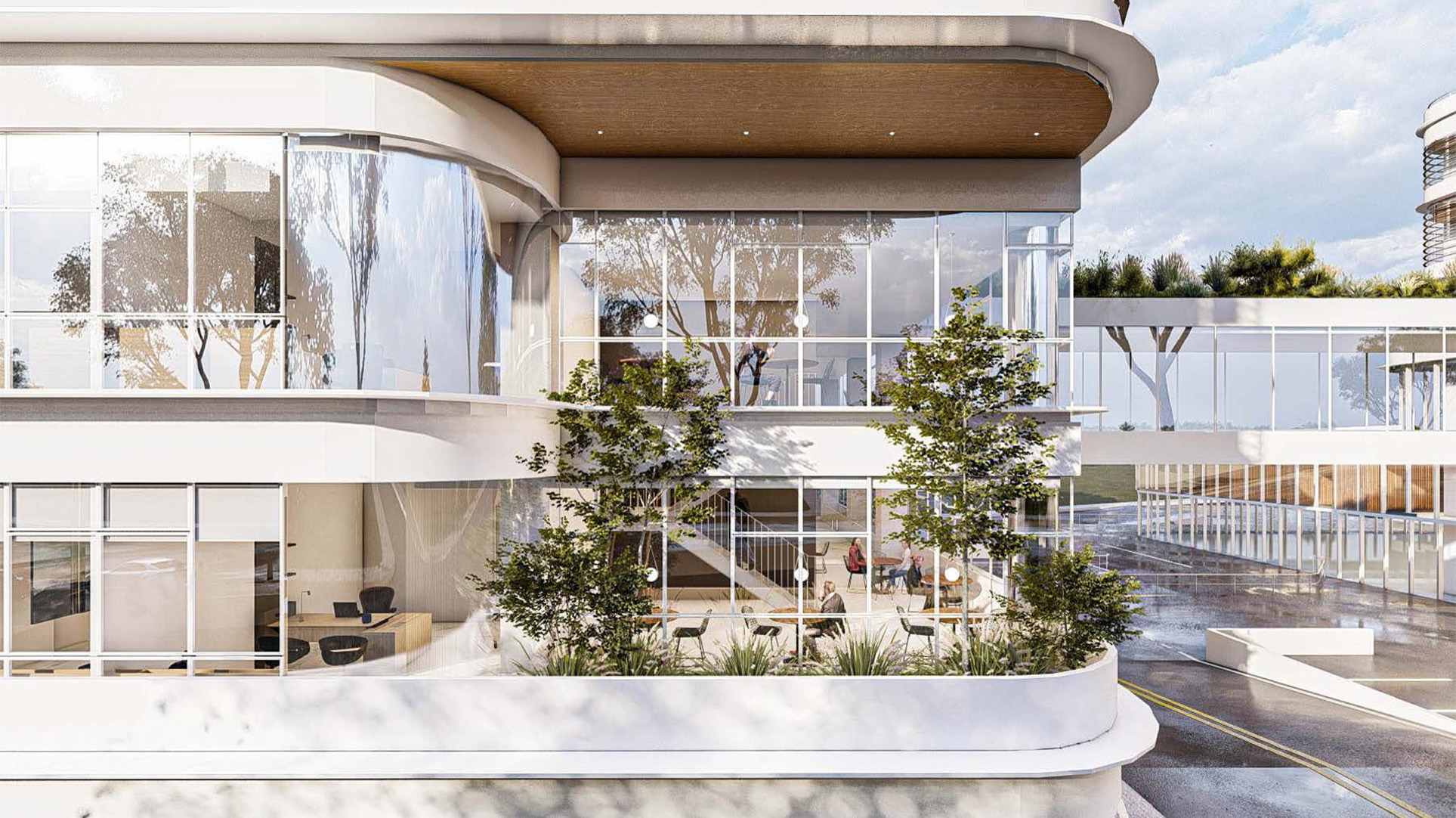
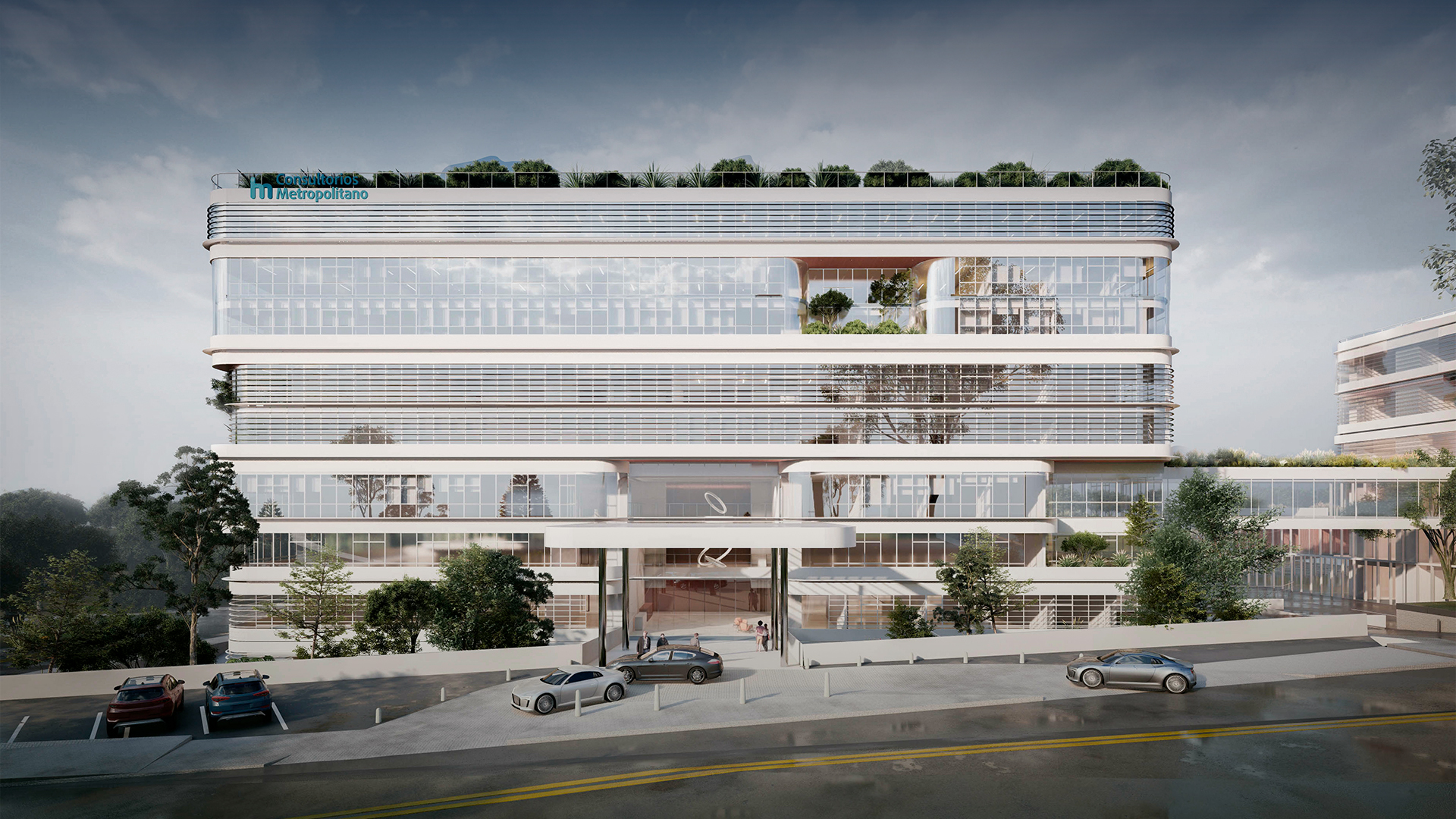
The building’s form is articulated into horizontal volumes to reduce the perceived scale, employing a language consistent with the overall Cumbayá complex: a predominance of white, curved corners, and an alternation of glazed surfaces and parapets. Inside, the use of warm materials and abundant natural light aligns with the growing trend toward the humanization of healthcare environments.