-
Program:
Education
-
Status:
Concept and Schematic Design
-
Area:
7.94 ha
- Location:
- Project website:
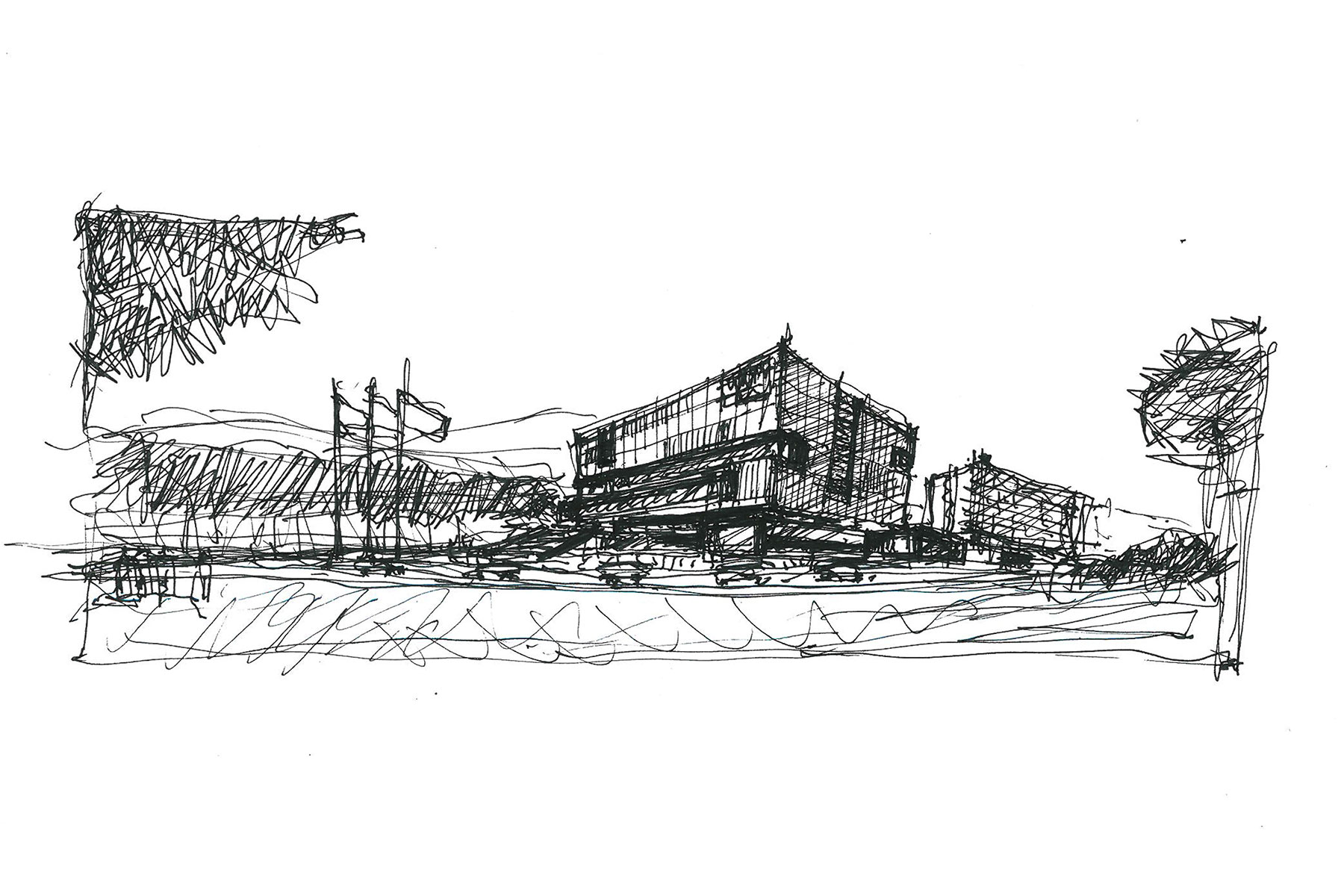
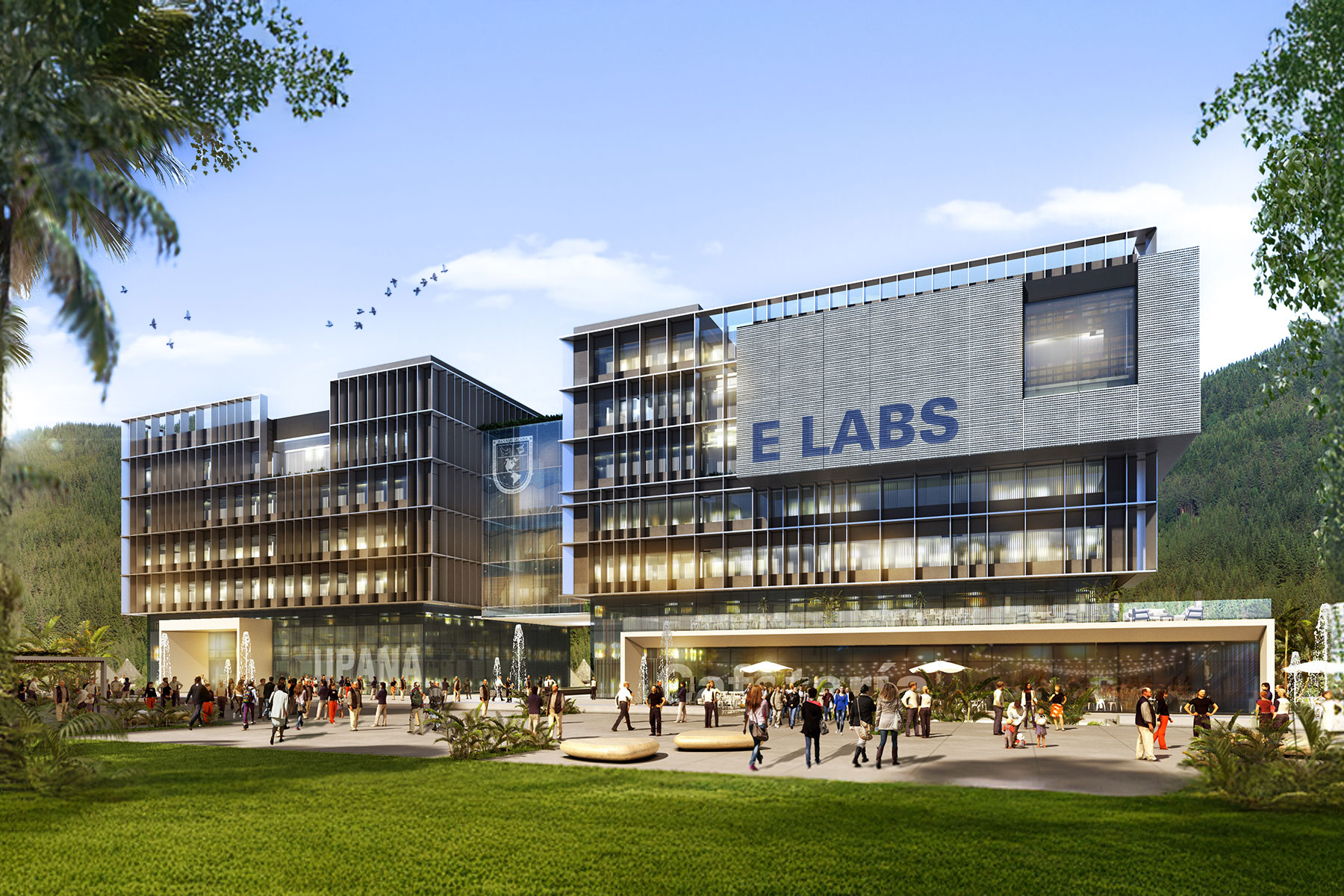
UPANA Technology Campus is envisioned as a large-scale urban intervention that brings together higher education, healthcare and housing within a single, integrated territorial system. The project organises the university’s institutional growth through a phased masterplan, designed to adapt to both evolving programme requirements and the wider urban development of the district.
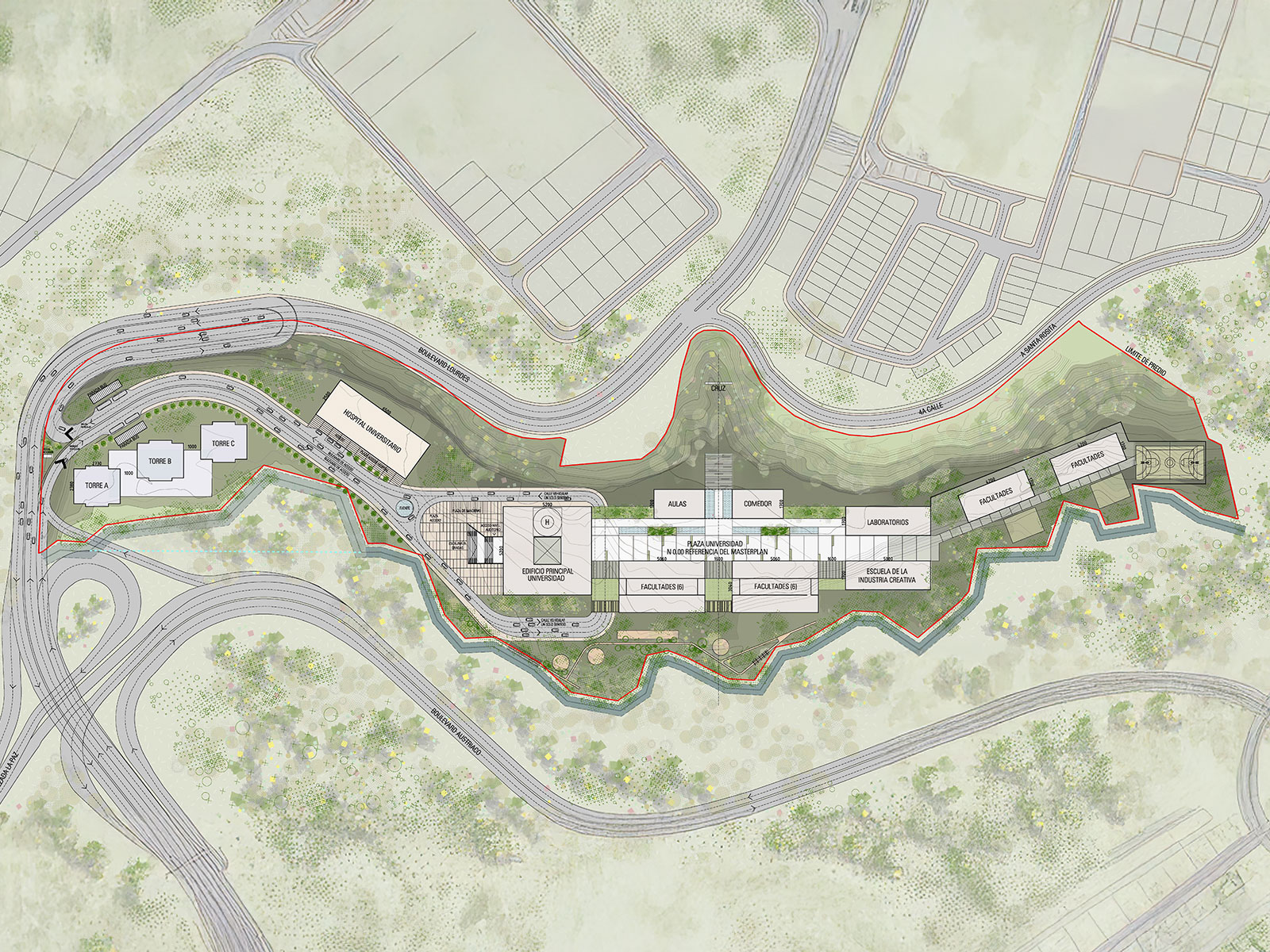
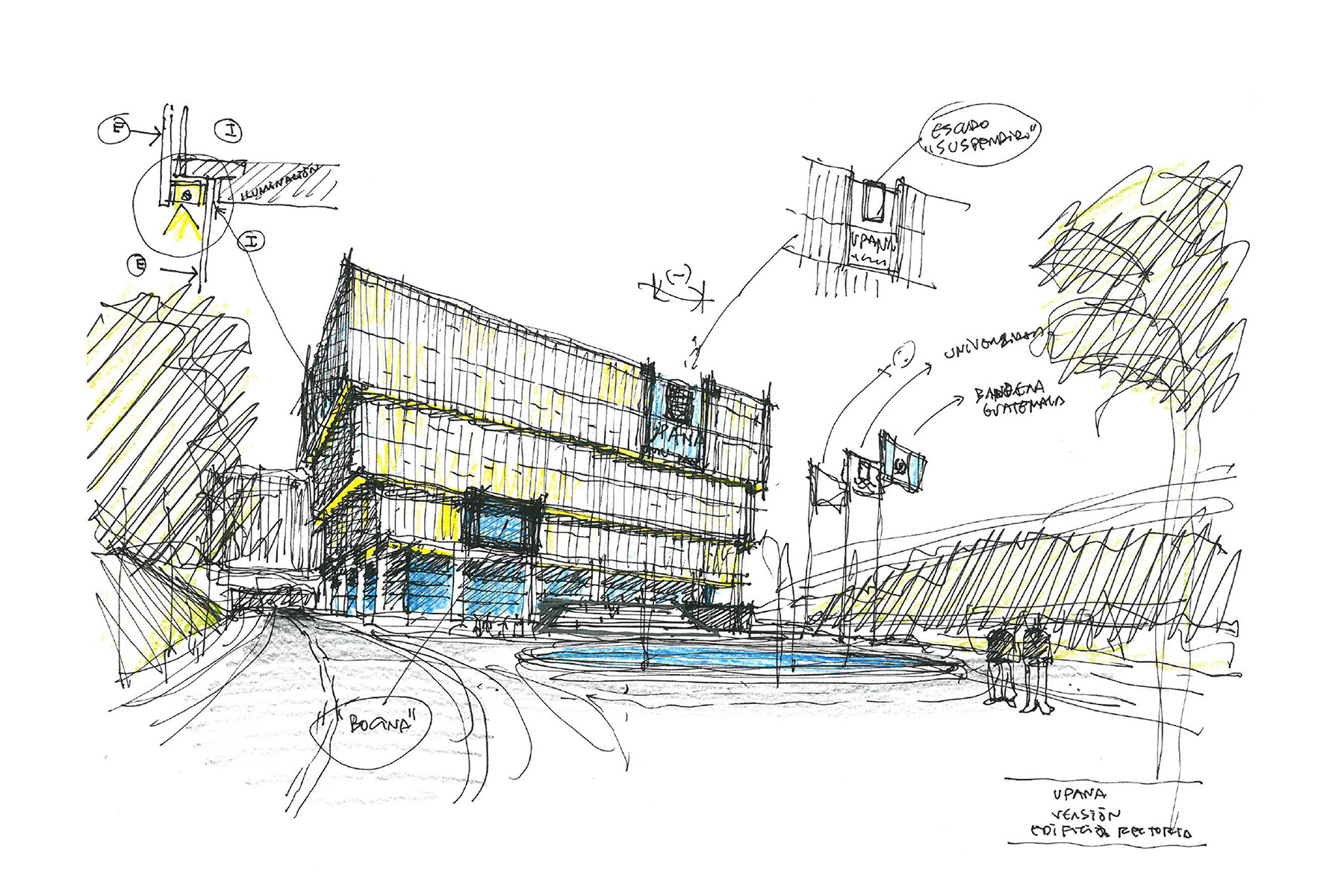
The architectural proposal for Universidad Panamericana establishes a direct relationship between architecture, landscape and city, consolidating an open, clearly structured campus. The site is located in the eastern sector of Guatemala City, within a strategic enclave of Zone 16, characterised by pronounced topography and the presence of metropolitan infrastructure. The design acknowledges the site’s natural catchment condition and the Santa Rosita stream, incorporating environmental setbacks and a linear park as structuring elements of the project. The masterplan is arranged around a north–south longitudinal spine that organises access points, internal roadways and the placement of built volumes, ensuring visual permeability and spatial continuity with the immediate urban context.
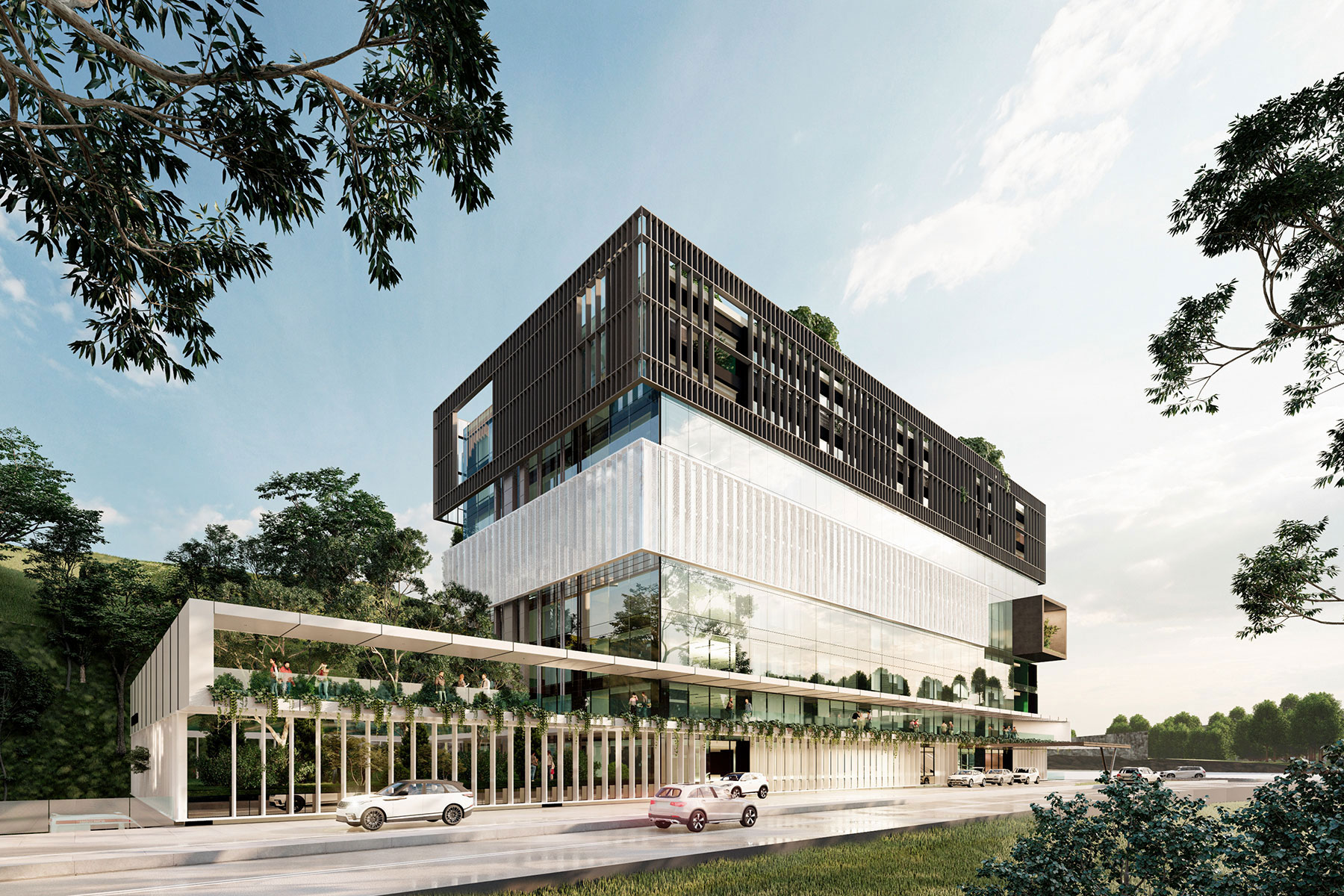
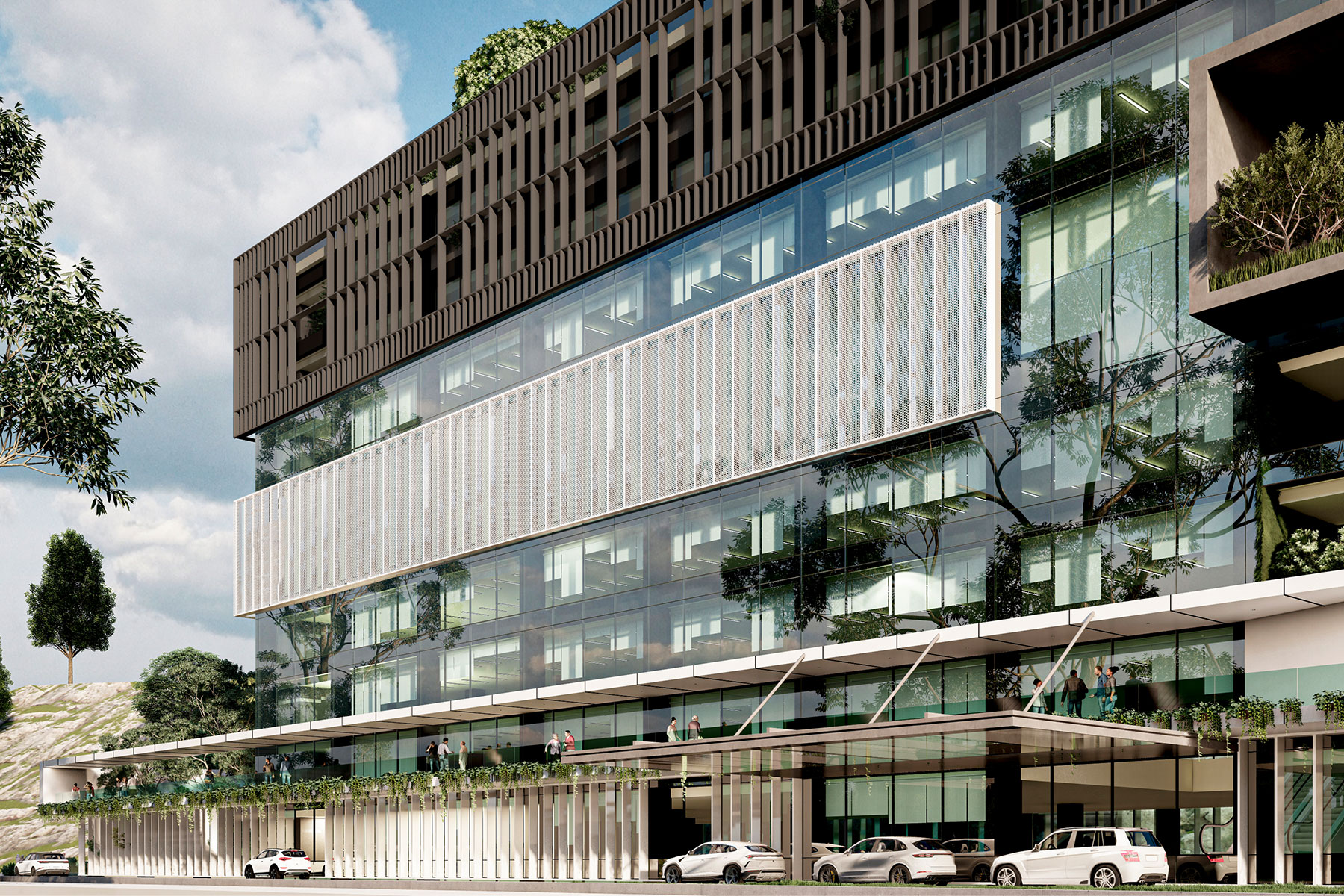
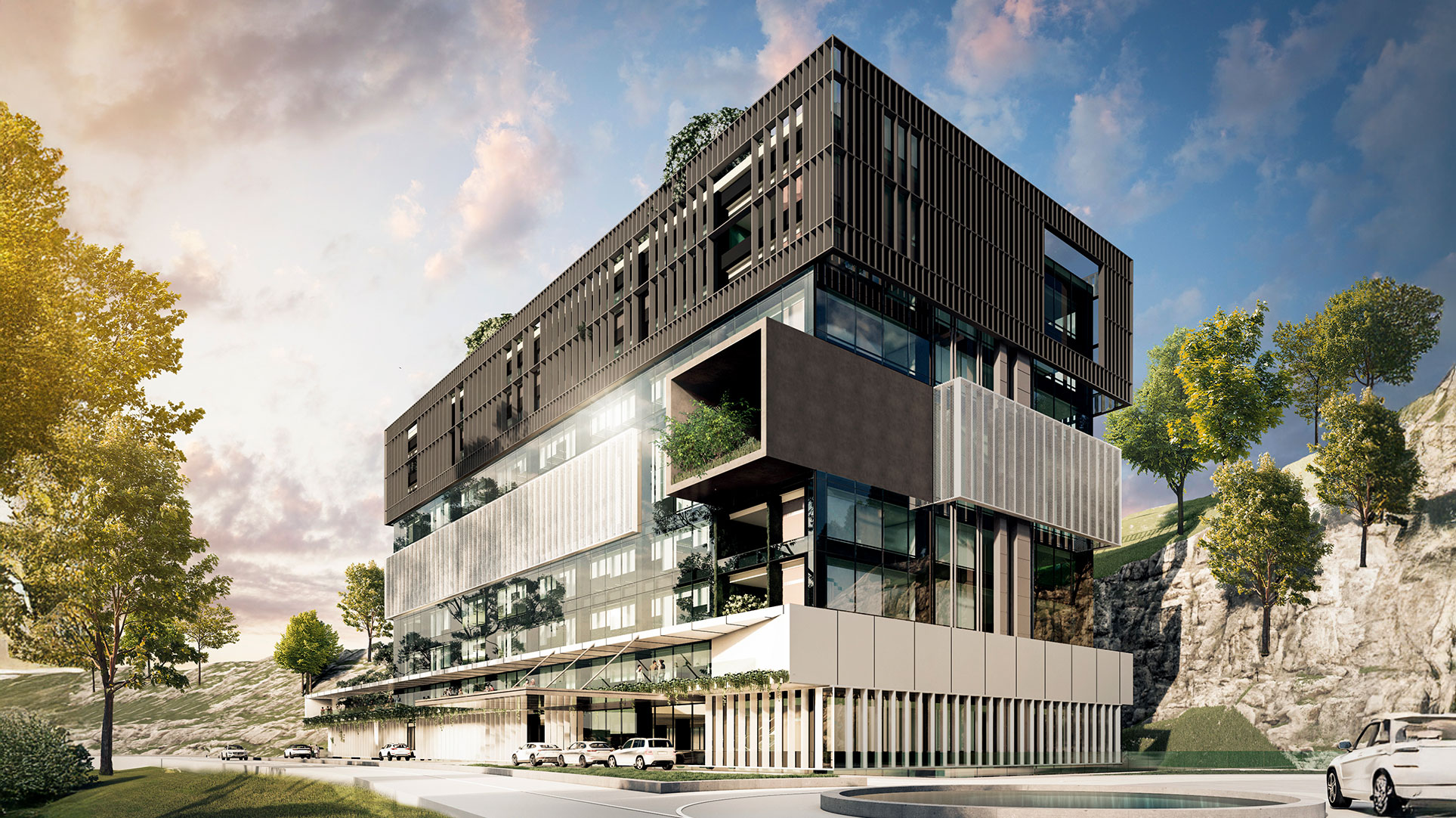
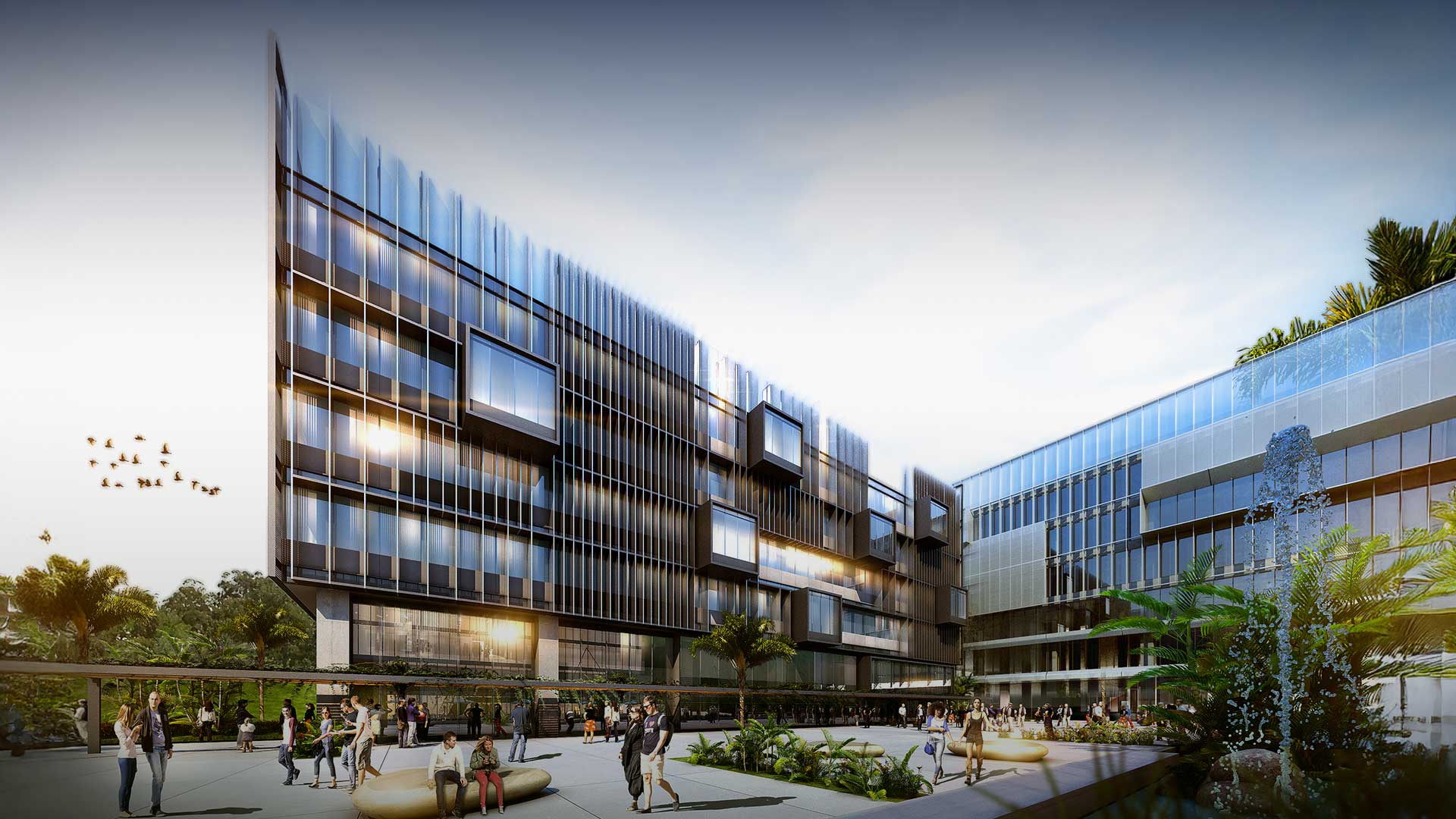
The programme is structured in three clearly defined phases. Phase one concentrates the University Campus and the sports and recreation areas, comprising academic buildings, the rectorate, library, auditorium and shared gathering spaces. Phase two incorporates an eight-storey University Hospital, dedicated to healthcare training and service provision. Phase three develops a residential precinct with three twenty-two-storey apartment towers, complemented by neighbourhood-scale retail. This phased organisation enables gradual and controlled implementation, while ensuring functional flexibility and operational efficiency.
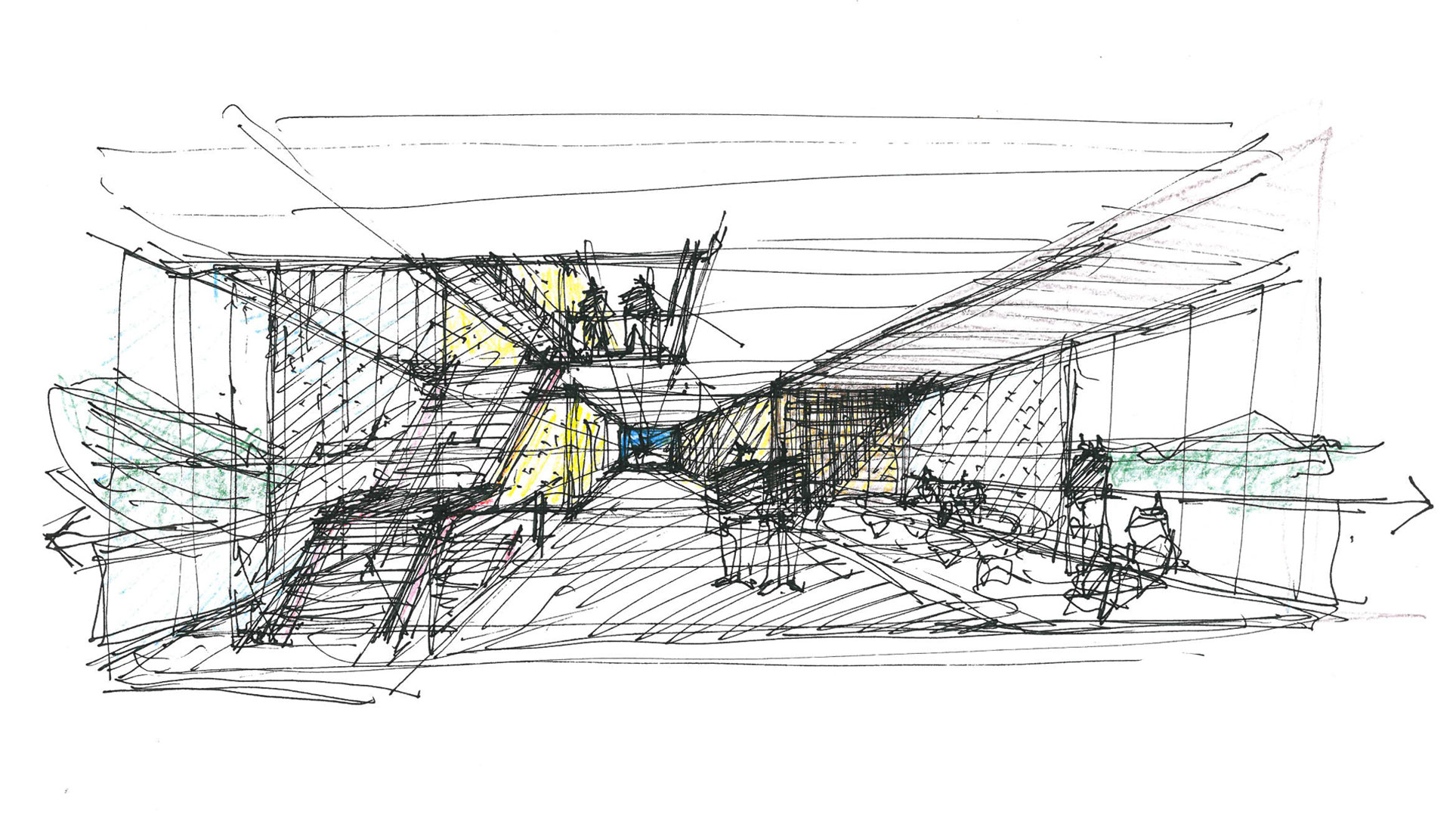
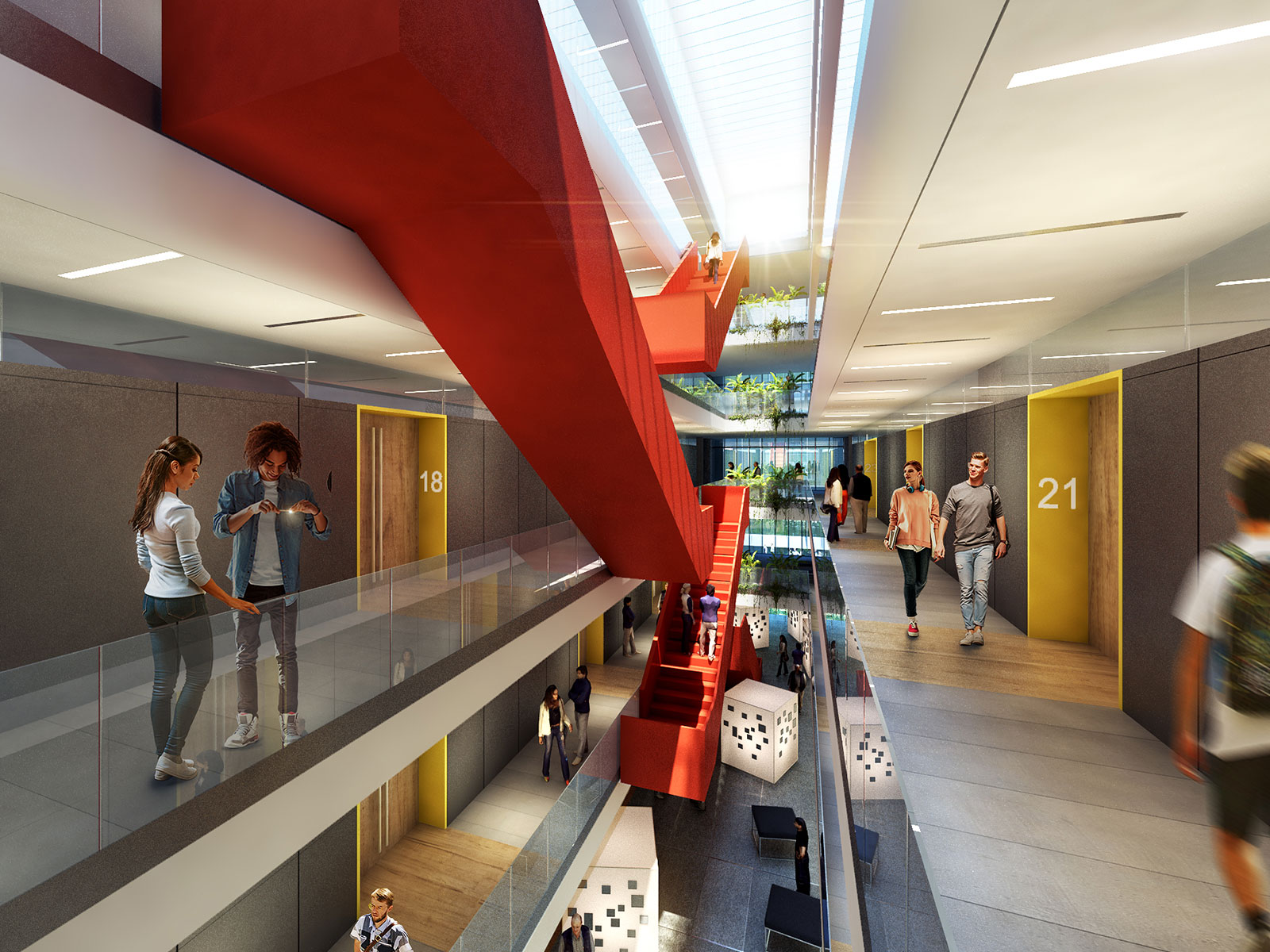
A transversal architectural principle underpins the masterplan: each building, regardless of programme, is organised around a structural grid that concentrates circulation, infrastructure and technical services. This strategy releases more open and reconfigurable floorplates, positioning flexibility as a central design driver—both a project response to uncertainty and a deliberate stance in relation to the evolution of pedagogical methods, teaching modalities, and the shifting demands of contemporary university environments.
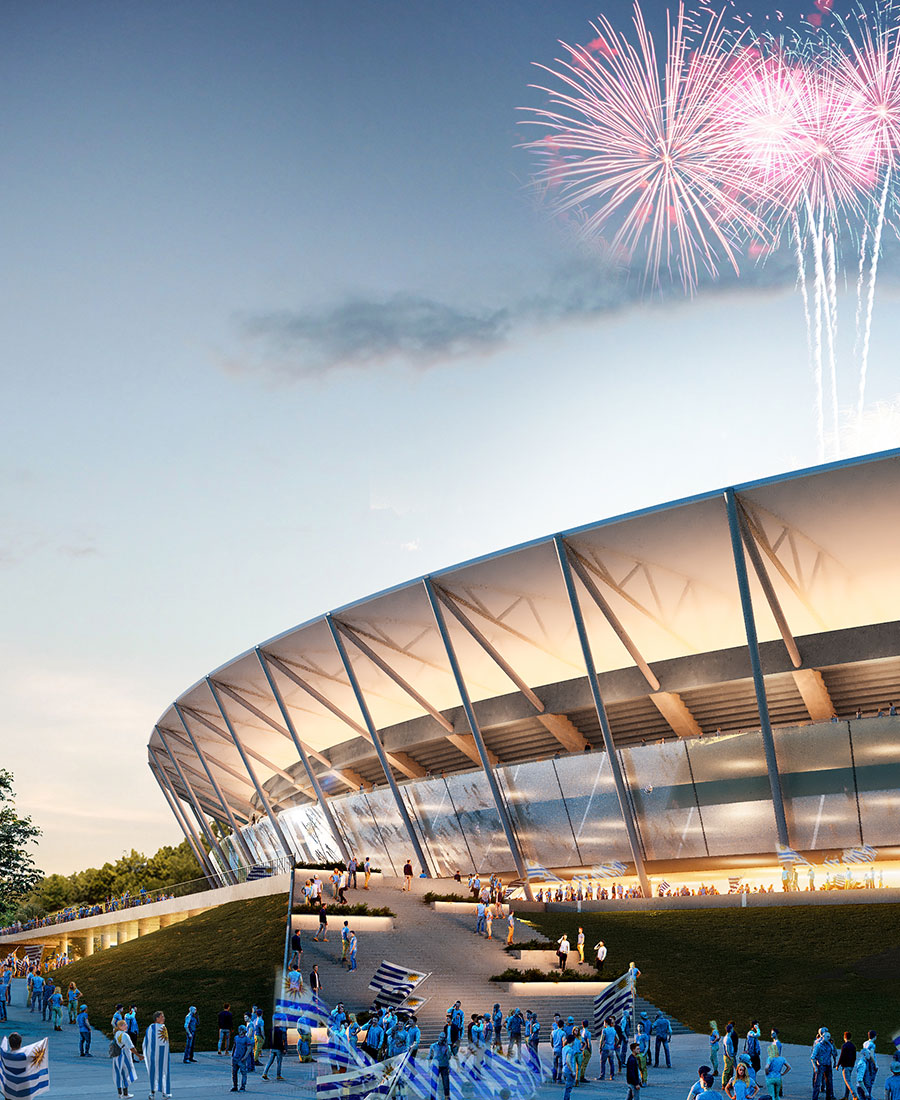
Formally, UPANA Technology Campus adopts simple, legible volumes whose arrangement defines plazas, routes and collective open spaces. The University Plaza is conceived as the civic nucleus of the campus, connecting the primary access points and encouraging interaction among users. Pedestrian and vehicular flows are separated through a topographic operation that integrates a high provision of parking—consistent with the campus scale and its accessibility model—within strategically placed terraces. This frees the ground plane for academic and recreational life, reinforcing the condition of an open campus.
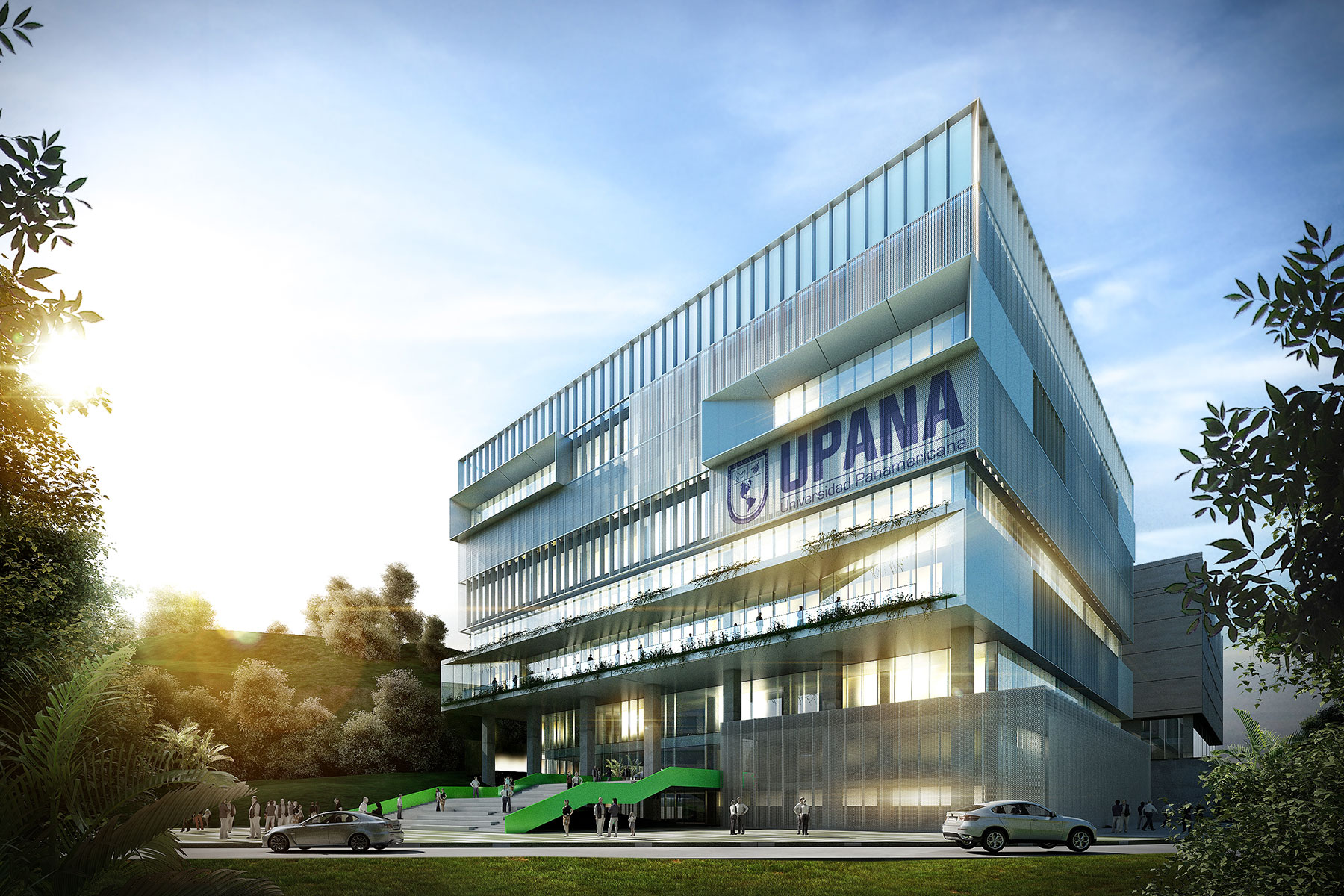
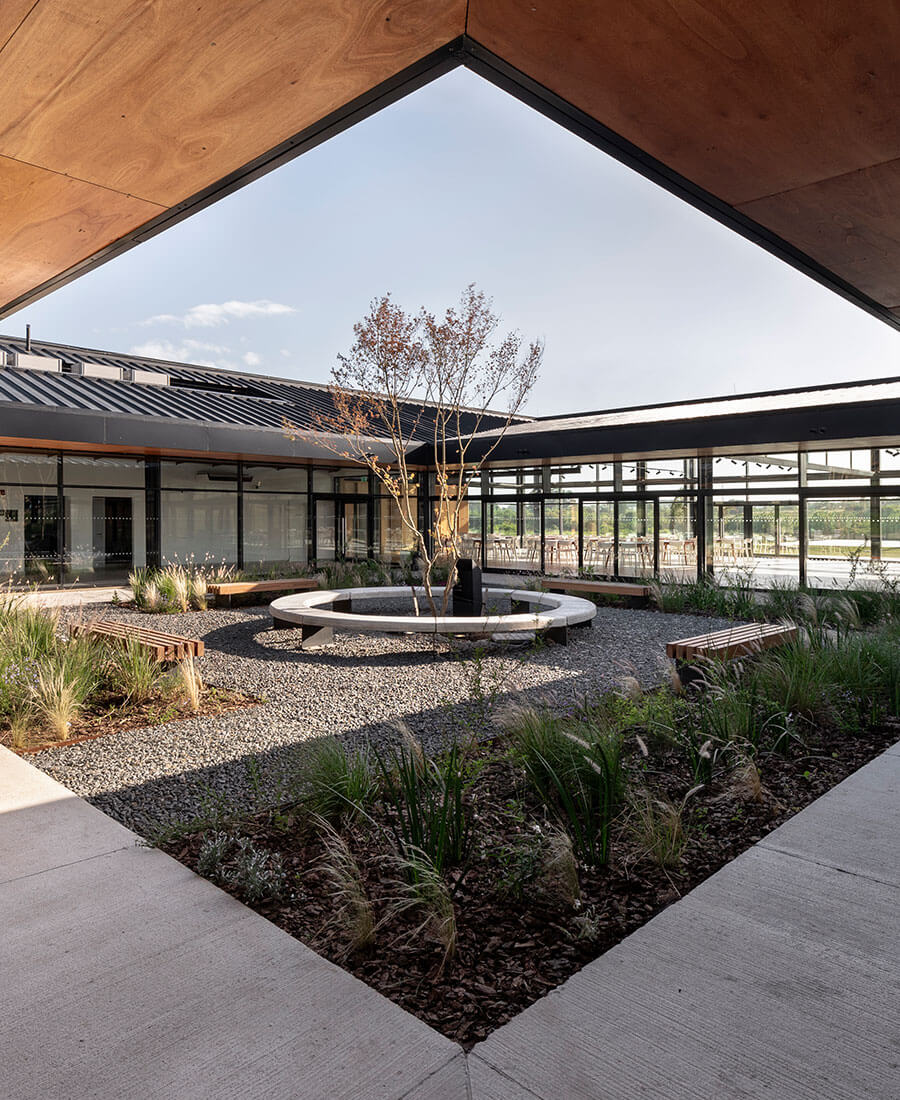
The project incorporates environmental sustainability criteria and technical efficiency measures, taking into account soil geotechnical conditions, limiting deep excavations, and optimising infrastructure. It promotes responsible resource use, integrates solar protection, and prioritises shaded outdoor areas. Overall, the UPANA schematic design establishes an institutional urban piece capable of operating as metropolitan-scale educational infrastructure. The combination of university, hospital and residential programmes extends activity beyond academic hours, generating continuity of use and urban vitality. This condition strengthens the campus’s role as an active node within Zone 16 and a catalyst for new dynamics in a sector undergoing transformation.
Phased planning and the clear definition of structuring axes ensure long-term growth without compromising the coherence of the whole. The longitudinal organisation, supported by a network of hierarchically arranged open spaces, enhances the masterplan’s legibility and enables adaptation to future programme demands. In parallel, the incorporation of regulatory, environmental and technical criteria from the schematic stage anticipates scenarios for controlled and sustainable development.
In this sense, UPANA Technology Campus is consolidated as a strategic urban operation, where architecture does not simply resolve isolated buildings but constructs a continuous spatial system. The project defines a physical framework capable of supporting long-term educational, healthcare and residential processes, integrating with the existing urban structure and adding value to its surroundings.