-
Program:
Residential
-
Status:
Concept and Schematic design
-
Area:
3 950 m²
- Location:
-
Collaborators:
Urban Climate Architects
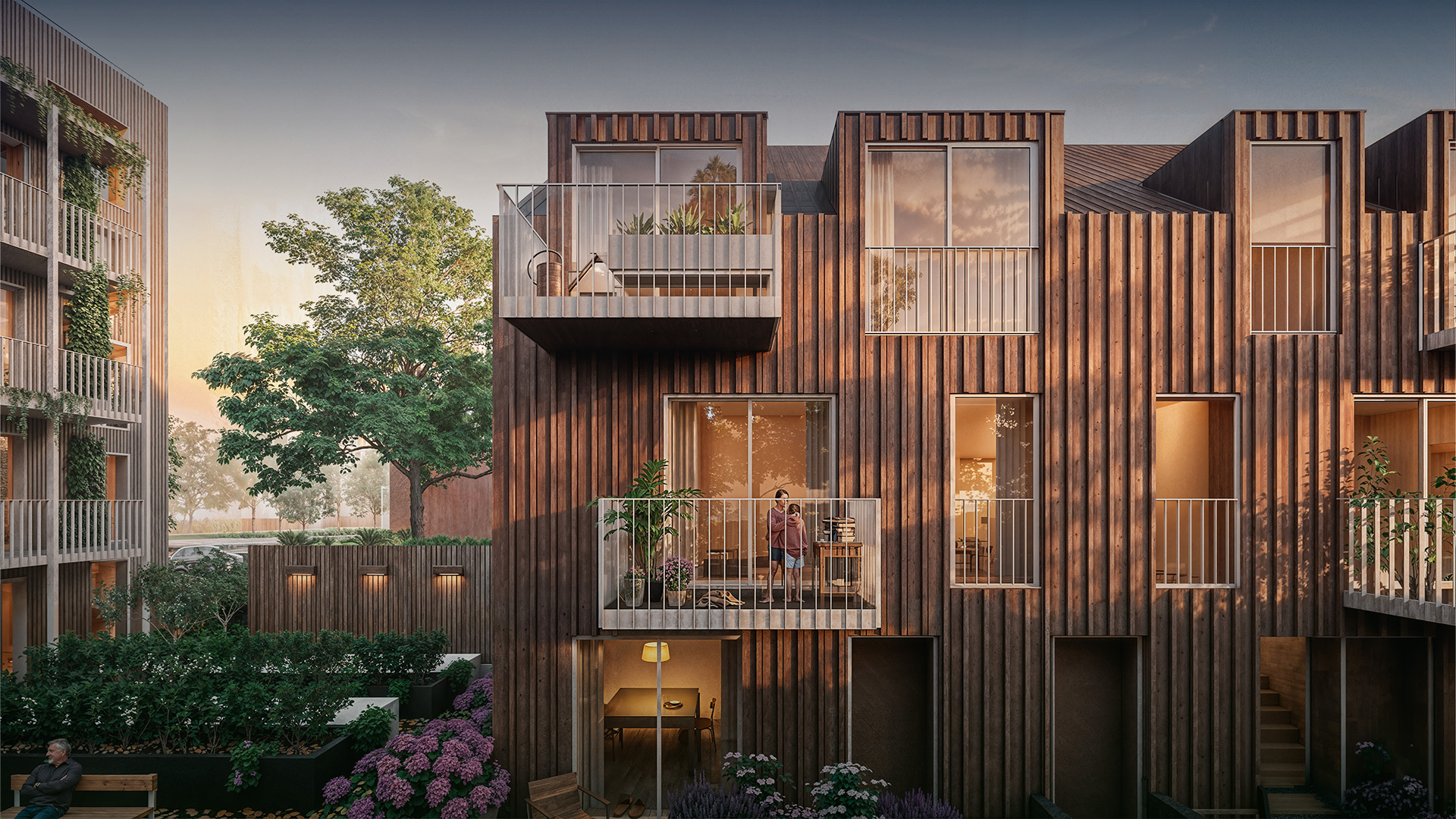
Hof van Renaud – Nieuwbouw is a collective housing proposal located within a historic inner block in central Delft, between Noordeinde and Wateringsevest. The project occupies a characteristic urban void: a semi-hidden interior space, accessed through narrow passages and steegs, embedded in the local tradition of courtyards, hofjes, and secondary circulation routes.
Previously occupied by small-scale structures, sheds, garages, and paved surfaces, the site existed as an open yet fragmented condition. The intervention replaces this residual fabric with a residential ensemble that stitches the block back together, introduces new pedestrian connections, and restores activity, social cohesion, and urban continuity.
The relevance of the project is deeply tied to the history of the neighborhood. The site lies within Delft’s protected urban landscape, characterized by a strong historical layering. Its structure is linked to the medieval canal network, former defensive systems, and the Kampveld—an open field historically used for military exercises and activities associated with the nearby windmill.
The area’s productive history is also key. From 1870 onwards, Johannes Renaud developed ceramic workshops in Delft, initially at other locations and, from 1904, along Noordeinde. This continuity gave the area a distinct identity rooted in local pottery traditions.
From an urban standpoint, the proposal reinterprets Delft’s spatial DNA. The historic center is defined by a network of narrow streets, passages, courtyards, and small inner openings, as seen in references such as the Prinsenhof and Bagijnhof. Hof van Renaud – Nieuwbouw builds on this tradition by introducing a new permeable route structured as an internal street, organized around a shared green courtyard. The ensemble adapts this logic to a contemporary condition: a dense yet accessible and domestic residential environment, where the sequence of volumes, courtyards, and open spaces establishes an intermediate scale between the street and the inner block.
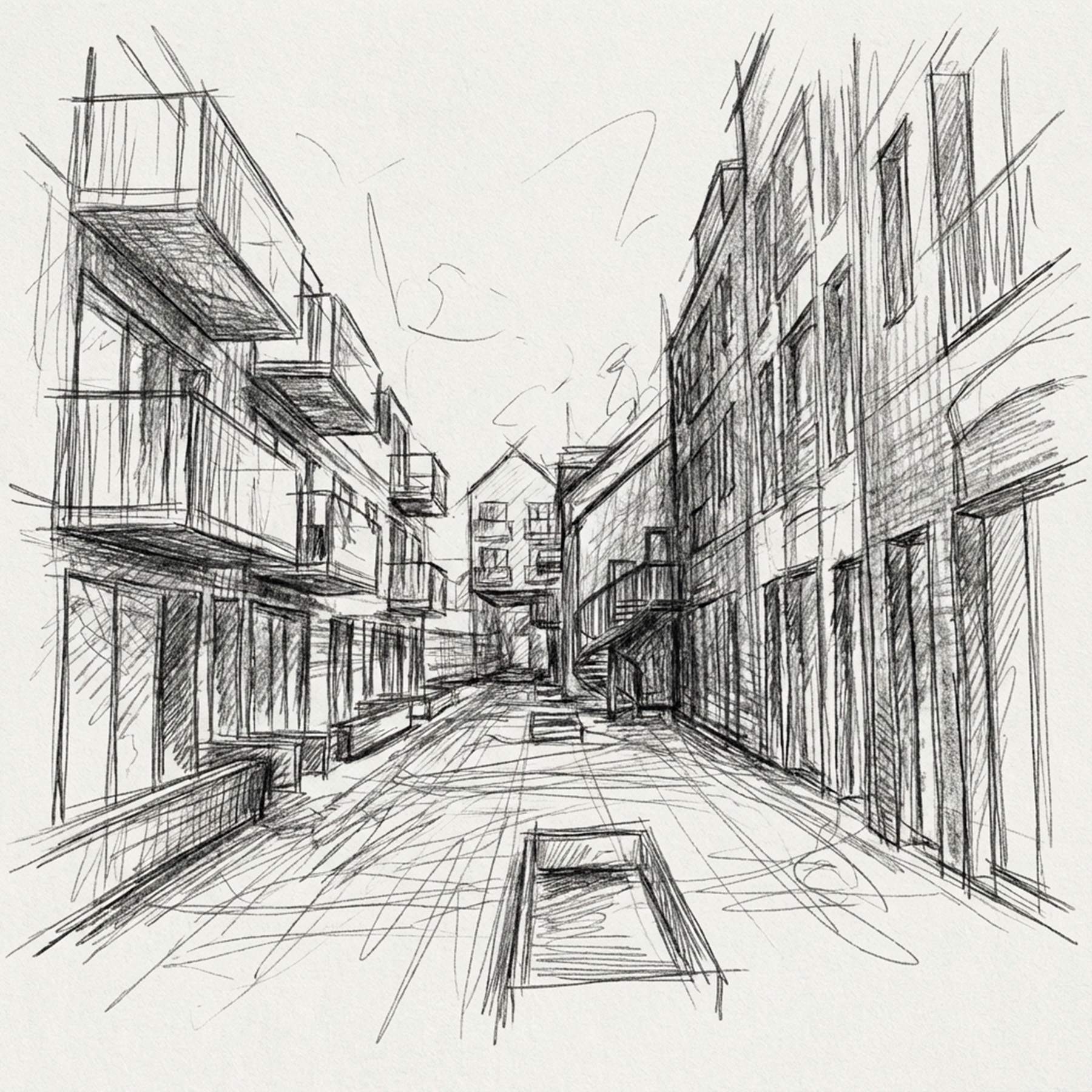
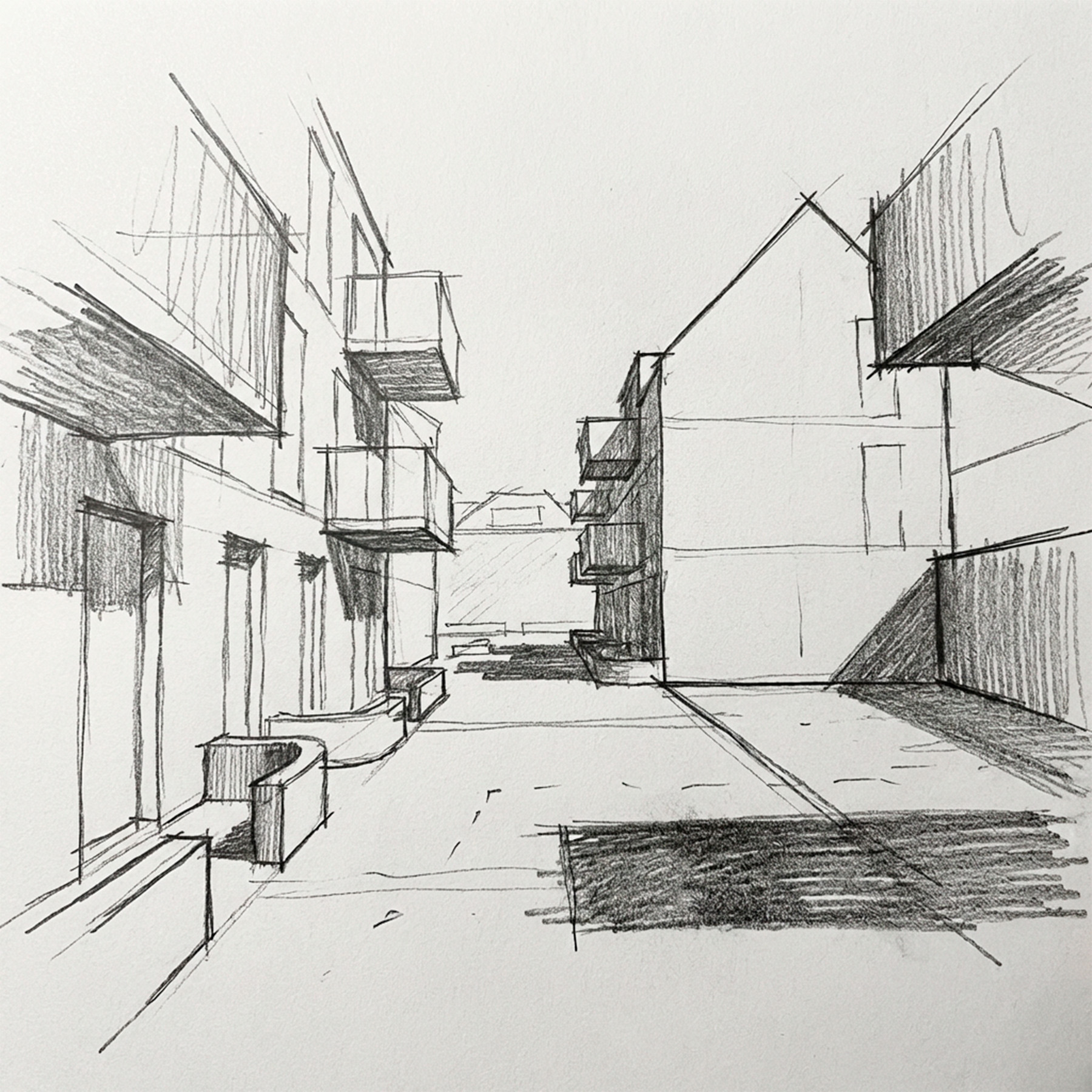
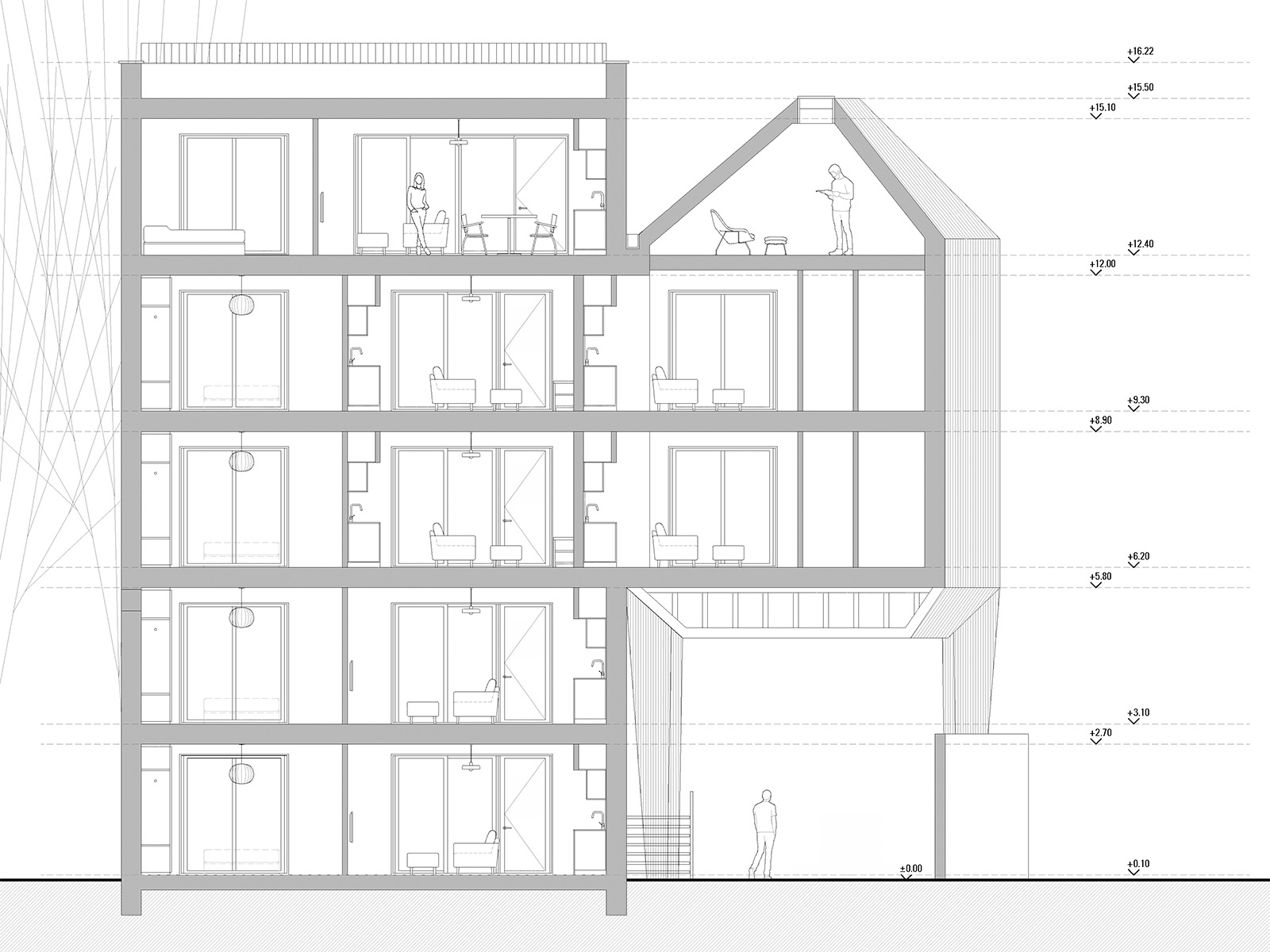
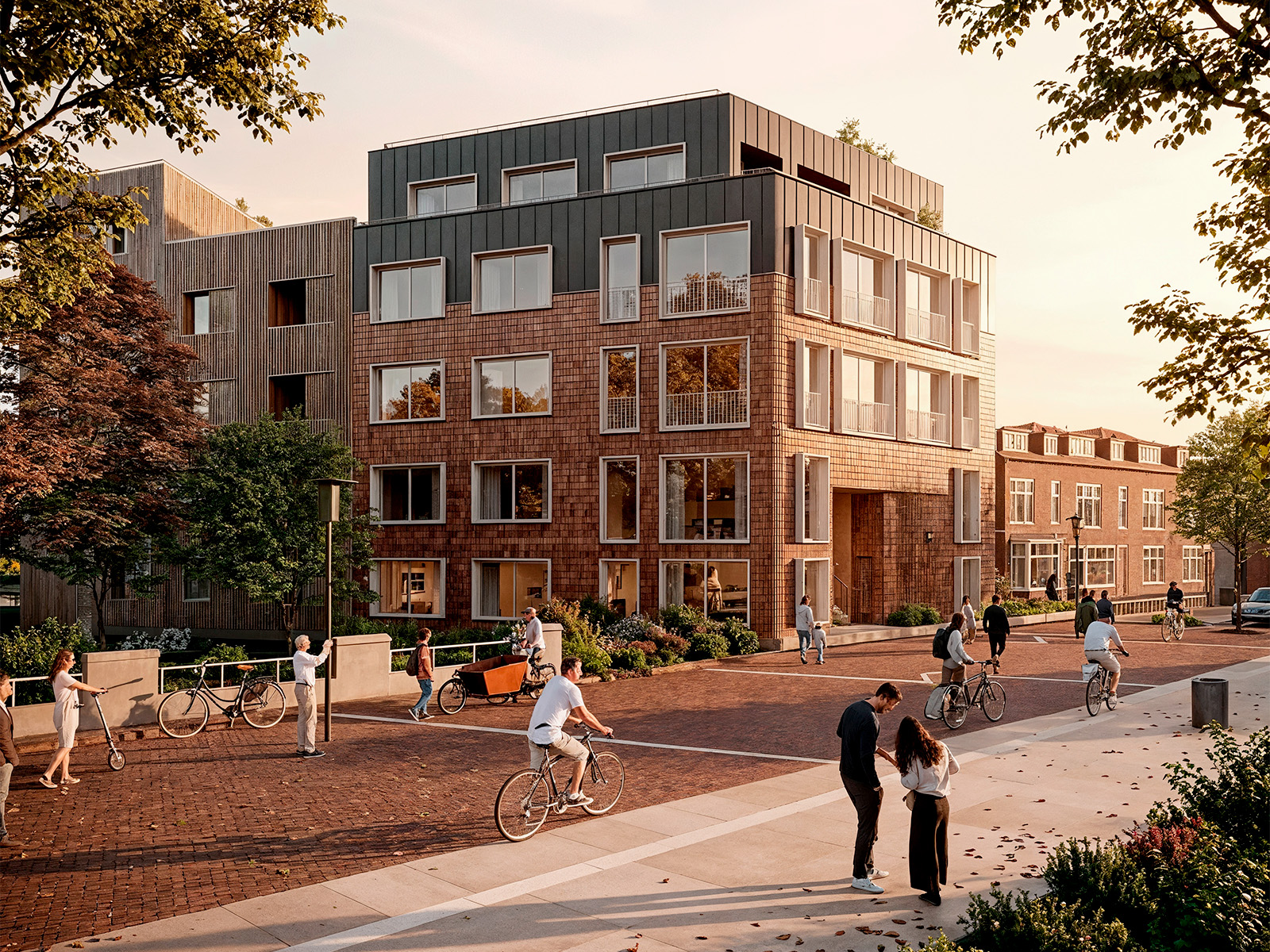
The relationship with Wateringsevest is particularly significant. This edge is defined by larger-scale buildings than those along Noordeinde, with a more regular rhythm, brick architecture, pitched roofs, and a continuous urban frontage. The project responds through Block A, positioned along Wateringsevest as both a perimeter building and the main access point. Its façade adopts a more urban and material expression, in dialogue with the mineral character of the surroundings and with references to the area’s ceramic heritage. At the same time, a generous undercroft passage allows entry into the inner courtyard, establishing a clear transition into the new hof.
Architecturally, Block A organizes the main entrance and concentrates several key technical decisions. It is developed over ground floor plus four levels, with a partially recessed top floor. External circulation via galleries is combined with a strict egress strategy, incorporating two independent stair cores and an accessible elevator. Part of the volume projects over both the passage and the vehicular access, reinforcing its role as a threshold element. At roof level, a shared terrace accommodates potential community gardening and designated areas for solar panels. This building condenses a core aspect of the overall strategy: consolidating the urban frontage, ensuring accessibility, addressing complex regulatory constraints, and integrating high-quality shared amenities.
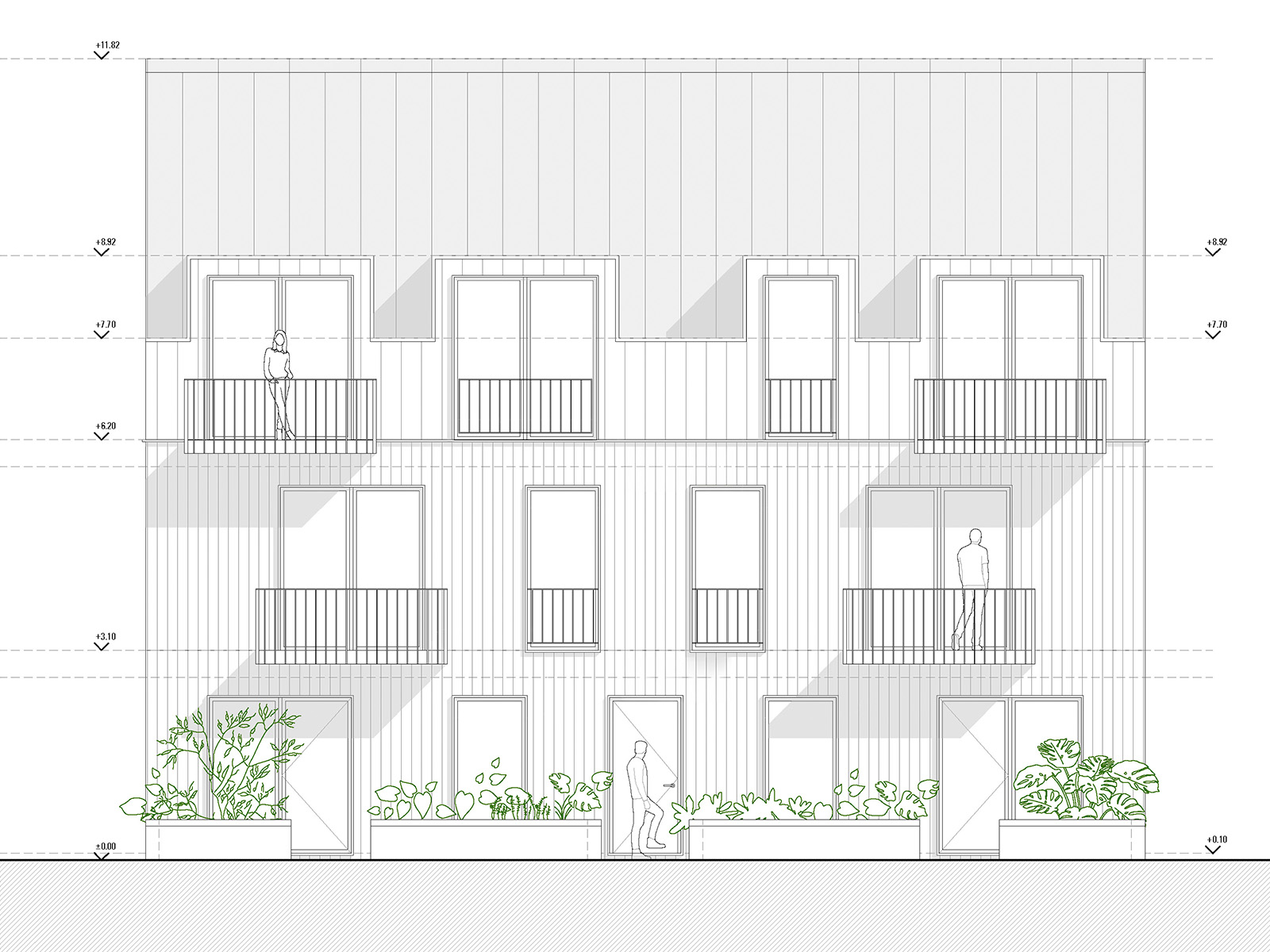
Behind this perimeter block, Blocks B and C adopt a more domestic and repetitive layout. They retain pitched roofs and a scale consistent with the inner block fabric. Ground-floor units have direct access from the exterior and include small private gardens, while upper units are organized through internal circulation, aligning with a more conventional urban apartment typology. Each unit incorporates balconies or equivalent outdoor extensions, as well as dedicated storage and technical spaces. The vertical consolidation of ducts, ventilation, services, and installations organizes the plan efficiently and enhances both construction logic and regulatory compliance.
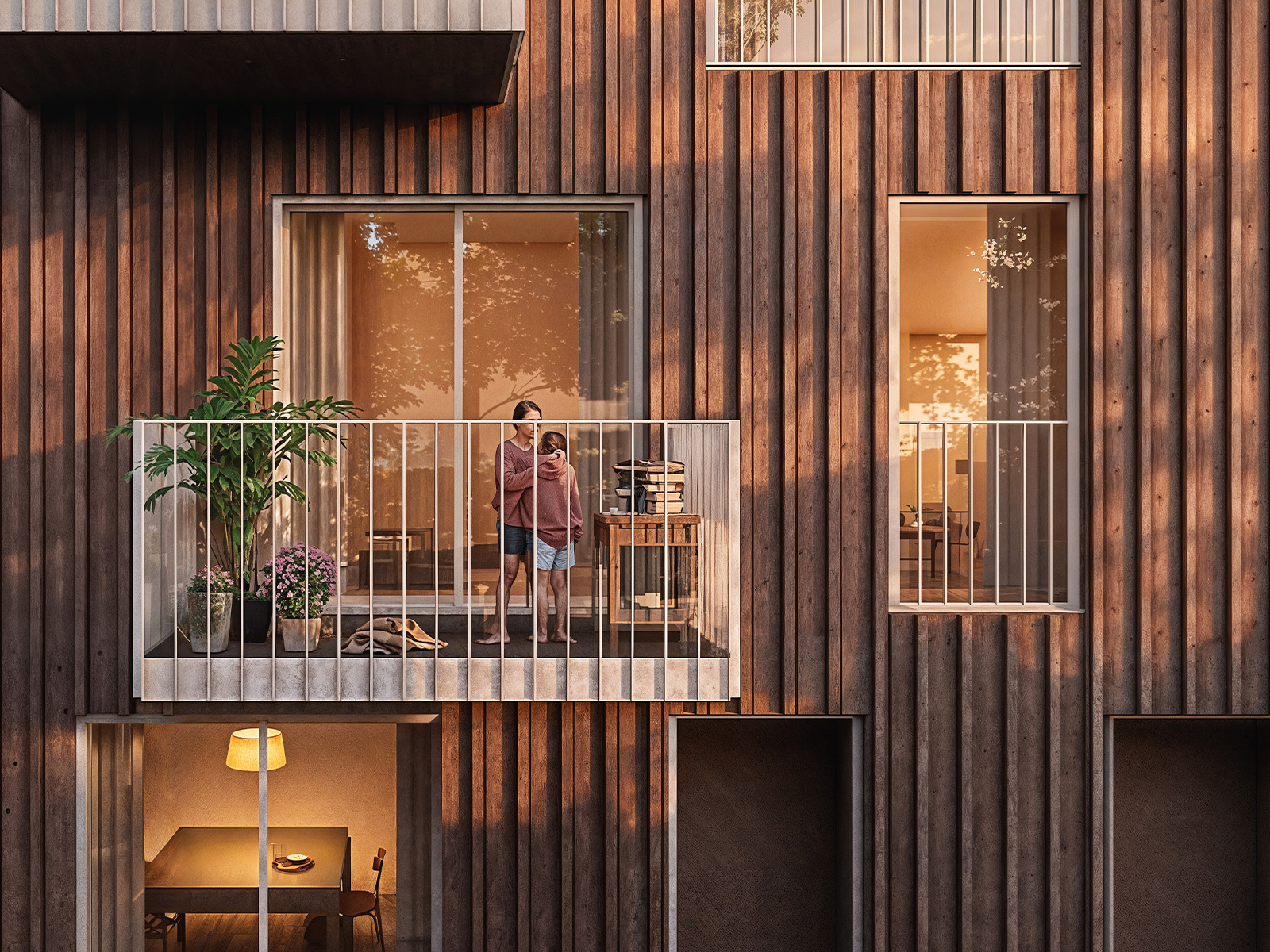
Materially, the project is based on a shared CLT structural system across all three buildings. From this common construction logic, Block A—facing the street—develops a more solid, brick-like presence through partial ceramic cladding and metal panels, while the remaining buildings and volumes over the passage are expressed through timber cladding. This strategy responds not only to sustainability criteria but also to a historical reading of the site. Timber construction recalls the originally open, green, and less mineral character of the former Kampveld, while the more robust street-facing treatment maintains continuity with the existing urban fabric.
Hof van Renaud – Nieuwbouw completes the final phase of a broader urban operation, consolidating a new piece of collective housing in the center of Delft. Its contribution goes beyond adding residential units: it reorders a historic inner block, activates a new connection between Noordeinde and Wateringsevest, and translates the memory of the neighborhood into a contemporary way of living.
At the same time, the proposal addresses groups that often struggle to access suitable housing typologies in central urban areas—such as seniors, students, recent graduates, and shared living arrangements. This programmatic openness introduces a social and intergenerational mix that enriches community life and reinforces the project’s inclusive character. The project densifies, but also opens up. It completes the block, yet remains permeable. It is precisely in this balance—between urban integration, residential diversity, and historical continuity—that its architectural value resides.