-
Program:
Masterplan
-
Status:
Concept and Shcematic Design
-
Area:
24 ha
- Location:
-
Developer
Junta de Beneficencia de Guayaquil
The masterplan for the General Cemetery of Guayaquil proposes the transformation of 24 hectares and more than 60,000 m², integrating new construction with the rehabilitation of existing structures through conservation strategies aimed at preserving the ensemble’s heritage legacy. The project responds to current urban needs, articulating heritage preservation with the incorporation of new uses and services, and consolidating the cemetery as a meaningful space within the urban fabric and the city’s collective memory.
Introduction
Founded in 1823 and declared a National Cultural Heritage site in 2003, the General Cemetery of Guayaquil is an urban, historical, and cultural landmark of the city. Located at the foot of Cerro del Carmen and bounded by Pedro Menéndez Gilbert Avenue and Cel. Oyarbide Avenue, this funerary complex has become a space of collective memory and artistic expression, housing masterpieces of funerary sculpture and architecture. Over its 200-year history, it has been the resting place of key figures in the nation’s life, including presidents, founding heroes, and personalities who have shaped Ecuador’s cultural and identity development.
The masterplan structures the architectural interventions that seek to preserve this legacy while responding to contemporary demands for funerary infrastructure, urban regeneration, and updated services.
Gate 1
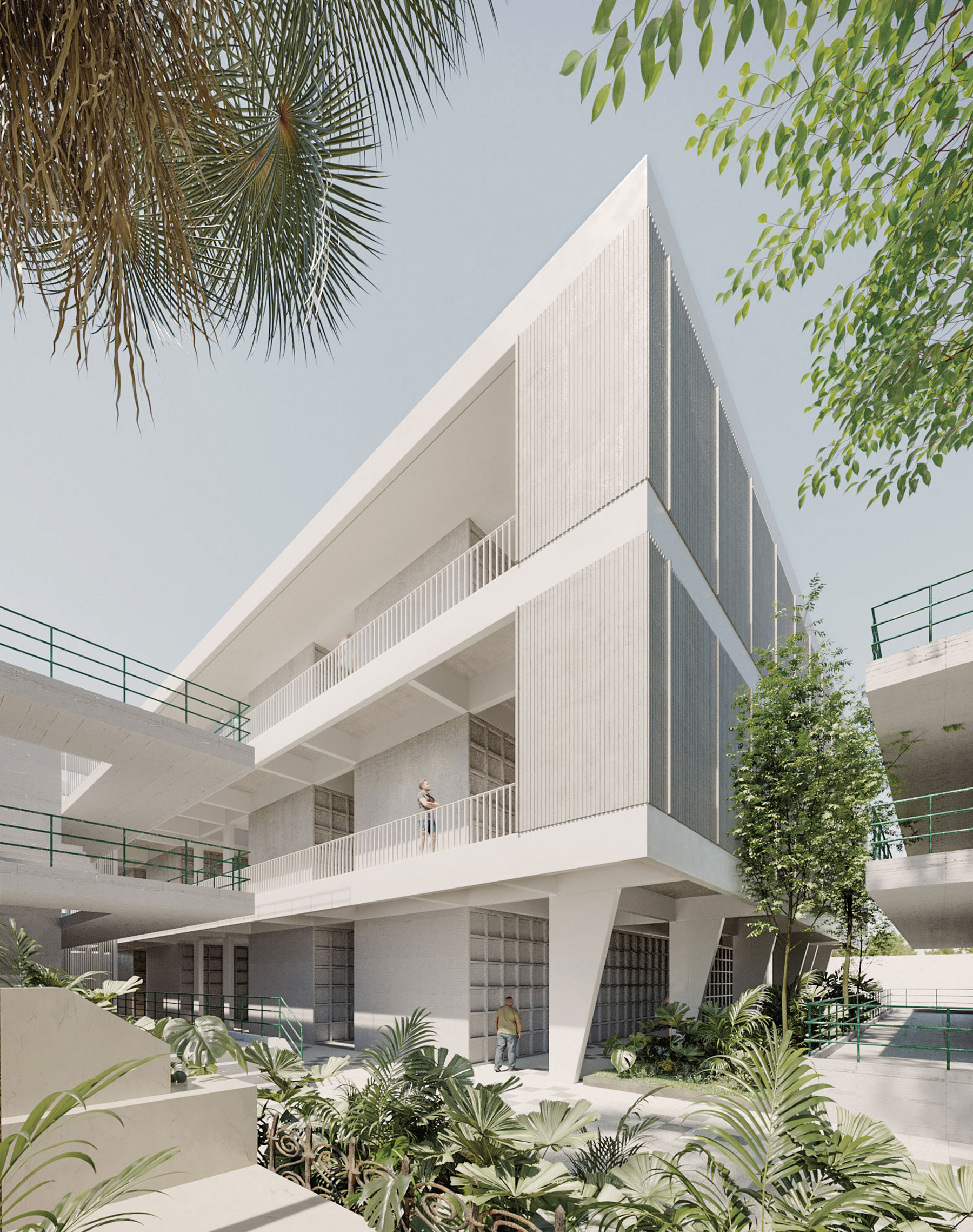
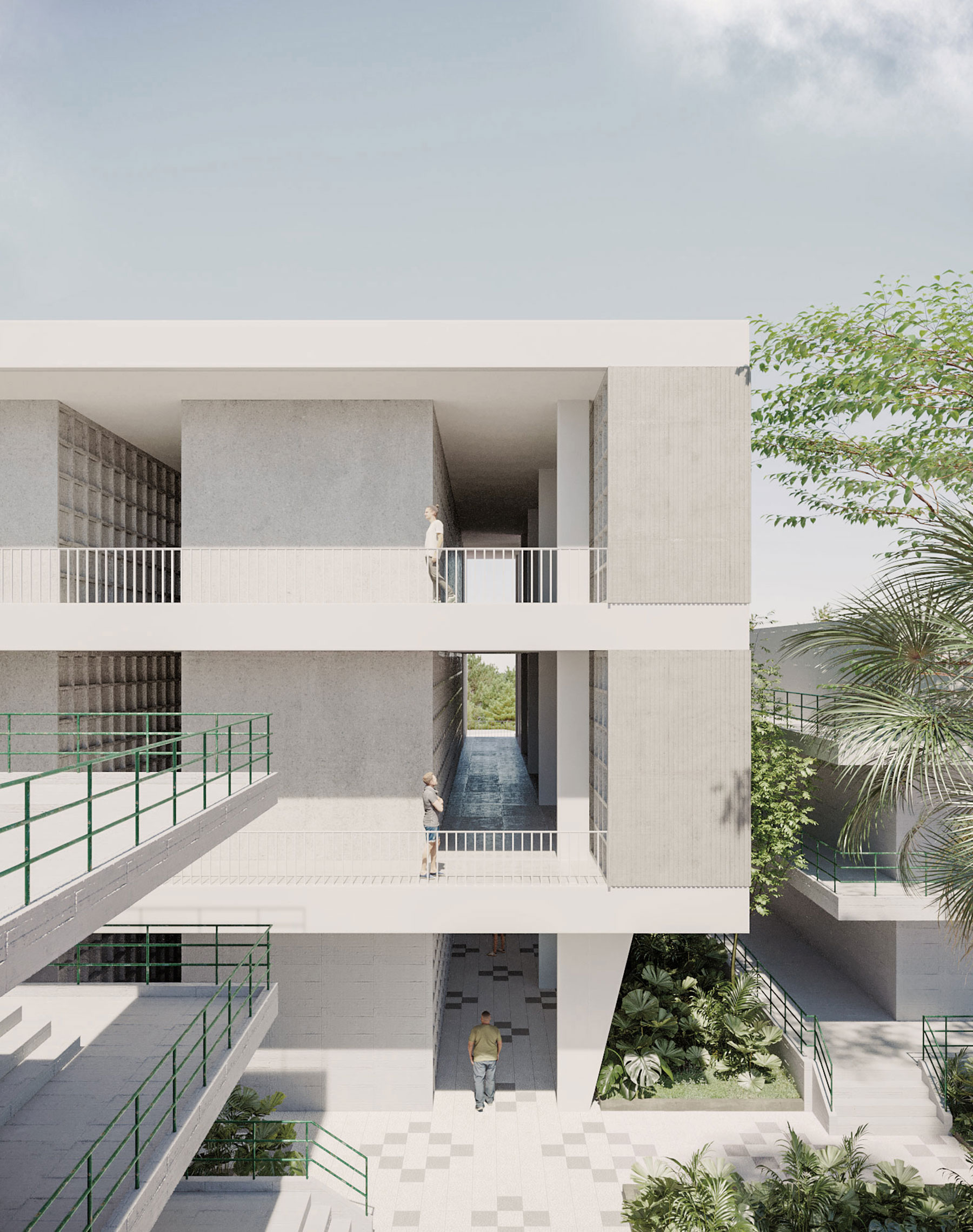
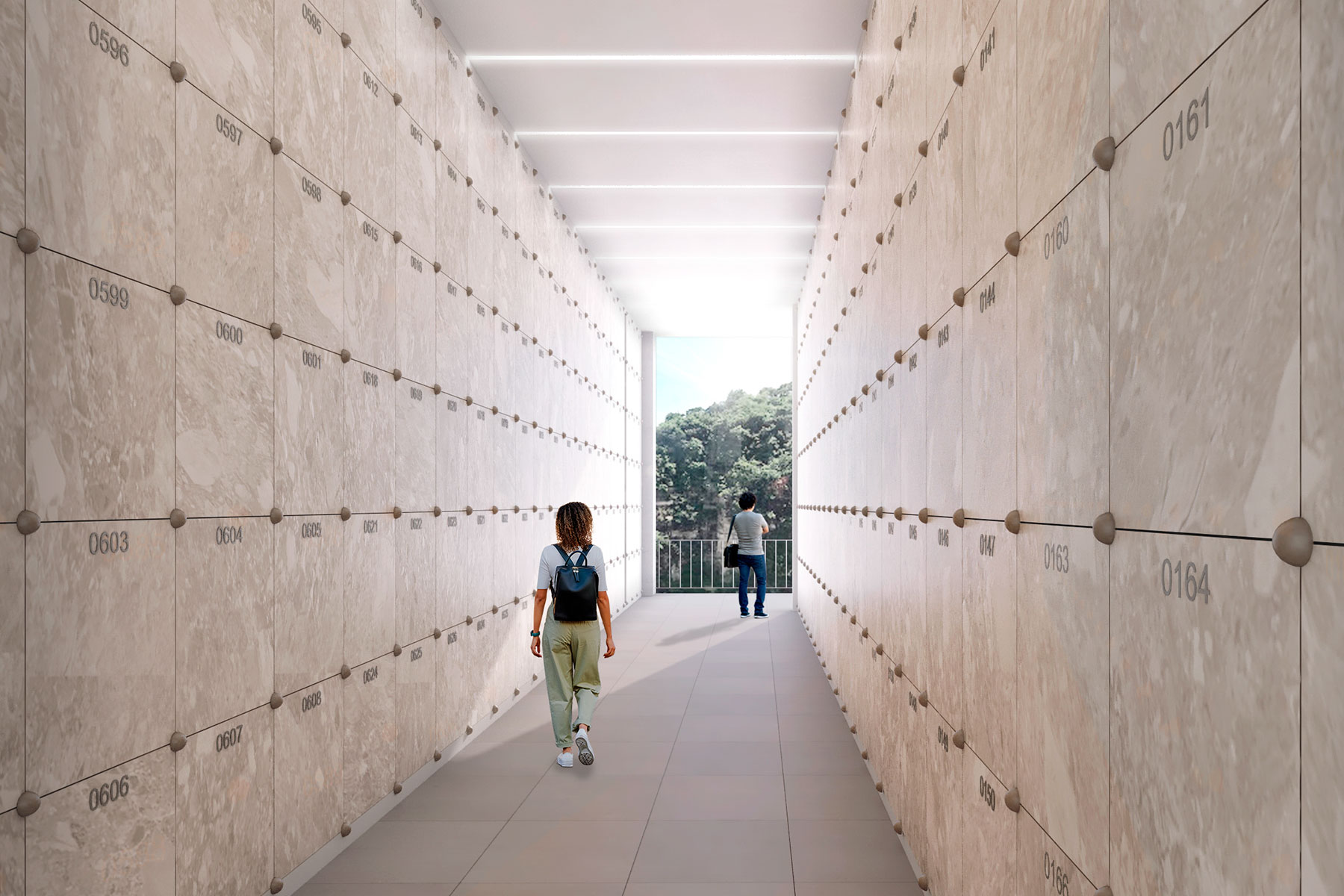
The main intervention at Gate 1 consists of the vertical expansion of vault capacity through the addition of two new levels, providing up to 18,000 additional units. The construction strategy is based on steel and concrete structures that wrap around the existing buildings, creating new identity-giving façades and improving accessibility through the incorporation of public elevators and service lifts.
Gate 3
In the Gate 3 sector, which holds the highest heritage value, interventions focus on urban regeneration, including the restoration of pavements, lighting, and façades, as well as the implementation of heritage wayfinding and themed routes that highlight the site’s history and funerary art. This sector concentrates the mausoleums of presidents and national heroes, and efforts have focused on consolidating tourist and educational routes, integrating collective memory into the urban fabric.
Gate 8
The intervention at Gate 8 responds to the need to double vault capacity through the construction of elevated pavilions on arches that preserve the existing mausoleums and tumuli at ground level. The structural solution avoids further occupation of the ground, respecting the density of heritage elements and allowing natural light to reach the lower spaces. The project’s phasing strategy enables progressive growth, adapting to demand and the constraints of the surroundings.
Gates 12 and 13
At Gates 12 and 13, expansion interventions have been developed to increase vault capacity across two additional upper levels, while respecting the original morphology of the buildings and creating new façades facing the main streets. Programmatic flexibility and modular construction make it possible to adapt the pavilions to different scales and requirements, facilitating phasing and ensuring the operational continuity of the complex.
Gate 16
At Gate 16, a new, comprehensive building is planned to house 20,000 vaults, a crematorium, administrative offices, parking, a café, a thanatopraxy laboratory, and complementary services. This building represents the largest contemporary intervention within the ensemble, incorporating universal accessibility criteria, operational efficiency, and advanced construction technologies.
Mausoleums
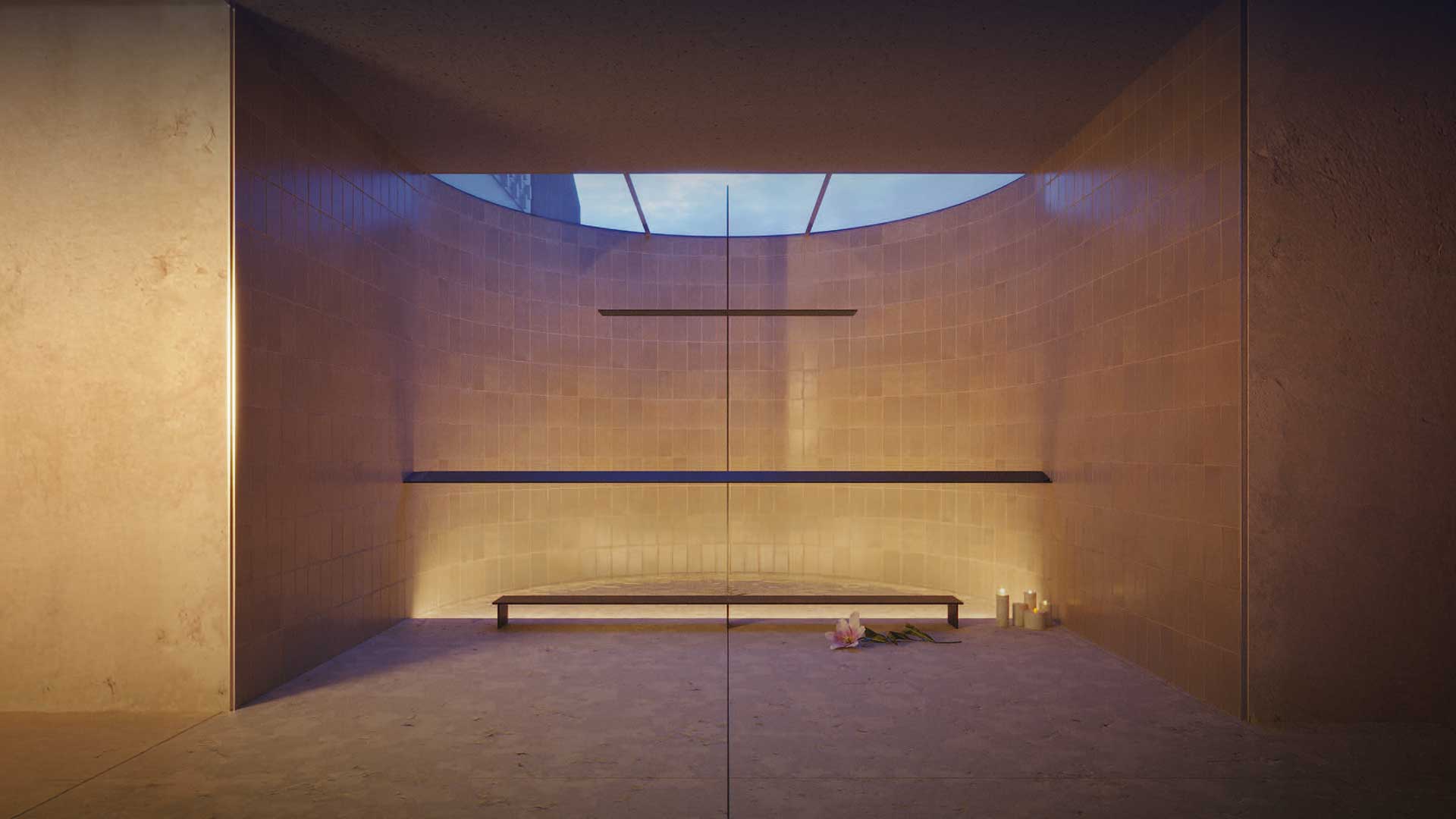
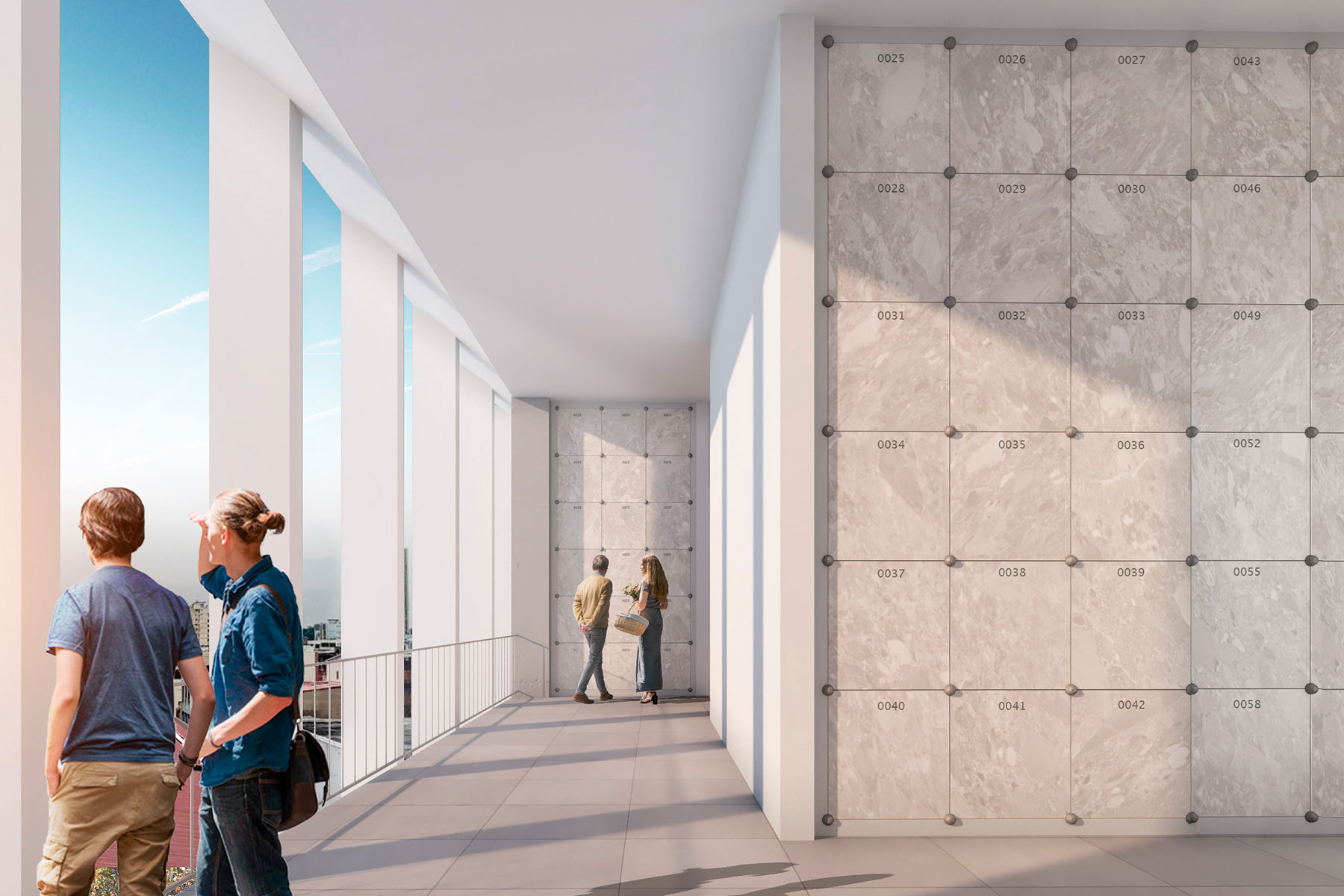
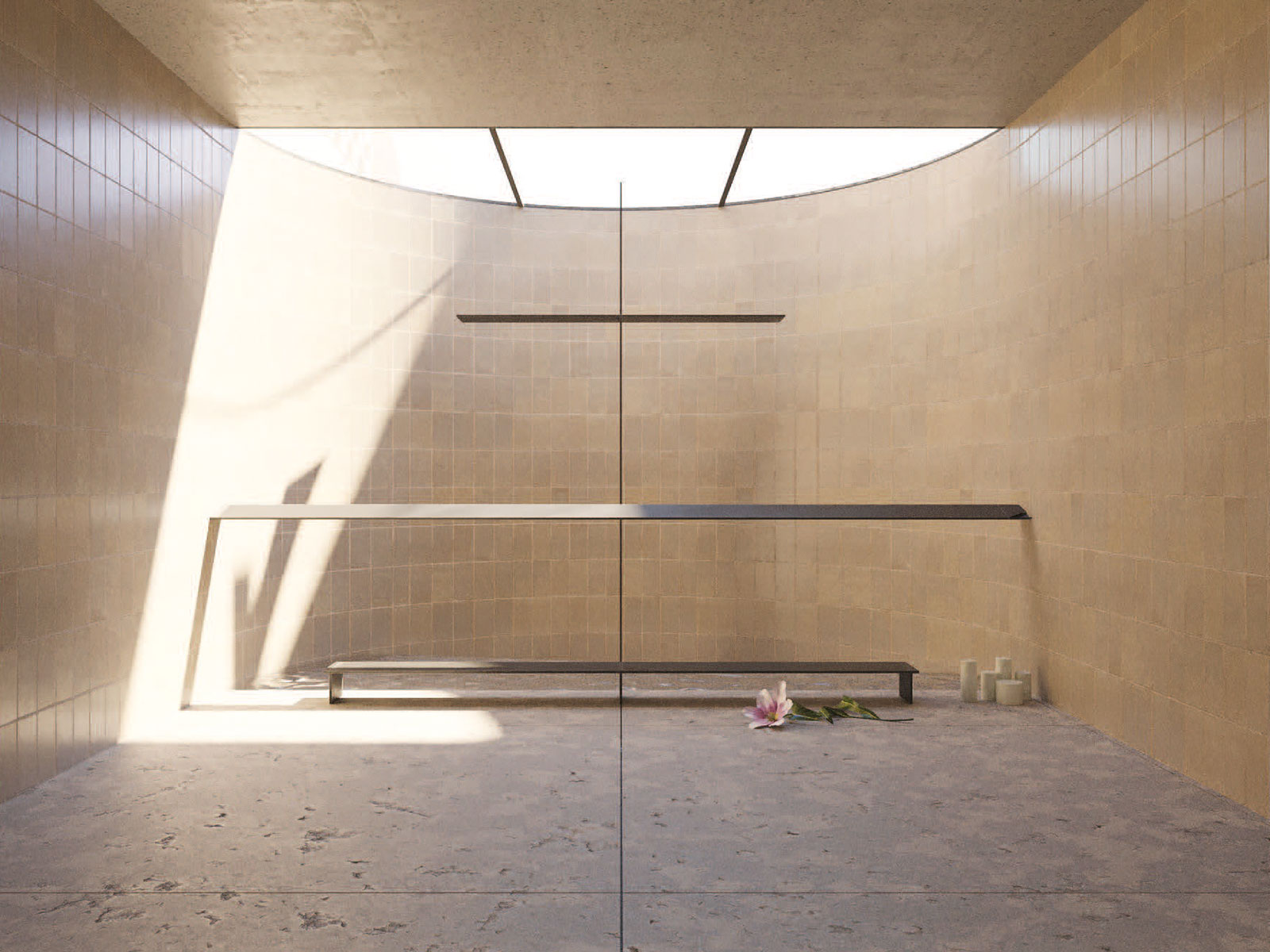
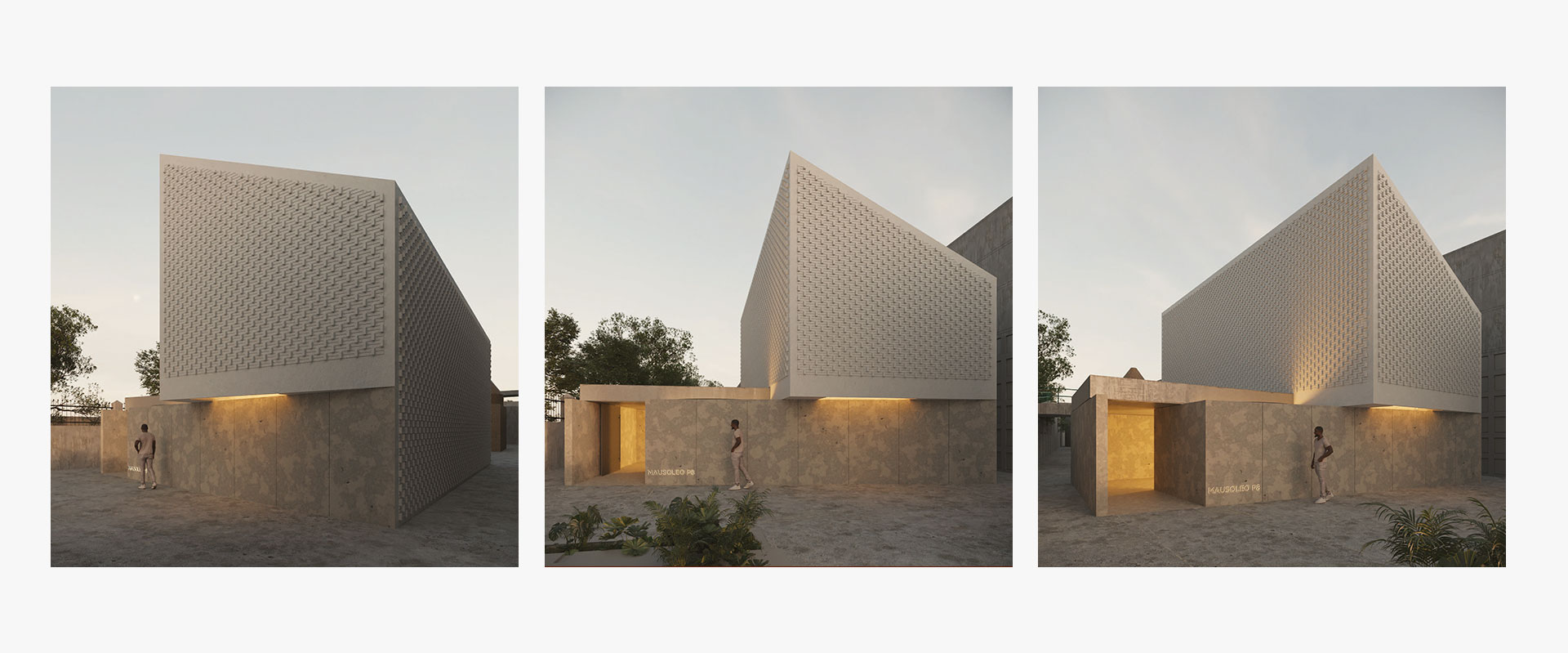
In the areas corresponding to Gates 6, 8, and 9, the masterplan proposes the incorporation of new mausoleums with an aesthetic that enters into a harmonious dialogue with existing interventions and the heritage context. These structures are conceived through a sober, timeless architectural language, employing noble materials and construction solutions that prioritize durability and visual integration. Their placement responds to criteria of respect for the historic layout and site topography, avoiding interference with significant heritage elements and ensuring the continuity of main routes and key sightlines.
The contemporary design of the mausoleums is expressed through pure volumes, precise modulation, and the use of shade and light elements that enrich the spatial experience. Programmatic flexibility is prioritized, allowing spaces to adapt to different scales and needs, and enabling the incorporation of areas for contemplation and reflection.
Heritage wayfinding
The heritage wayfinding system is a key component of the masterplan, designed to facilitate orientation and enhance the visitor experience. A comprehensive signage system was developed to map the different heritage routes within the General Cemetery of Guayaquil, classifying them by historical, artistic, and cultural themes. This system makes it possible to identify routes linked to presidents, national heroes, writers, and masterpieces of sculptural art, fostering a sense of ownership of the space and awareness of its heritage assets. The signage, conceived with durability and legibility in mind, integrates harmoniously into the surroundings, respecting the materiality and character of the ensemble.
Sales booths and flower kiosks
In addition to the wayfinding system and architectural interventions, points of sale for funerary products and services and flower kiosks are designed in line with the main entrances and key circulation nodes. These structures, built with contemporary materials and clean lines, reinforce the cemetery’s visual identity and contribute to the functional organization of the public realm. Their strategic placement facilitates visitor services and operational management, consolidating a holistic experience consistent with the heritage and urban values of the General Cemetery of Guayaquil.
The phasing and flexibility of interventions within the General Cemetery ensure its capacity to adapt to future demands, allowing operational continuity and the integration of new uses. In this way, the preservation and enhancement of its urban, architectural, and cultural heritage are guaranteed, consolidating the cemetery as a historic and functional reference for future generations. This integrated approach reinforces its role as a space of memory, gathering, and reflection within the city.