-
Program:
Residential
-
Status:
Concept and Schematic Design
-
Area:
8.1 ha
-
Yaax District is a residential masterplan located along Boulevard Colosio in Cancún, Mexico, within a strategic territorial enclave where urban infrastructure, an expanding residential fabric, and a high-value environmental system converge—closely connected to the Nichupté Lagoon and the Caribbean Sea.
Yaax District is a residential masterplan located along Boulevard Colosio in Cancún, Mexico, within a strategic territorial enclave where urban infrastructure, an expanding residential fabric, and a high-value environmental system converge—closely connected to the Nichupté Lagoon and the Caribbean Sea.
The project occupies an 8.1-hectare site whose depth and orientation allow it to be conceived as a transitional territory. This condition is understood not as a rigid boundary, but as a zone of gradual mediation between scales, landscapes, and ways of inhabiting.
The proposal is grounded in a precise urban and geographic reading of the site, acknowledging the multiple pressures, intensities, and velocities that coexist in the area: to the west, metropolitan connectivity, road infrastructure, and ongoing urban growth; to the east, the dominant presence of the natural landscape, lagoon systems, and long, open views. From this dual condition, the masterplan is conceived as a mediating framework capable of accommodating residential density while preserving landscape continuity and environmental quality.
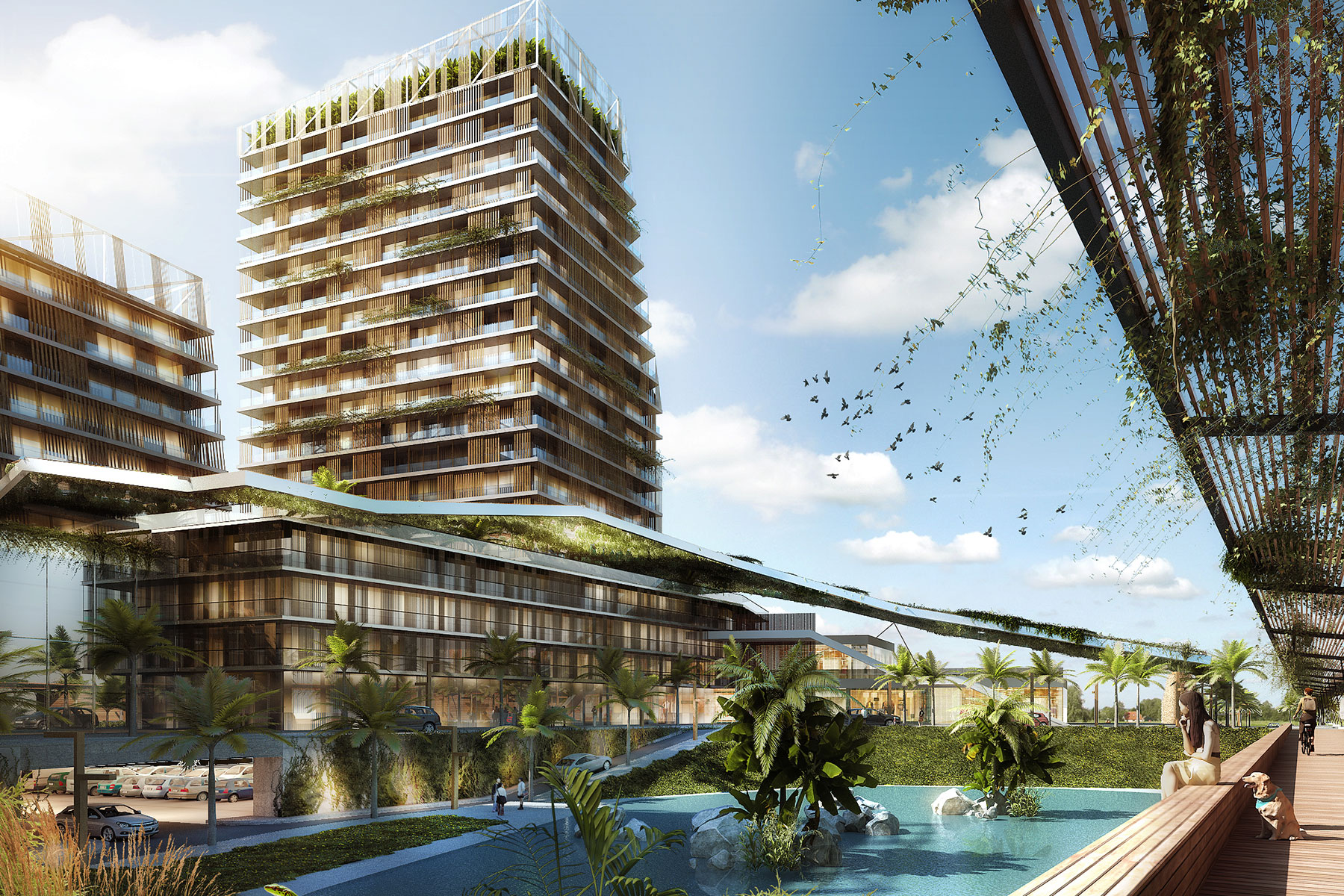
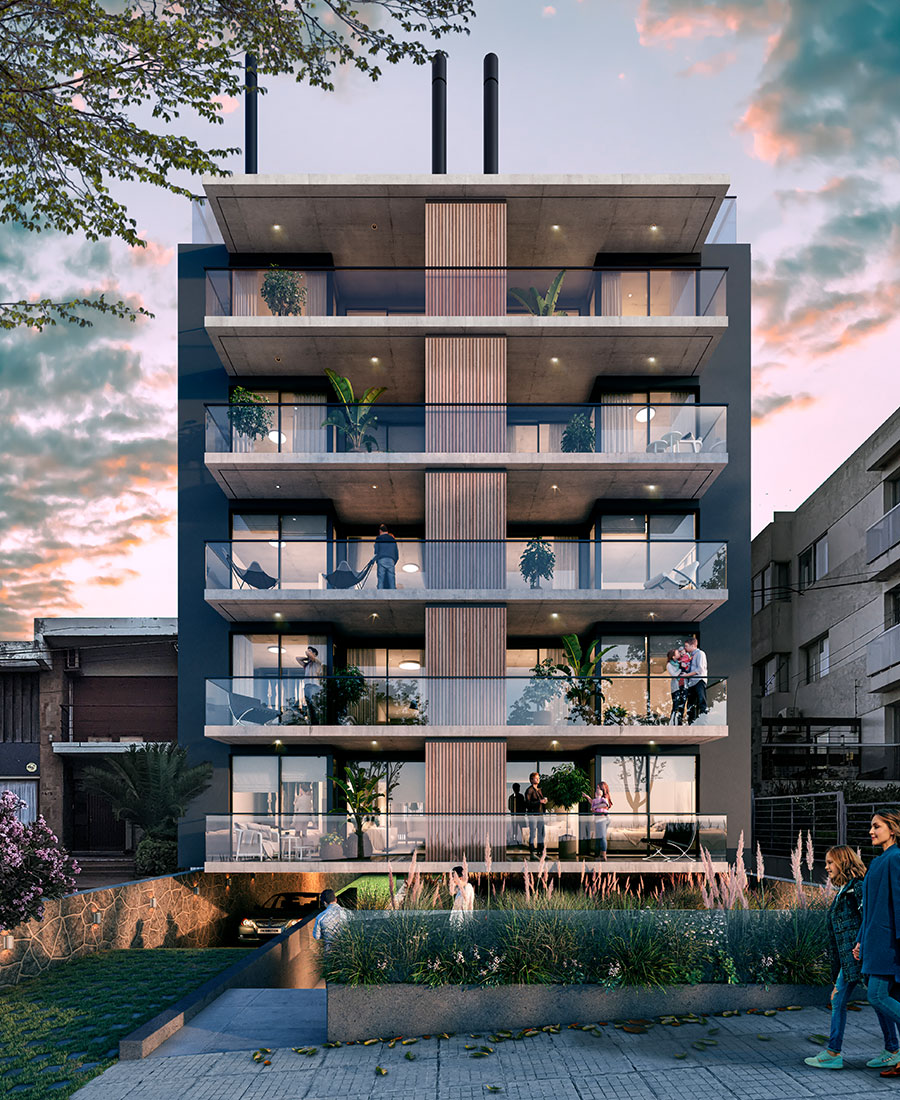
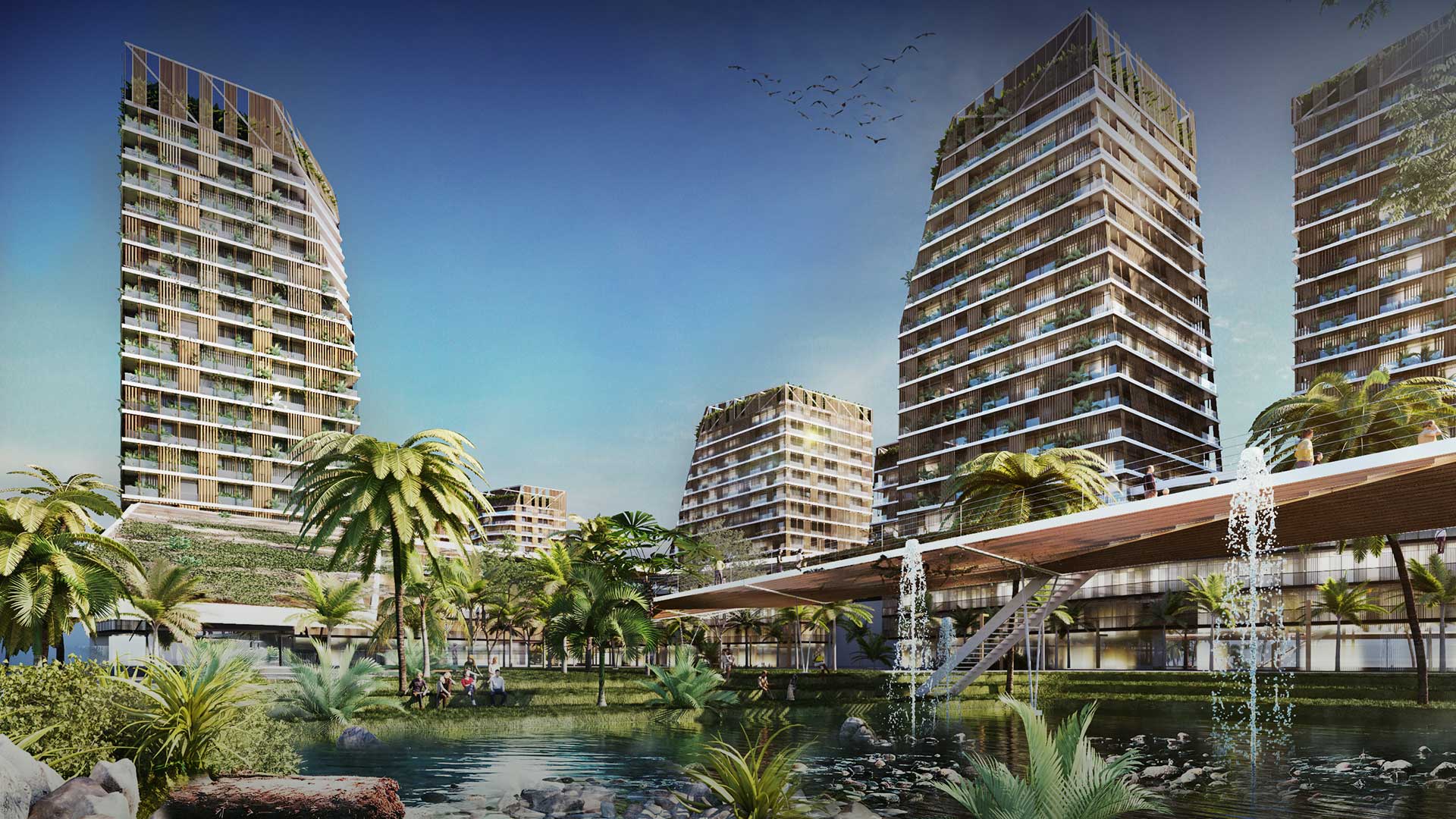
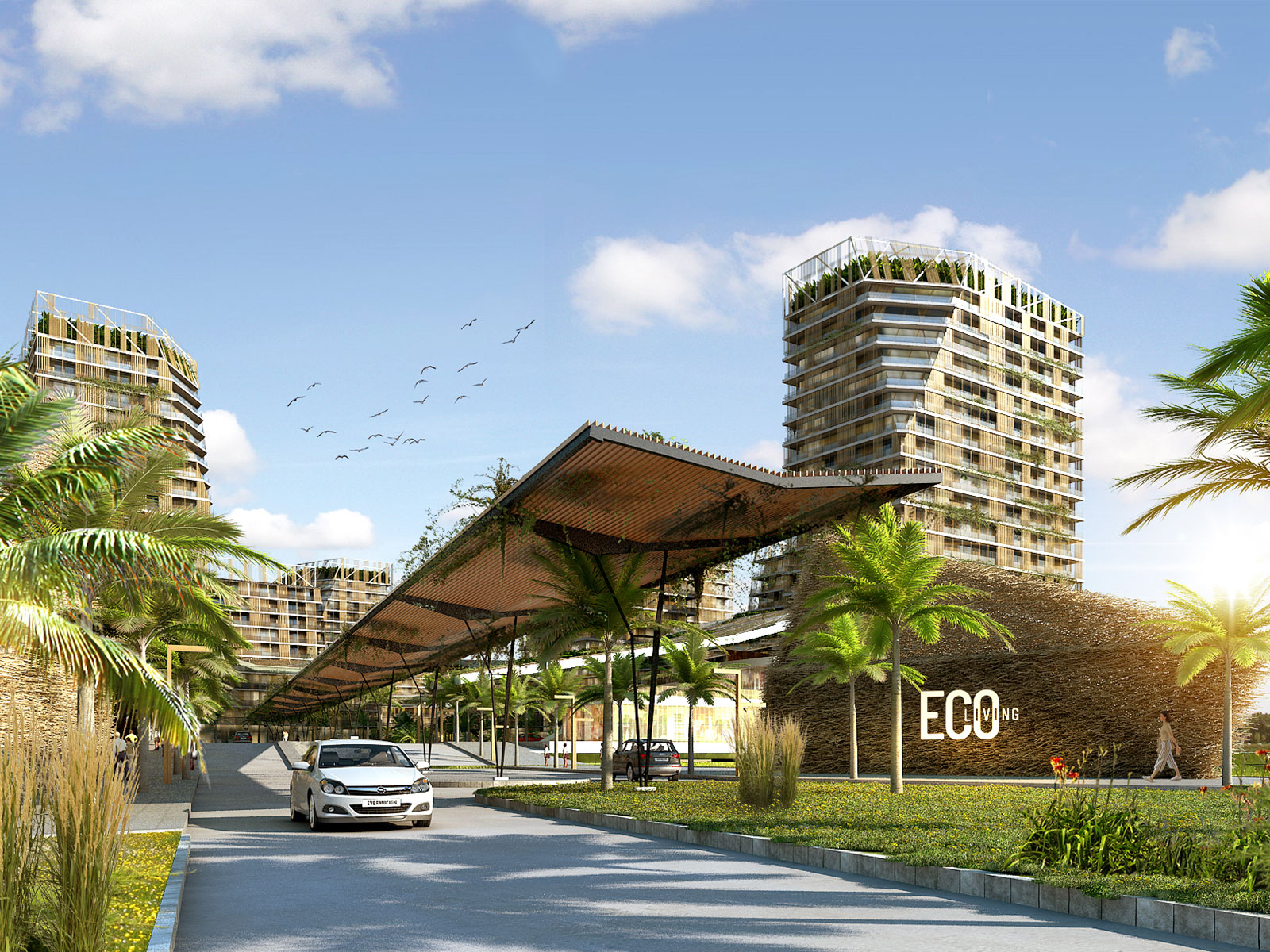
The development is organized into eight plots housing sixteen residential towers, rhythmically arranged within a clear and efficient geometric matrix. This structure optimizes solar exposure, cross-ventilation, and views, while ensuring appropriate spacing between volumes and a coherent urban order. The towers—rising up to twenty storeys, with six units per floor—emerge from a system of podiums that consolidate parking, services, and complementary programmes, efficiently addressing high parking demand while avoiding interference with the site’s high water table.
These podiums are not conceived as neutral infrastructure, but as active components of the urban project. Their perimeters are programmed with residential and complementary uses, generating inhabited frontages at a controlled scale that frame open spaces and strengthen the relationship between architecture and landscape. The podium roofs are conceived as shared amenity platforms, expanding opportunities for collective use and increasing the amount of outdoor communal space.
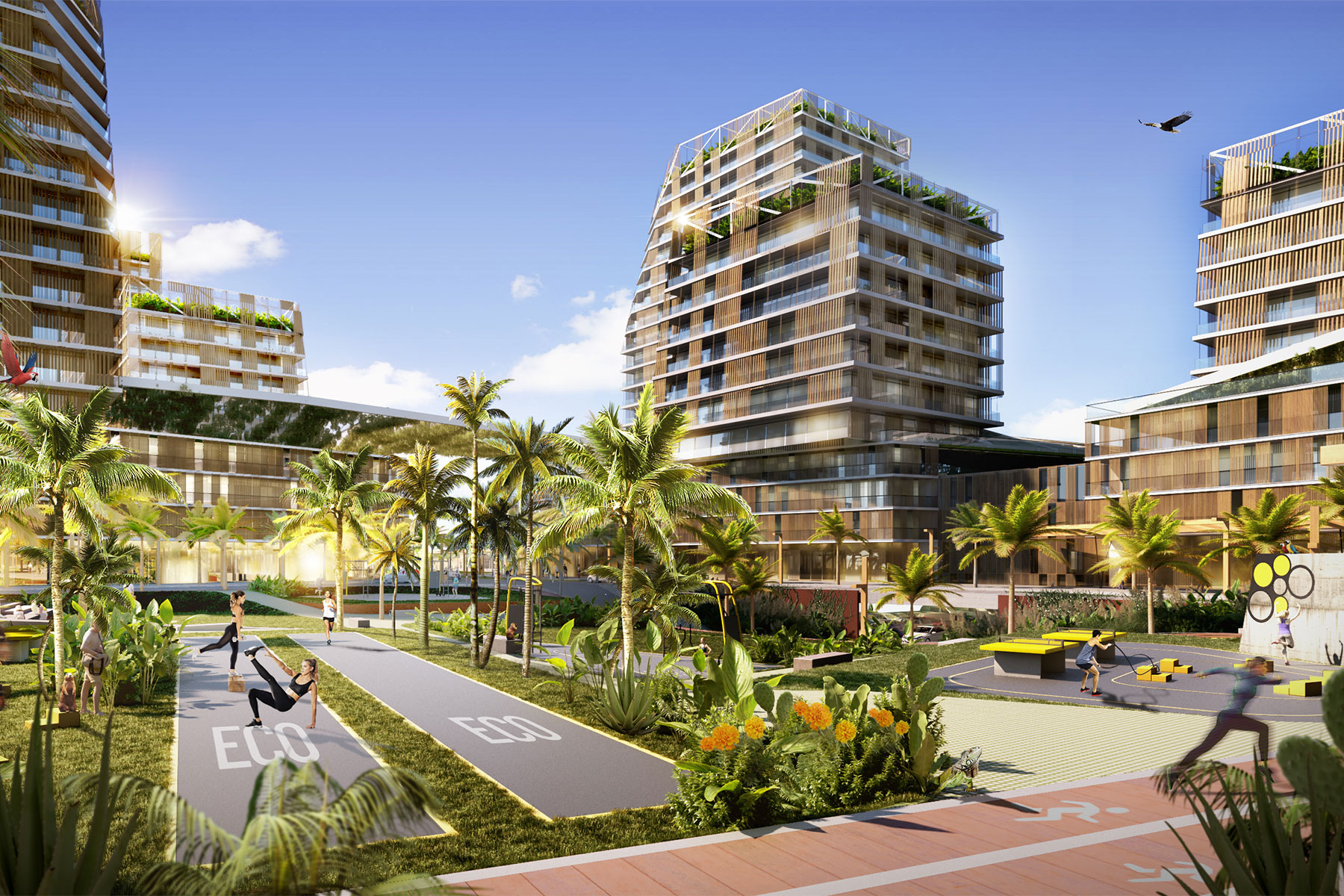
One of the masterplan’s primary structuring elements is a continuous green system occupying approximately 50% of the site. This system is articulated through a sequence of large-scale pocket parks, conceived as true centres for each phase of development. Far from being residual spaces, these parks organize the ensemble, define distinct identities, and structure pedestrian movement. Each park is themed around specific use profiles—sports, recreation, nature, and contemplation—creating a diverse and progressive spatial experience across the site.
An oblique pedestrian spine runs through the development, avoiding linearity and proposing a sequential, evolving route in which visual focus and spatial experience shift from one park to the next. This axis connects varying levels, subtle topographic changes, and edge conditions, reinforcing the perception of green centralities surrounded by activity. The circulation strategy clearly separates pedestrian flows from technical and vehicular traffic, ensuring acoustic comfort, safety, and continuity of the natural landscape at ground level.
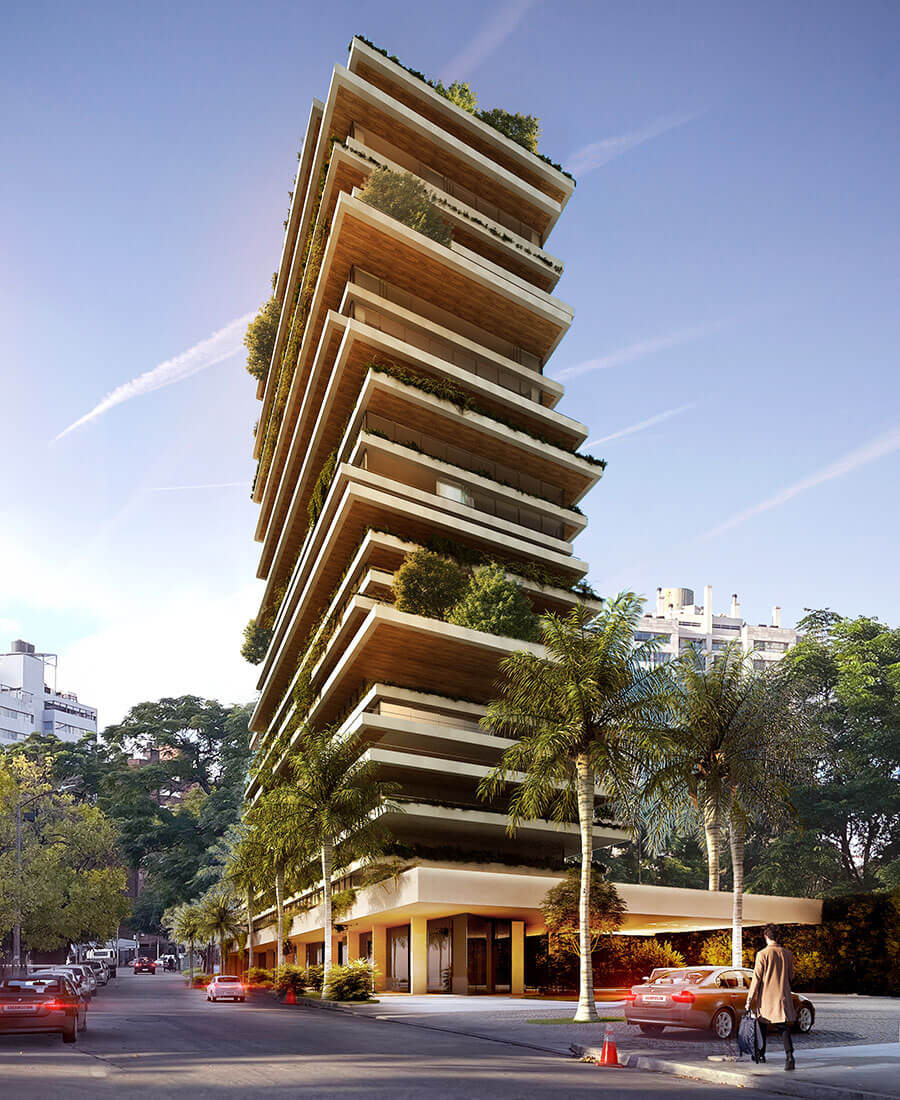
The volumetric arrangement of the towers follows a gradient strategy: taller buildings are located in areas of greater urban exposure and connectivity, while lower-scale buildings are positioned closer to the natural landscape. This approach maximizes views, mitigates visual impact, and supports a gradual territorial transition. Controlled variations in height, footprint, and geometry avoid typological repetition and produce a diverse skyline aligned with the overall logic of the masterplan.
From a constructive and operational standpoint, the project is based on a rational structural matrix, defined by regular grids and open, ordered, and standardized systems that ensure technical efficiency, economic feasibility, and a high degree of adaptability. This logic operates across all project scales—from the overall planning framework to typical floor layouts—allowing future adjustments in density, programme, or development phasing without compromising the coherence of the whole.
The development is conceived in successive phases, each consolidating not only the planned built components but also its corresponding system of open spaces, ensuring full functionality at every stage of growth. This phasing strategy strengthens the masterplan’s urban resilience, enabling it to respond to changing real-estate conditions and evolving lifestyles without losing identity or spatial quality.
Yaax District proposes a large-scale residential model in which architecture, landscape, and infrastructure are integrated into a continuous system. The project generates value through the relationship between private and collective spaces, understanding shared areas as active interfaces that enhance the residential experience and foster a strong sense of community. In this context, the masterplan does more than organize a housing programme: it establishes a new urban centrality, reinforcing Cancún’s identity while offering a contemporary, flexible living environment deeply connected to its geography.