-
Program:
Sports
-
Status:
Concept and Schematic Design
-
Area:
5 735 m²
- Location:
-
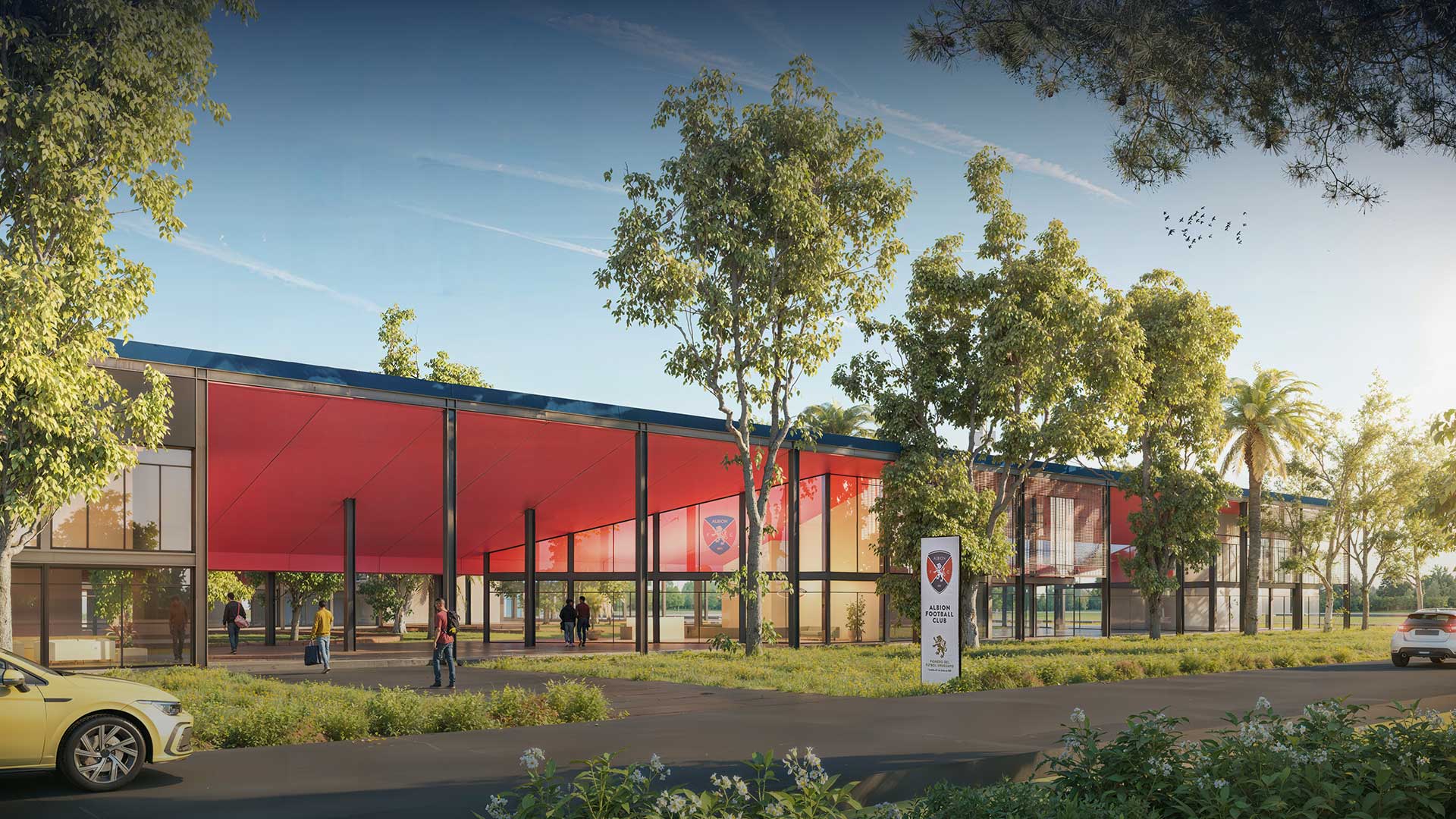
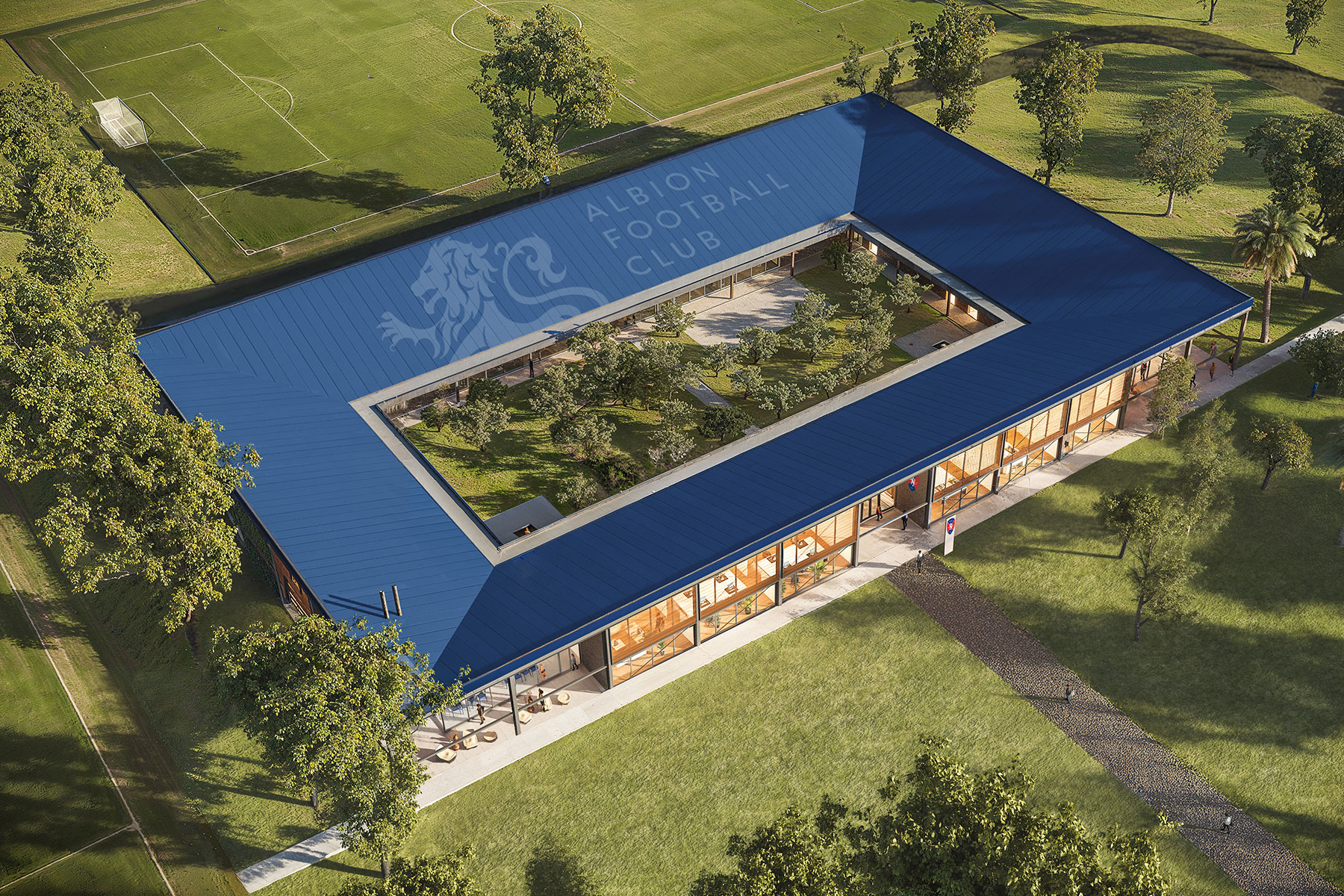
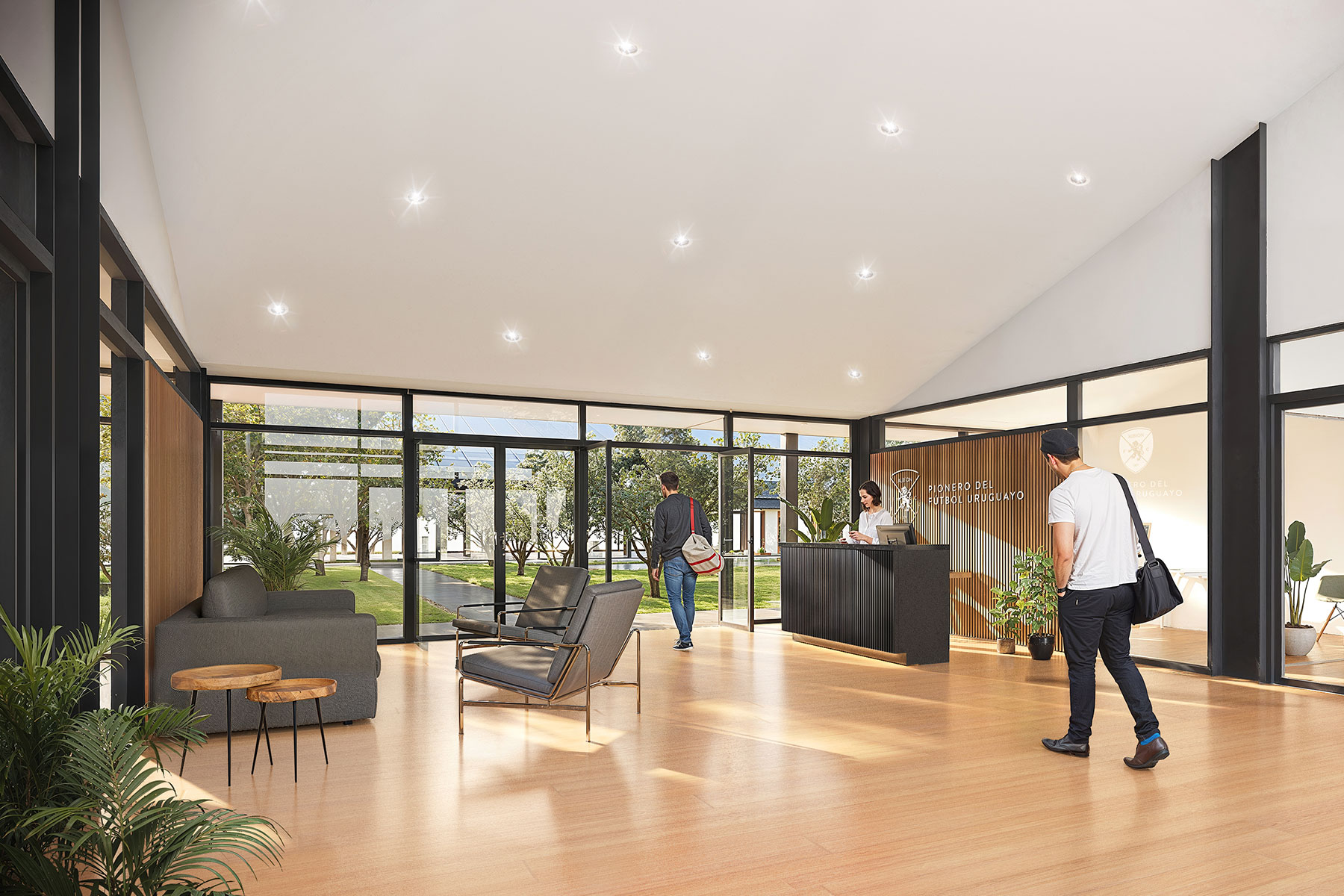
The project for the Albion Club headquarters, located in the northeastern area of Montevideo, aims to create a comprehensive training environment that brings together sports functionality, institutional identity, and respect for the natural landscape. The architectural proposal for the main building is organized around a central courtyard that preserves the existing vegetation, while the broader master plan integrates landscape and program into a cohesive, unified experience.
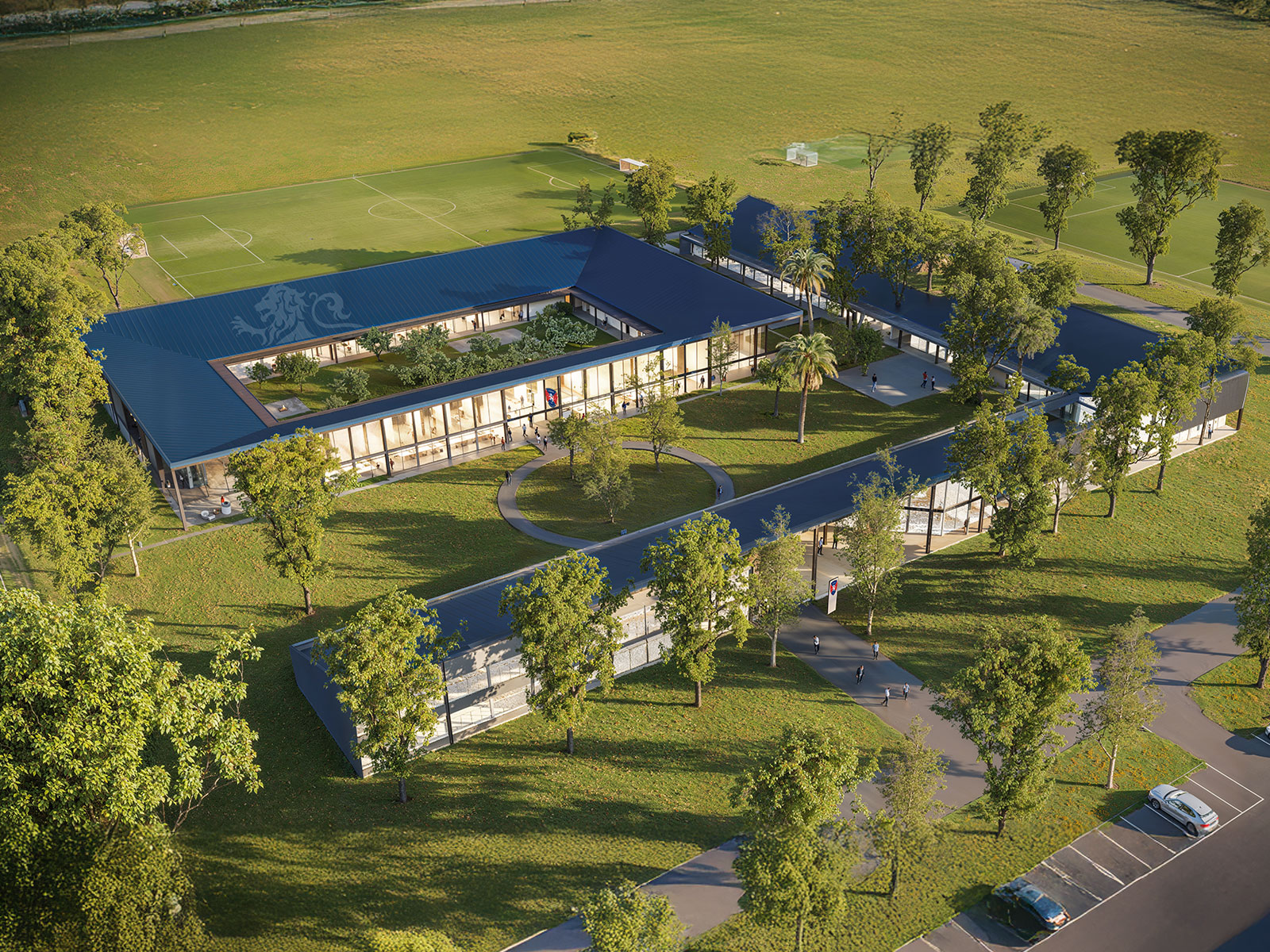
The project for Club Albion stems from the institution’s aim to expand its training and physical conditioning facilities for athletes across its various divisions. Located in the northeastern area of the Department of Montevideo, on the border with Canelones, the site is close to metropolitan-scale facilities such as Zonamerica, the Peñarol Stadium, and the School of Veterinary Medicine. Covering an initial area of 50 hectares—with plans for future expansion—the property combines favorable topographic conditions with high-value vegetation, which the project seeks to preserve as much as possible.
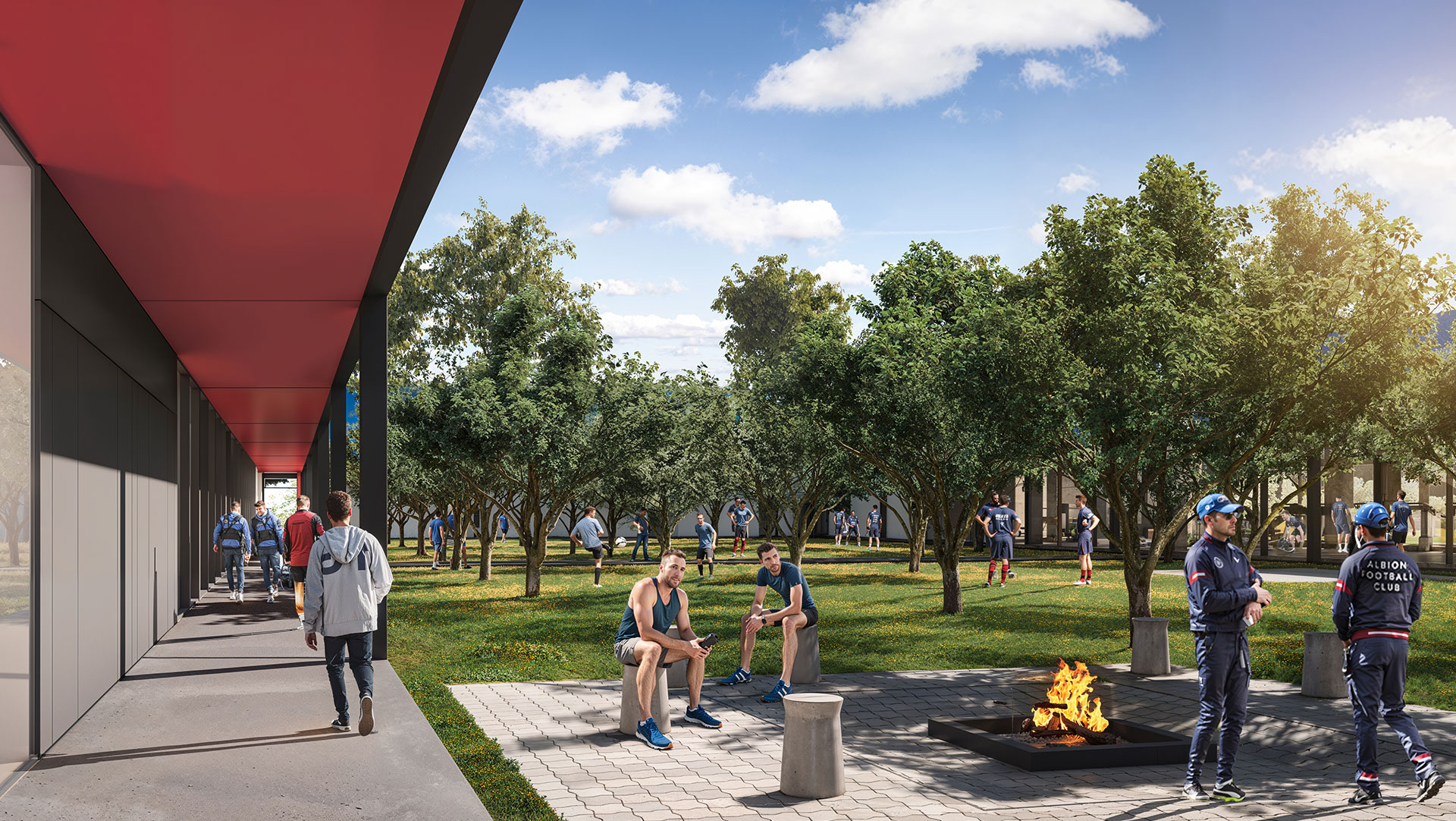
The initial survey of the site, together with a detailed landscape study, identified the existing tree species and assessed their condition, origin, and environmental value. Based on this assessment, a conservation plan and selective pruning strategy were developed, allowing the team to define the most suitable areas for intervention. The proposal for the main building emerges from a careful reading of the landscape: positioned along the perimeter, it creates a central courtyard that preserves an existing cluster of plum trees and other mature specimens, establishing a natural reference point within the complex.
The master plan for the complex includes training fields, gyms, locker rooms, administrative spaces, service areas, parking, and lodging zones for the club’s different categories. The development is organized in stages, the first of which (the main headquarters building) is currently under construction. This building concentrates sporting, administrative, and supporting functions, and serves as a gateway to the complex. The future stages, which comprise two additional longitudinal volumes, include accommodations for the youth divisions and the main team, as well as dining areas, kitchen and coworking spaces, and institutional areas for the board of directors.
Access to the complex is from Route 8, through a control point located on Laudelino Vázquez Road. From there, an internal road organizes circulation and connects the different parts of the project: the training fields, the main building, its parking area, and the future facilities. In addition, the internal nature of this road ensures the safety of the young players who walk from nearby public transport stops.
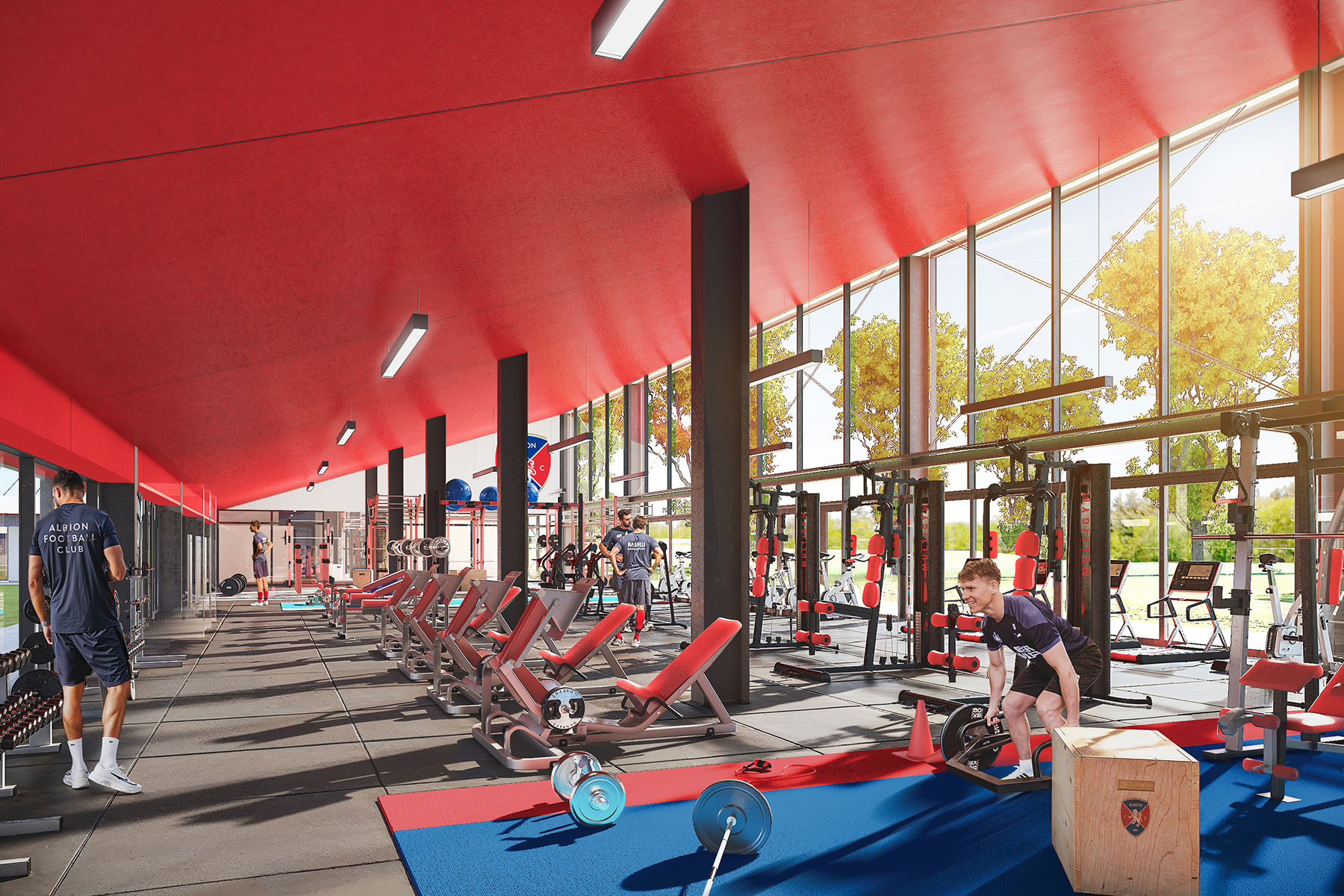
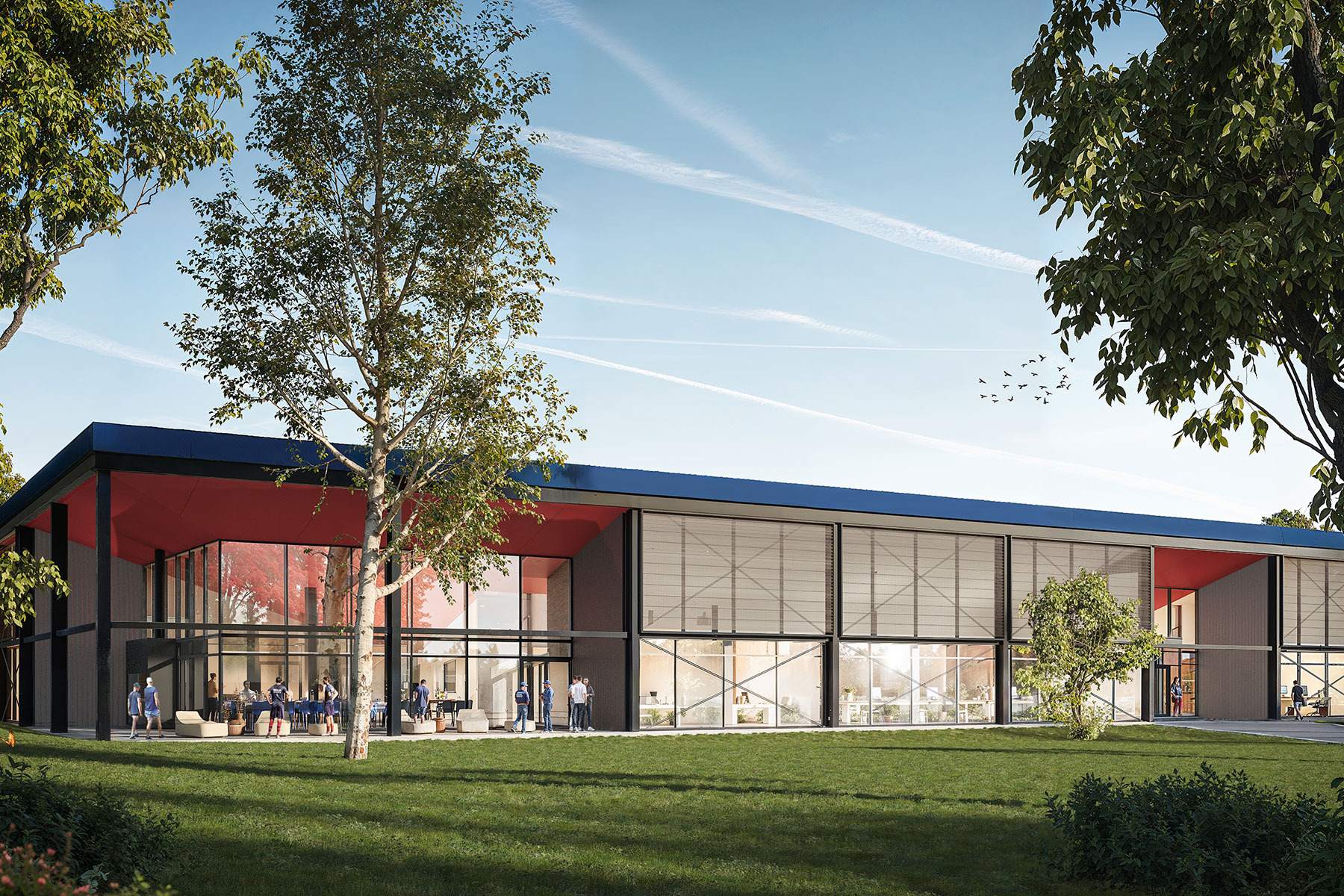
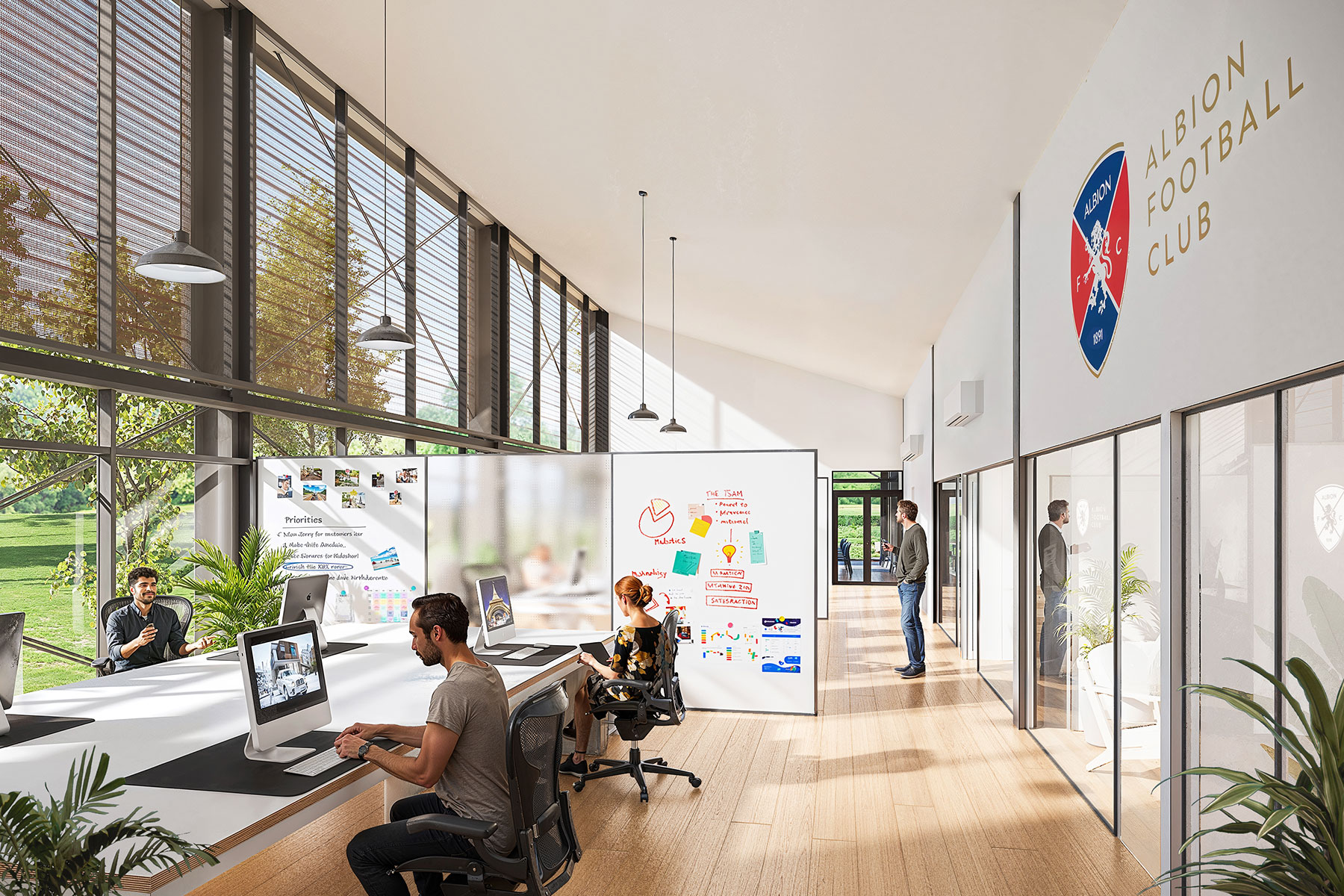
The headquarters building follows a clear functional logic: it separates the areas designated for the youth squads from those of the main team, promoting both independence and controlled interaction among age groups with distinct needs and requirements. The locker rooms, medical and recovery rooms, technical support areas, sports management and administrative offices, as well as the gym, are organized around an exterior gallery facing the central courtyard, which serves as the organizing element of the complex. The gym is a generous 450 m² space that opens to the northwest with views toward the fields, and on the opposite facade, toward the interior garden.
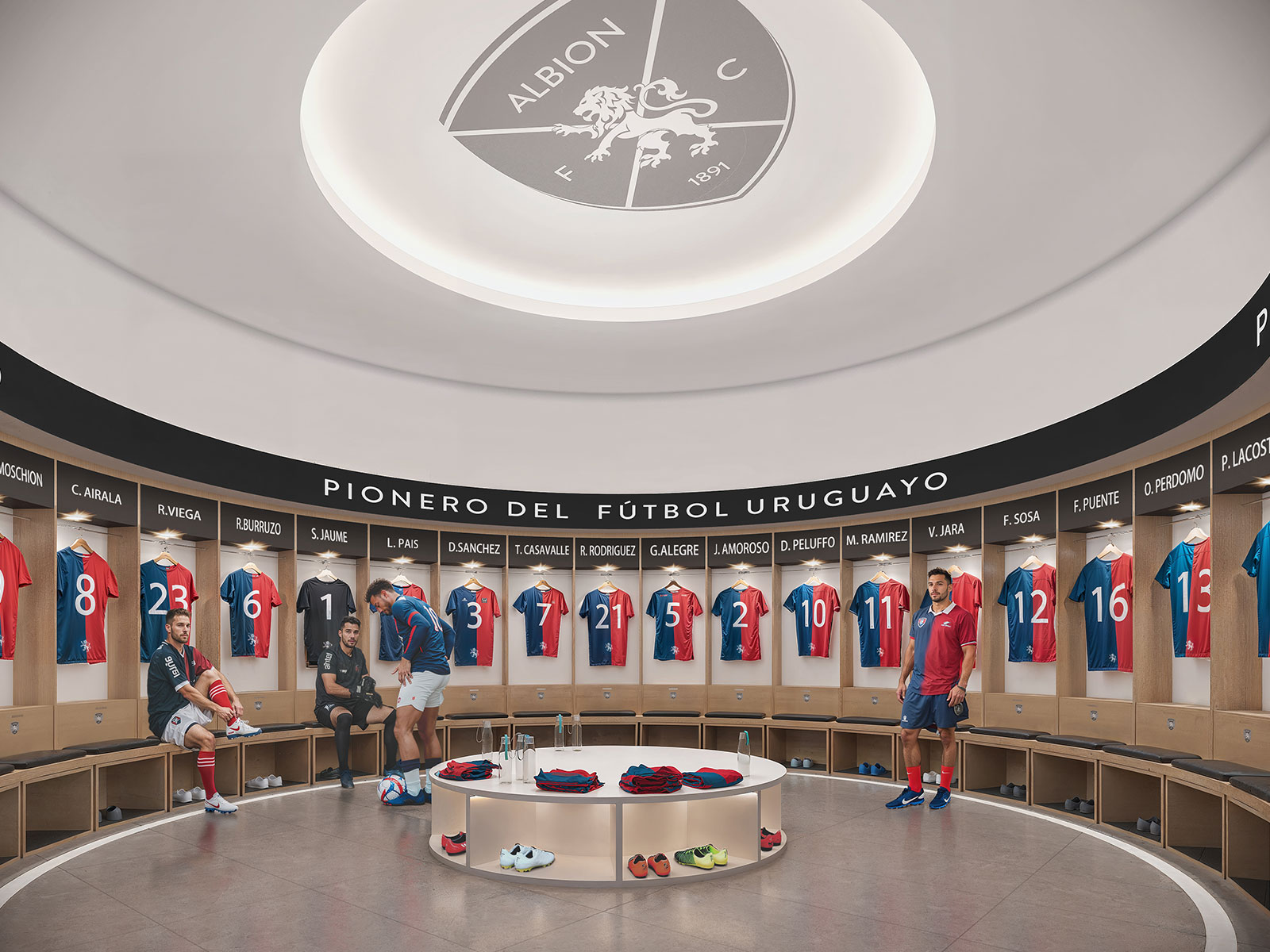
The project adapts its interior spaces to the contemporary demands of professional sports, integrating functionality and comfort into the design of each area. In this regard, the design of the locker rooms is particularly noteworthy: the lockers and seating are arranged in a circular configuration, a layout that enhances communication between players and coaching staff during tactical talks, reinforcing team identity and group cohesion. This circular arrangement also improves visibility, spatial efficiency, and internal circulation, creating a functional and dynamic environment.
In addition to the training fields, the complex includes a main synthetic-turf pitch intended for professional matches. A grandstand is planned for this field, with an approximate capacity of 2,300 spectators, including a VIP section and area for the press. Access to sporting events is independent from the rest of the complex, with separate parking areas for the home and visiting teams as well as for the general public.
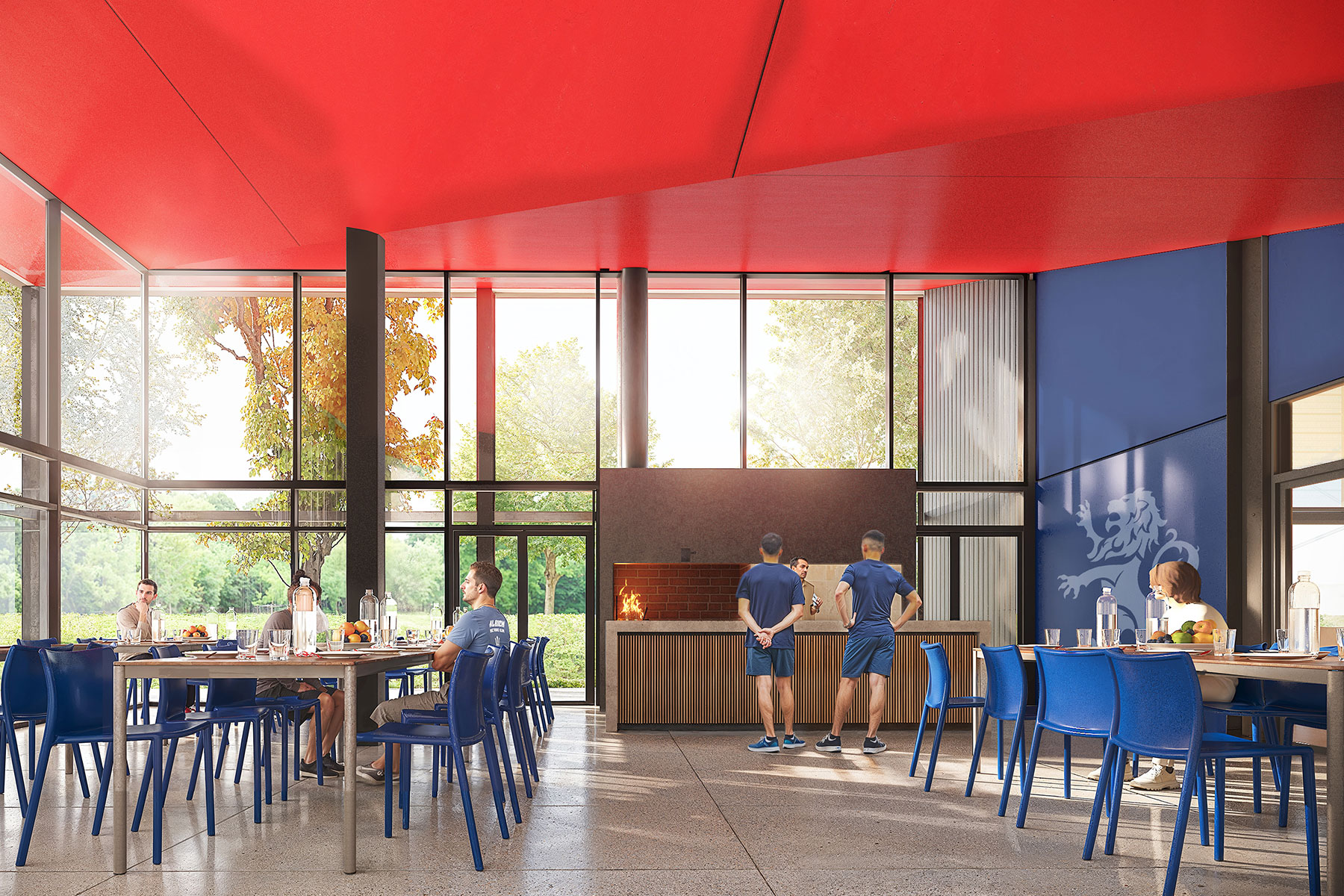
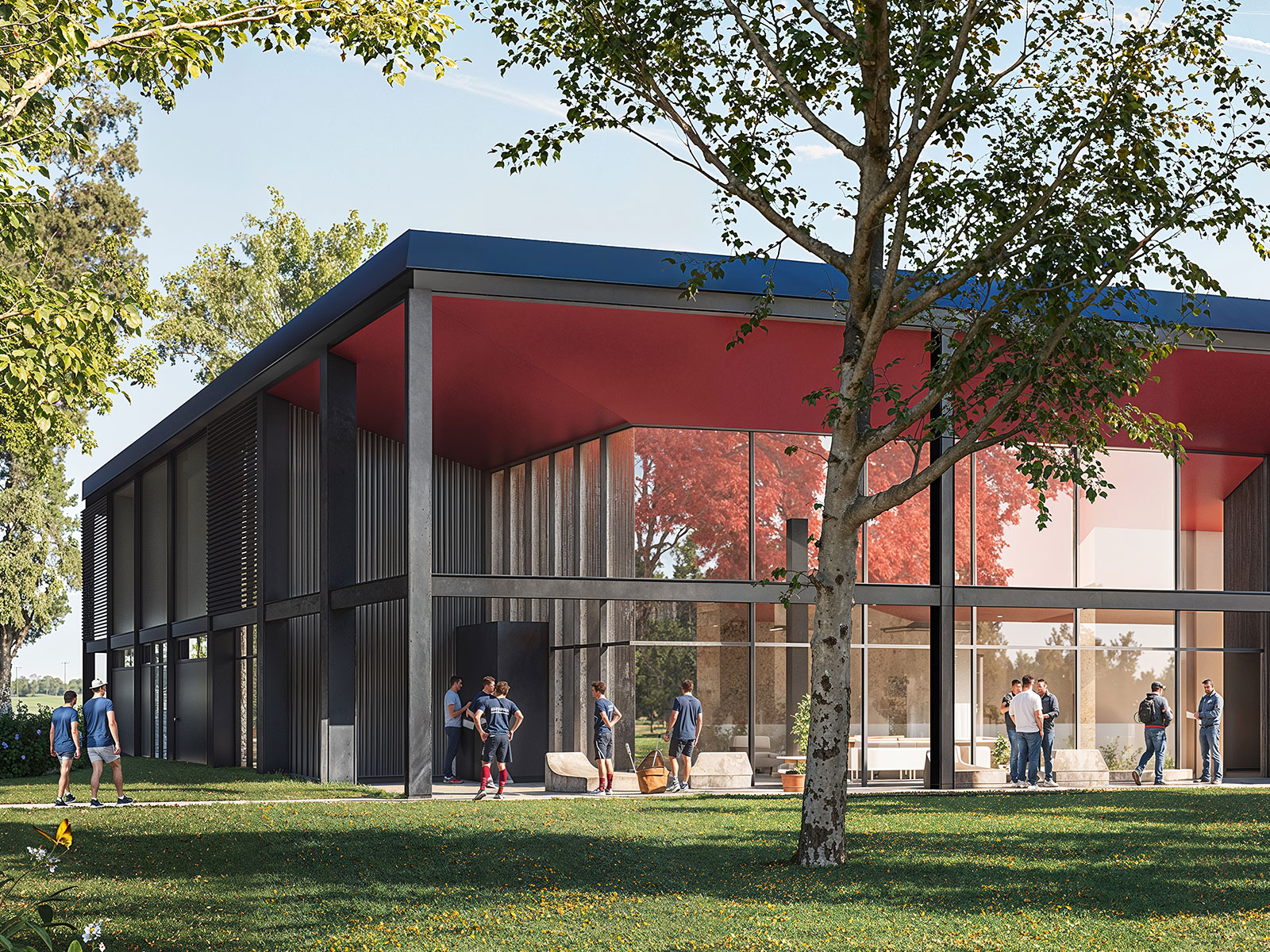
From a construction standpoint, the project prioritizes austerity and efficiency. While the sloped roofs facilitate rainwater management, a series of sunshades and overhangs regulate solar exposure. The selected materials aim to convey sobriety and robustness, prioritizing functionality and low maintenance without sacrificing a clear identity through the use of color—applied to ceilings, floors, walls, and other elements of the club’s graphic identity. In certain areas, the metal structure is intentionally left exposed, integrating it into the architectural expression and reinforcing the project’s constructive character.
The complex is conceived as an expanding sports campus, with high-quality open spaces that are visually and functionally connected. Integration with the landscape, the use of natural resources, and the possibility of future growth are the pillars of a project that supports the institution’s professionalization and consolidation within the local sports scene.