Buenos Aires Architecture Biennial Celebrates 40 Years
In 2026, the Buenos Aires International Architecture Biennial marked its 40th anniversary and 20th edition. Under the theme HABITAR (Inhabiting), it brought together leading voices from Argentina and abroad to share projects and explore our relationship with the spaces we inhabit.
Founded in 1985 by Jorge Glusberg through the Center for Art and Communication (CAYC), the Biennial helped pioneer architectural dialogue in Latin America. Across its editions, it has hosted nine Pritzker Architecture Prize laureates, including Zaha Hadid, Rem Koolhaas, Norman Foster, and Toyo Ito, as well as internationally recognized practices such as Bjarke Ingels Group (BIG).
Held as part of Buenos Aires Design and Architecture Month, the program ran from September 22 through October, with exhibitions, installations, talks, and free public events. The edition featured approximately 100 architecture practices, 40 international guests, and representatives from more than 55 cities, alongside 15 exhibitions and 50 talks.
The National Museum of Fine Arts and the Recoleta Cultural Center, both longstanding Biennial venues, formed part of a six-venue circuit that also included the National Library, the National Museum of Decorative Art, MARQ, and Casa Victoria Ocampo. At the National Museum of Fine Arts, the central exhibition, HABITAR, examined the cultural, social, historical, and technological forces that shape how we live in and experience spaces.
From October 5 to 10, the Amigos del Bellas Artes Auditorium hosted the international lecture program. Closing events included the Biennial XX Awards and the Oscar Niemeyer Award for Latin American Architecture ceremony.
GP at “Projects That Transform the City”
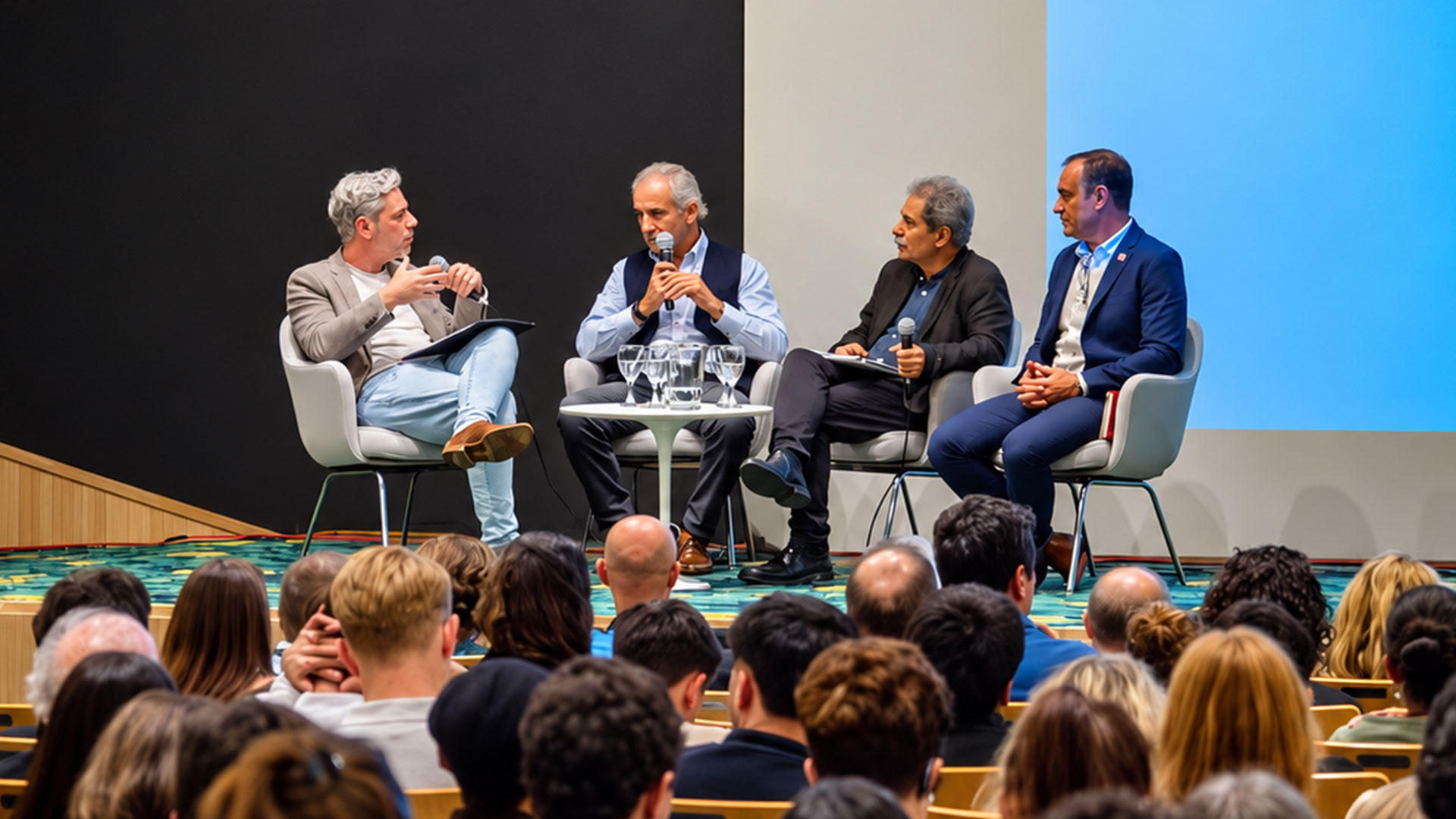
On October 5, Martín Gómez Platero, President and CEO of Gómez Platero Architecture & Urbanism, joined Damián Vinson of MSGSSV Arquitectos and Christian Wolff of Gensler for the panel “Projects That Transform the City.” Ezequiel Barenboim, Development Manager at IRSA, introduced the session, with Gervasio Ruiz de Gopegui, also a Development Manager at IRSA, serving as moderator.
Drawing on the panelists’ experience, the discussion explored the challenges of delivering developments whose influence extends beyond the site. It focused on how projects respond to their urban context—and how aligning a developer’s vision with architectural design can spark new patterns of activity and shape the way people live in cities.