Branded Residences: Architecture, Brand, and Real Estate Value
In high-end Real Estate, luxury is no longer defined only by location or construction quality. Increasingly, the true differentiator is experience design. In that context, branded residences—homes affiliated with global brands—have emerged as one of the fastest-growing and most promising real estate formats worldwide, bringing together architecture, design, services, and operations under a recognizable and consistent identity.
Reading time: 6 minutes
The branded residence model offers more than housing: it curates a lifestyle. The brand serves as a guarantee of standards and, at the same time, as a meaning-maker—shaping a day-to-day experience that goes beyond the private unit and extends into shared areas, services, and ways of living. For developers and investors, this translates into stronger differentiation, faster absorption, and greater long-term resilience for the asset.
From living to belonging: residence as a designed experience
Branded residences are not simply “homes with services,” but an evolution in the way we inhabit. Here, value lies not only in square meters or location, but in the everyday experience the project can consistently deliver over time—supported by professional operations and a clear identity.
The brand functions as a cultural framework: it sets expectations, defines standards, and builds a recognizable narrative. But it is architecture that turns that promise into space. Circulation, views, the relationship to the landscape, the sequence of uses, and the quality of shared spaces become tools for creating belonging, community, and a sense of place. Living stops being a strictly individual act and becomes a shared experience.
This approach connects with the so-called experience economy, in which people prioritize experiences, well-being, and quality time over the accumulation of goods. Branded residences capitalize on that logic by integrating housing, leisure, and services into a single ecosystem—outsourcing the operational, reducing friction, and elevating quality of life as part of the program.
In Punta del Este, Uruguay’s internationally known seaside resort, this logic plays out in different ways across brand-affiliated residential projects. At SLS Punta del Este Residences, the residential experience is shaped by architecture designed to support an active, social lifestyle: private units that expand into amenities and shared spaces that function as a natural extension of the home. The SLS universe—associated with lifestyle, gastronomy, and a contemporary energy under the Accor umbrella—translates into a spatial organization that encourages connection, well-being, and “life outside the front door,” reinforcing community as part of the project’s value.
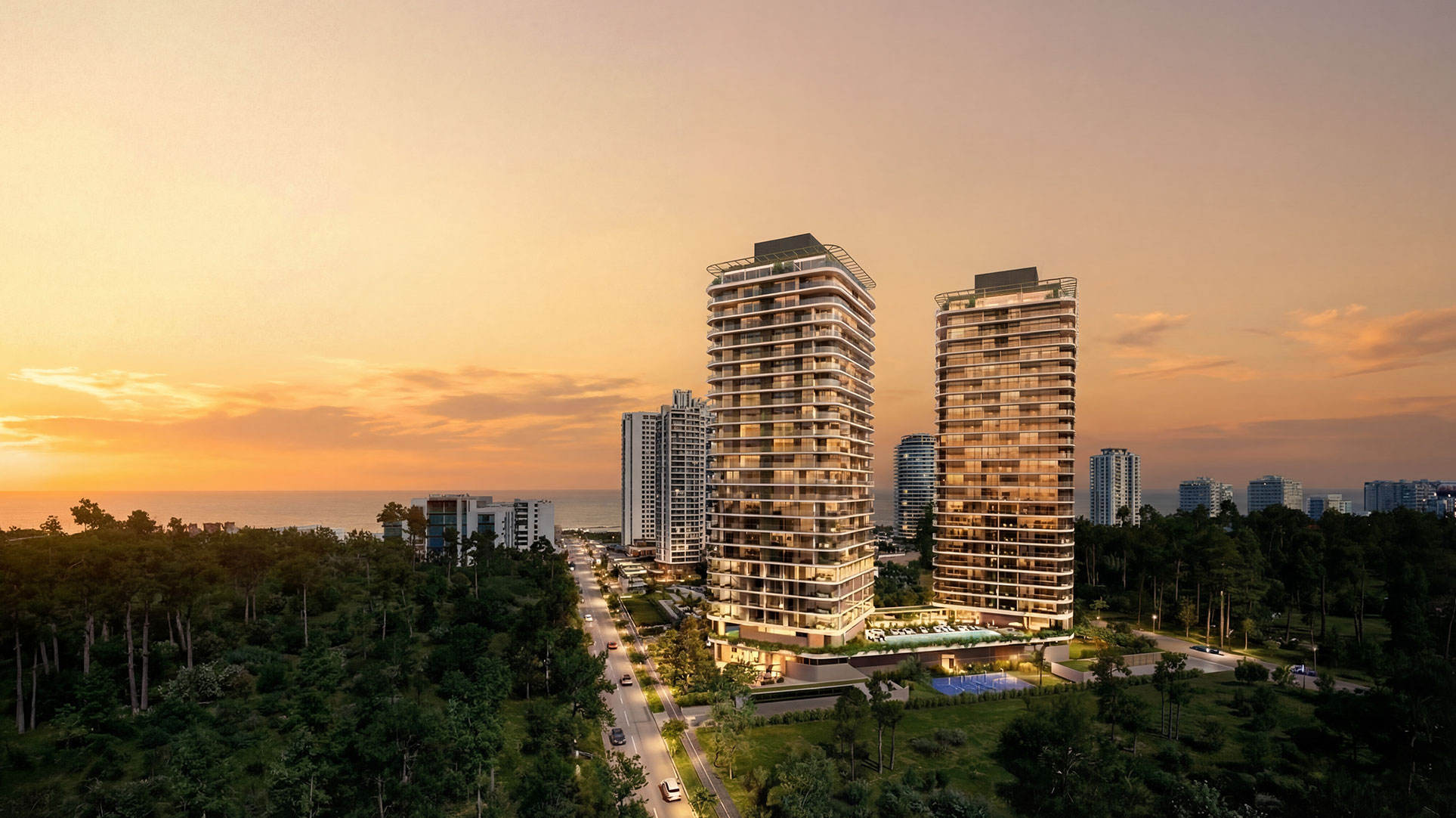
Another example of this trend is Fendi Château Residences Punta del Este. In this beachfront luxury development, the focus shifts toward the relationship between architecture and landscape. Facing Bahía de la Mansa, the project sits on elevated land of more than 75,000 m² and is organized into two 27-story towers. The architecture adopts an undulating form and a composition that responds to the sea and horizon, integrating views, scale, and materiality to create a sensory experience rooted in place. Here, belonging is produced through indoor–outdoor continuity, generous spatial proportions, and a design that expresses luxury through detail and a close relationship with nature—rather than through isolated spectacle.
Hospitality: the model’s origin and driving force
The DNA of branded residences comes from hospitality. Major hospitality brands—especially in the luxury segment—were the first to bring their operating culture and service standards into the residential world, recognizing that the guest experience could extend beyond a temporary stay.
From its earliest manifestations in the 1980s, this intersection between hospitality and private housing gained scale and sophistication. Today, hospitality’s contribution goes beyond a “bundle of services”: it introduces a holistic way of thinking about living, where operations are part of the design and the building is managed as a living system—capable of sustaining quality, consistency, and reputation over time.
The brand as a multiplier of Real Estate value
The model’s economic performance helps explain much of its expansion. According to a Savills report, branded residences command an average global price premium of 33% compared to similar, non-branded developments. In resort destinations, the average premium is 34%, while in global cities it is around 27%. In emerging markets, the average uplift rises to 47%.
In particularly active markets, the premium can be far higher. Savills notes that in Dubai—one of the segment’s global hubs—some projects have achieved premiums close to 90% in specific submarkets.
These differences are typically driven by a combination of brand trust, quality and operational standards, and a perception of lower risk. In addition, the model tends to support stronger long-term value retention when the lived experience matches the brand promise.
A market that is expanding and diversifying
The scale of the phenomenon is also well documented. Savills reports that the sector has grown by more than 180% over the past decade, with more than 700 branded residences currently in operation and a similar number in the pipeline. The same source projects that global supply could double by 2030.
While hospitality brands continue to lead the segment, diversification is increasingly evident: fashion, automotive, and lifestyle brands are turning to real estate as a platform to extend identity and create long-term immersive experiences.
This dynamic is reinforced by growth in the potential customer base for these developments. Altrata’s World Ultra Wealth Report 2024 projects a 38% increase by 2028 in the population of consumers for this kind of high-end product—a natural demand base for exclusive, professionally managed residential offerings with a strong experiential component.
For developers, branded residences are consolidating as a particularly powerful strategy in competitive markets and in mixed-use projects. Their ability to differentiate the product, accelerate absorption, and maintain clear positioning can improve commercial performance while strengthening the overall financial feasibility of the development.
At the same time, it is a demanding format. Early alignment between the developer, the brand, and the architecture team is critical: target audience definition, layouts, service standards, operations, narrative, and contractual terms must be addressed from the outset. When that coordination doesn’t happen, friction appears—rework, loss of coherence, or promises that are difficult to deliver—which ultimately impacts final value.
A long-term strategy for contemporary luxury
Branded residences have moved from an emerging format to a mature typology within premium real estate. Their strength lies in integrating architecture, identity, and operations into a coherent value proposition: living better, with less friction, in spaces designed to sustain experience and reputation.
In a landscape where differentiation is essential and experience has become the new standard of luxury, the model stands out as a long-term strategy—one that can capture demand, increase perceived value, and build assets where narrative, operations, and design are fully aligned.