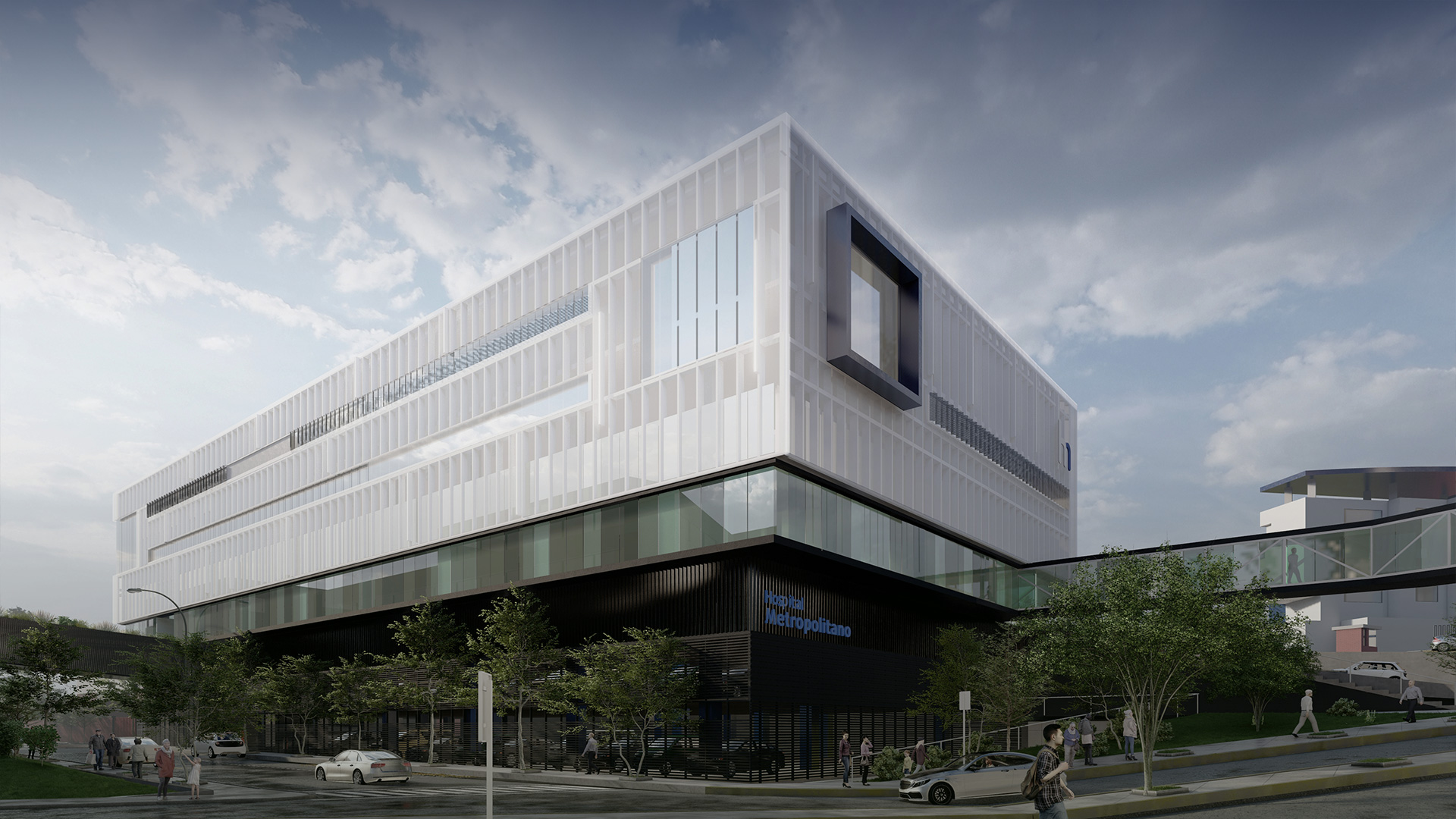
The transformation of the healthcare system is redefining the role of architecture. Digitalization, artificial intelligence, and new models of care require infrastructures that are more flexible, connected, and centered on experience. The challenge is no longer simply to incorporate technology, but to design spaces capable of integrating it systemically, securely, and at scale.
Publication date: 6/5/2026
Reading time: 6 minutes
The transformation of the healthcare system is redefining the role of architecture. Digitalization, artificial intelligence, and new models of care require infrastructures that are more flexible, connected, and centered on experience.
But this shift is not only technological. It is structural.
Today, those who develop, operate, or invest in healthcare infrastructure face five critical challenges:
• Redefining the role of the hospital within a decentralized network
• Integrating technology as part of the infrastructure
• Improving operational efficiency in a context of scarcity
• Designing for adaptability and preventing obsolescence
• Elevating experience as both a clinical and business variable
These are the forces reshaping hospital architecture—and defining the future of healthcare design.
1. The hospital is no longer the center: it becomes a node
For decades, the hospital operated as the epicenter of the healthcare system. Today, however, that logic is beginning to shift toward a more distributed model.
The rise of telemedicine, connected devices, and remote care models is moving part of healthcare delivery into the home and other decentralized environments. According to a McKinsey & Company report, up to 24% of outpatient consultations could be virtualized, within a potential USD 250 billion market.
This is a structural shift: the hospital is no longer a single destination, but part of a broader healthcare network. In this context, architecture is no longer designing isolated buildings, but platforms capable of articulating physical, digital, and home-based care with operational continuity.
_________________________________________________________________
Explore this topic through real-world cases
Discover how these new models of care are translating into healthcare projects better prepared to evolve.
[See other healthcare projects]
_________________________________________________________________
2. Technology is no longer equipment: it is infrastructure
For years, technology was treated as an add-on. Today, it is part of the system. Cloud infrastructure, interoperability, cybersecurity, and real-time operations are now baseline conditions. According to Deloitte, more than 60% of healthcare providers already operate in the cloud. Yet the main challenge is not adoption, but integration. As the World Economic Forum has warned, system fragmentation remains one of the greatest barriers to scaling digital health solutions.
This redefines the design brief: the smart hospital is not the one with the most technology, but the one where technology works as an integrated ecosystem. For architecture, the challenge lies in absorbing innovation without compromising day-to-day operations.
3. More demand, fewer resources: efficiency becomes urgent
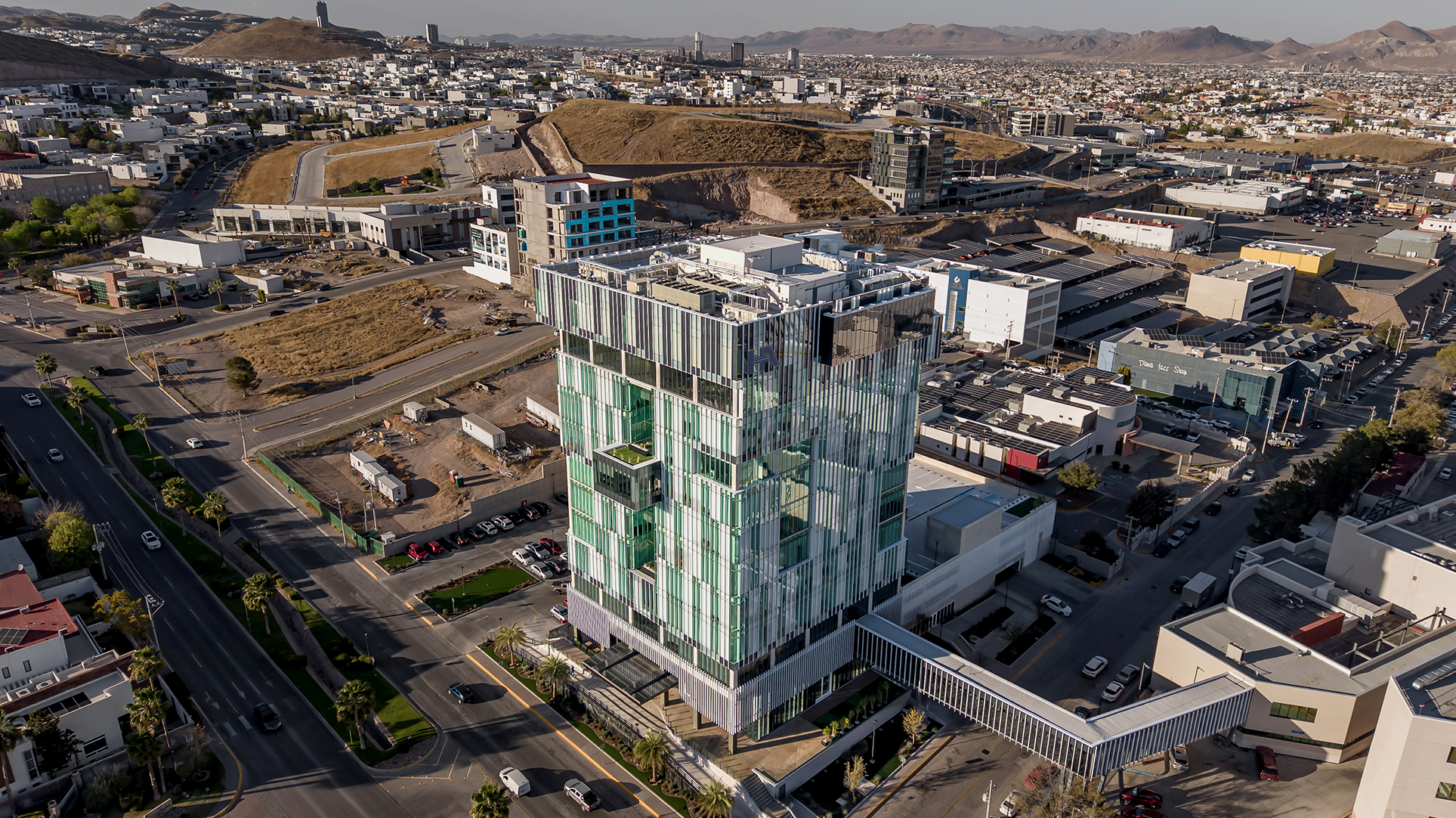
Healthcare systems are under increasing pressure, shaped by rising demand, constrained resources, and talent shortages. The WHO projects a shortfall of up to 10 million health workers by 2030, while operational efficiency is becoming a strategic priority for the sector.
In this context, design is no longer merely a formal exercise; it becomes a performance tool. Reducing travel distances, removing friction points, and optimizing flows can improve daily operations and strengthen the system’s capacity to respond to increasingly demanding scenarios.
Models such as the Patient Hub, which consolidate clinical functions within a single environment, support better coordination between teams, reduce travel times, and increase operational capacity. For decision-makers, the impact is clear: better design means better operations.
_________________________________________________________________
Are you evaluating a healthcare infrastructure project?
We can share applied criteria, metrics, and lessons learned to help optimize operations and anticipate future growth scenarios.
[Download the summary of the 120-min Healthcare Conversation]
_________________________________________________________________
4. Flexibility or obsolescence: the risk is no longer building, but becoming outdated
Today, the greatest risk is not building poorly, but becoming obsolete too quickly. Hospitals operate 24/7 within contexts of constant change. In this scenario, flexibility is no longer an advantage; it is a structural condition. The concept of future-proofing proposes buildings that can adapt without losing operational continuity, maximizing their long-term value.
This requires:
- modular systems
- reconfigurable spaces
- scalable technical infrastructure
But it also demands a shift in mindset: from minimizing upfront cost to maximizing value across the building’s life cycle. For investors and developers, this is a critical point.

5. Better spaces to heal better
Spatial quality has a direct impact on health. Evidence-based design shows that natural light, ventilation, contact with nature, and acoustic comfort can improve recovery and reduce stress. At the same time, the wellbeing of medical teams has become strategic: the built environment affects productivity, retention, and quality of care. In a context of talent shortage, this is no longer a “nice to have”; it is a competitive factor.
The hospital of the future must not only be efficient. It must also be habitable.
The new infrastructure of health
The hospital precinct can no longer be conceived as a static, closed, or definitive building. In a healthcare system shaped by digital transformation, operational pressure, resource scarcity, and new models of care, hospital infrastructure must operate as a living platform: able to adapt, integrate technology, support daily operations, and improve the experience of patients, medical teams, and operators.
In this scenario, architecture moves beyond physical support to become a strategic tool. Its value lies not only in solving for the present, but in anticipating what comes next: enabling changes of use, absorbing new technologies, optimizing flows, and extending the life cycle of the asset without compromising its performance.
Designing hospitals today means projecting systems that are ready to evolve alongside medicine, management models, and people’s expectations.
That is where the real challenge lies. And also the opportunity.