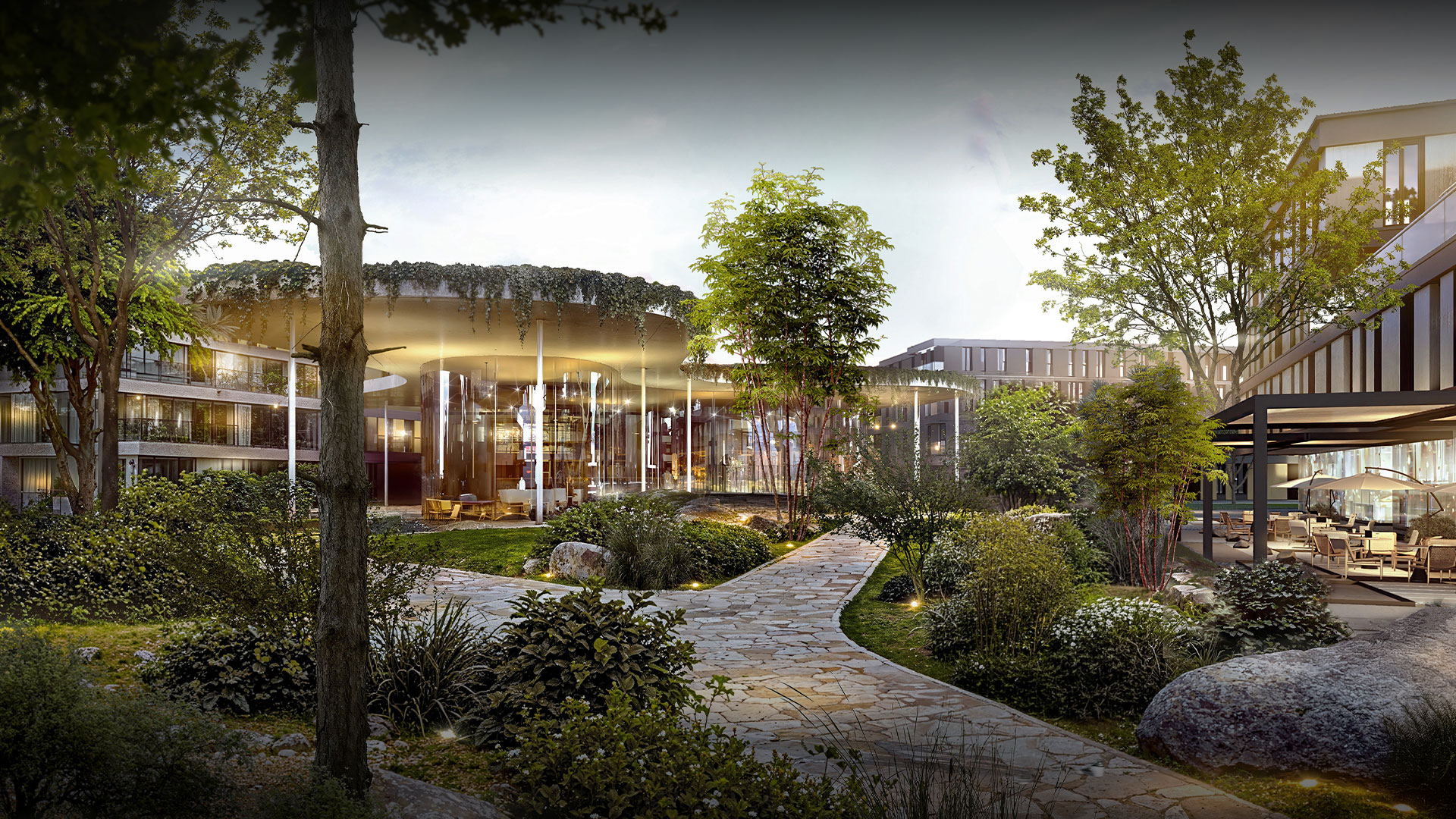
Wellness is no longer confined to specific building types. It has become a guiding principle across architecture and design. Homes, workplaces, hotels, retail environments and mixed-use developments are increasingly shaped by decisions that support physical, mental and social wellbeing. The shift is not about adding dedicated wellness spaces, but about creating environments that help people live better.
The relationship between space and wellbeing is not new. For centuries, cultures around the world have used proportion, materials, light, sound and connection with nature to shape environments for rest, contemplation and gathering. What is changing today is our ability to understand and design these qualities through a more holistic view of human experience.
For many years, however, wellbeing in contemporary architecture remained largely associated with specific building types: hospitals and healthcare facilities, spas, gyms and sports facilities. Even as it entered the workplace, it was often treated as an additional amenity aimed at supporting employee wellbeing.
Those boundaries are now becoming increasingly blurred. Health is no longer viewed solely as a consideration for certain types of buildings, but as part of everyday life that can inform architectural decisions across a wide range of settings. This shift also responds to contemporary challenges such as stress, isolation, population ageing and a growing awareness of the impact the built environment can have on physical, mental and social health.
Wellness is therefore becoming relevant across virtually every typology. Natural light, air quality, acoustic and thermal comfort, connection with nature, movement, accessibility, human scale, privacy and opportunities for social interaction are no longer simply desirable attributes. They are factors that shape everyday experience and can increasingly be defined —and even measured— from the earliest stages of a project.
The growth of wellness real estate provides a measure of this transformation. According to the Global Wellness Institute, the market reached US$876 billion in 2025 and could exceed US$1.8 trillion by 2030. More significant still is where that growth is heading: wellness is expanding into new real estate categories and evolving from an amenity-driven approach towards integrated systems designed around how people live, connect and age.
For architecture, the implication is significant. Wellbeing is no longer addressed within a designated area of a project; it becomes embedded in the design itself.
 ___________________________________________________________
Explore this topic further through real-world projects
View related projects: Millenium Med
___________________________________________________________
From residential to retail: a principle across typologies
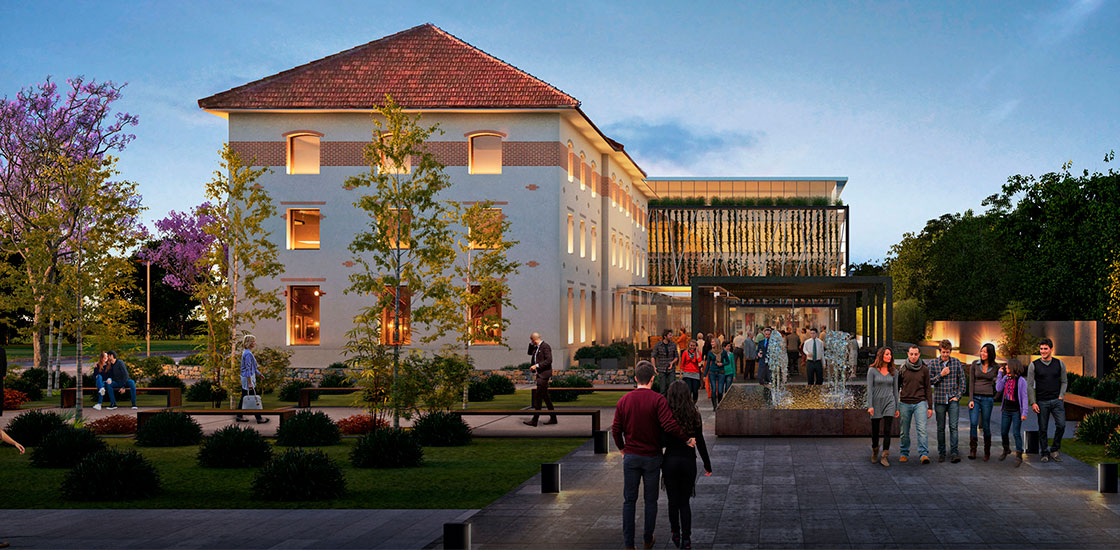
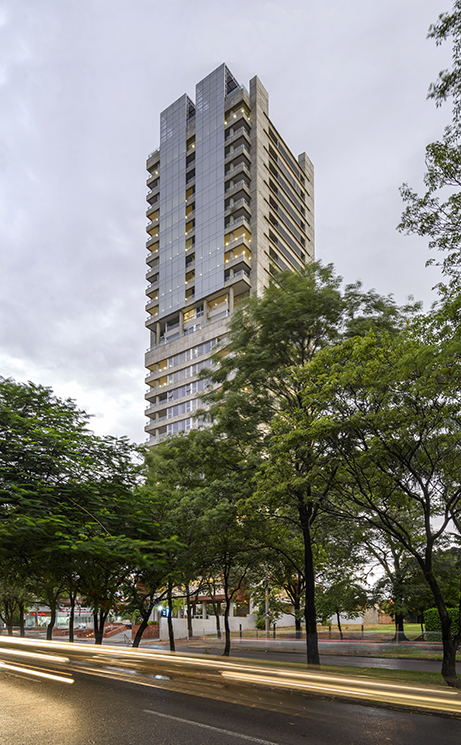
In residential design, this approach begins long before the gym or wellness area. It can be found in the orientation of a home, access to natural light, indoor-outdoor connections, varying degrees of privacy and shared spaces that encourage interaction between residents.
It also extends to less visible aspects of design. Ventilation, indoor air quality, thermal performance, acoustics and material choices all contribute to the environmental quality that shapes everyday experience. Designing for wellbeing therefore means approaching these variables as an integrated system, rather than as separate considerations added once the architecture has already been defined.
In the workplace, it means creating environments that respond to different physical and cognitive needs: focus, collaboration, movement, rest and social interaction. Wellbeing is no longer treated as an additional employee benefit; it becomes part of the experience of work itself.
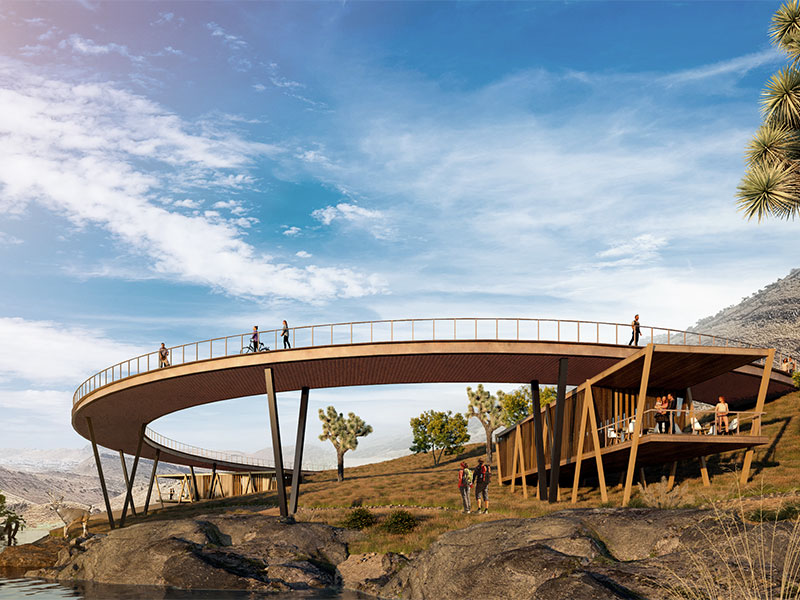
In hospitality, rest, sensory comfort, connection with the landscape and the ability to maintain healthy routines increasingly shape an experience that extends beyond the stay itself.
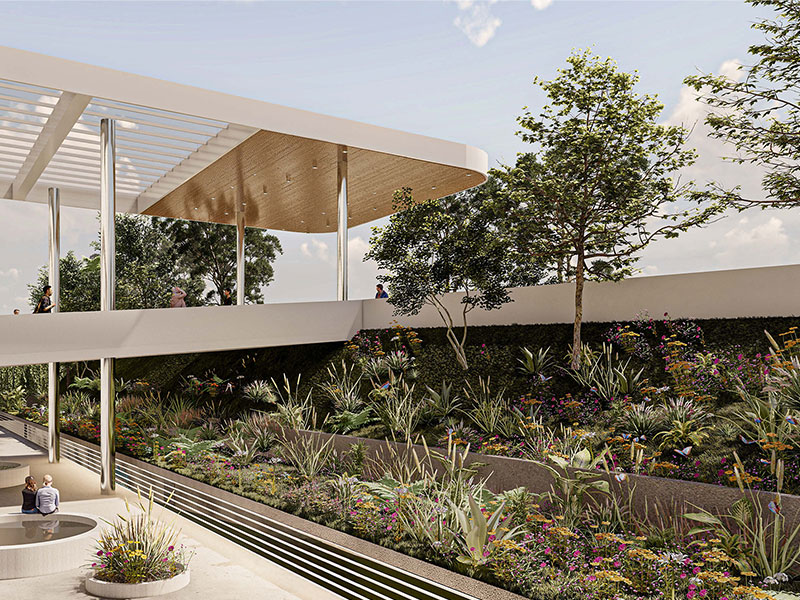
Even retail, traditionally organised around circulation and transaction, is embracing this approach. Vegetation, natural light, places to rest, outdoor areas, comfortable circulation and spaces for gathering can reshape the retail experience. The goal is no longer simply to facilitate a purchase, but to create environments where physical presence offers value that digital channels cannot replicate.
This also introduces another important dimension of wellness: designing for movement. The organisation of circulation, the visibility and placement of stairs, and the creation of walkable connections can encourage more active ways of moving through a building without turning exercise into a programmed activity.
The same principle extends to the urban scale. In mixed-use developments, walkability, landscape, shade, proximity, active mobility and the quality of public space allow wellbeing to extend beyond building interiors and become part of the everyday experience of the city.
Wellness therefore ceases to be a category associated with particular assets. It becomes a cross-cutting dimension of the project, connecting architecture, landscape, interior design, operations and experience.
Designing for longer, better lives
Another transformation makes this conversation particularly relevant: longevity.
Increasing life expectancy raises a challenge that goes beyond the number of years we live. A generation expecting to live longer also expects those additional years to come with greater autonomy, activity, connection and quality of life.
This perspective is beginning to reshape the conversation around senior living. Rather than focusing exclusively on specialised environments for a particular stage of life, a broader concept of future living is emerging: environments capable of supporting different stages of life and adapting as people's needs change over time.
Architecture for longer lives is therefore beginning to move beyond a model focused primarily on care towards one that also prioritises autonomy, dignity and connection. The ability to make choices about how we live, maintain privacy and, at the same time, have access to shared spaces can be just as important as physical accessibility itself.
This changes the questions designers need to ask. Can a home adapt without sacrificing spatial quality? Can it support autonomy as residents' needs and abilities change? Are there spaces that encourage everyday movement and social connection? Can technology provide support without dominating the experience? How can a sense of community be fostered without compromising privacy?
Accessibility, flexibility, lighting, connection with nature, clear and safe circulation, proximity to services and spaces for social interaction therefore take on a different significance. The goal is not simply to design for old age, but to design for lives that may be longer, more active and more dynamic.
From this perspective, future living can be understood as an evolution of traditional senior living models: one defined less by age and more by the ability to sustain autonomy, wellbeing and connection over time.
___________________________________________________________
Are you considering a project of this kind? We can share what we have learned.
Download the report The Evolution of Residential Architecture: New Ways of Living.
___________________________________________________________
From amenities to asset value
This expansion is also changing the role of wellness in real estate.
When an amenity can be replicated relatively easily, it ceases to be a meaningful differentiator on its own. Two developments may offer a gym, swimming pool, spa or green spaces and still deliver fundamentally different experiences.
Value lies in how these features are integrated into the project as a whole and, above all, in the less visible decisions that shape the overall experience: orientation, materials, acoustics, landscape, circulation, flexibility, scale, accessibility and the relationship between private, shared and public spaces.
This perspective also introduces a methodological shift. Factors such as air quality, daylight, acoustics and thermal comfort can be established as concrete performance targets from the earliest design stages and assessed throughout the building's life cycle. Wellbeing therefore moves beyond perception or marketing claims to become part of how a project's performance is defined and evaluated.
The Global Wellness Institute defines wellness real estate in terms of built environments that are proactively designed and operated to support the holistic health of occupants, visitors and surrounding communities. The shift is significant: from buildings with wellness amenities to buildings designed around wellbeing.
For real estate, this broadens the conversation around value creation. Wellbeing can help differentiate a product, but it can also help sustain its relevance as health, quality of life and longevity become increasingly important factors in how people choose where and how to live, work and spend their time.
Wellbeing as everyday infrastructure
Ultimately, the evolution of wellness represents a shift in scale.
Not every space needs to become a place dedicated to wellbeing. But every project can consider how its design decisions affect the people who use it.
A home can support autonomy. A workplace can facilitate both focus and connection. A shopping centre can incorporate rest, nature and urban life. A hotel can support healthy everyday routines. Public space can encourage movement and social connection. And a development designed for different generations can adapt to longer lives without allowing age to define the experience.
This perspective also broadens the very notion of health in architecture. Buildings, landscapes and infrastructure are not merely settings in which life takes place: they can create conditions that support movement, social interaction, recovery, autonomy and belonging.
Perhaps, then, the most important evolution of wellness is not the emergence of new programmes, but its gradual disappearance as a separate category.
When wellbeing is embedded from the earliest design decisions, it stops being something that happens in a specific place and becomes a quality of the built environment itself. Designing for wellness then takes on a much broader meaning: designing environments that enable us to live, work, shop, connect and age better.