Designing resilience: how can architecture prepare for a future that cannot be anticipated?

Climate change, technology, and new ways of living are transforming design conditions faster than a building can be constructed. In the face of a future that is hard to predict, the question is no longer what will happen, but which practices allow architecture and the city to adapt without losing value.
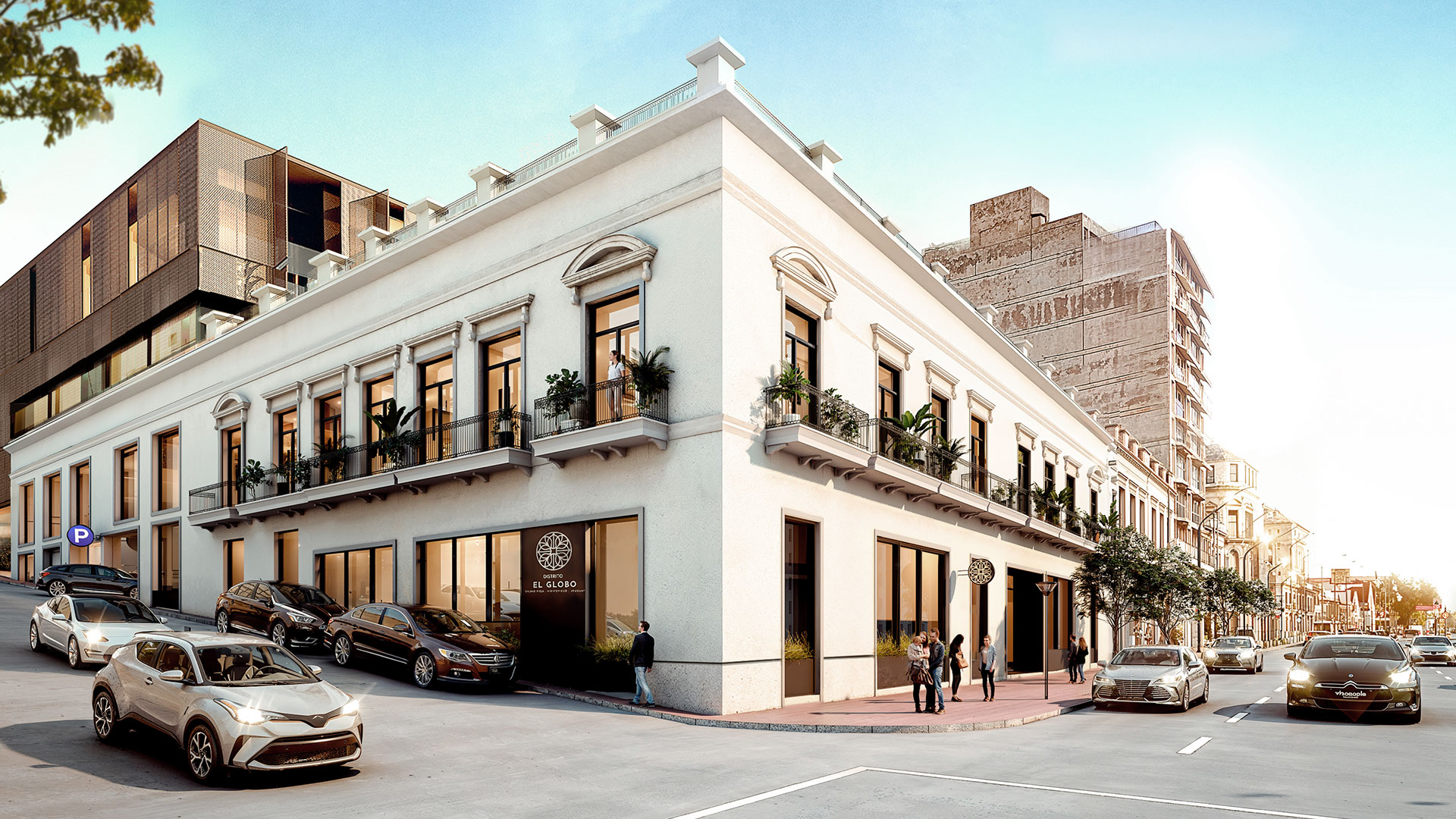
Technologies change within a project's life cycle, uses overlap, and problems emerge almost in real time.
After Hurricane Katrina in 2005, New Orleans rebuilt its levee system. According to the article Shrinking post-Katrina levees need $1B in upgrades, published by E&E News in August 2025, the project cost US$14.6 billion. Yet land subsidence and sea-level rise already require raising some 80 km (50 miles) of levees, at a cost of more than US$1 billion.
Meanwhile, in the Lower Ninth Ward, community organizations are leading the restoration of Bayou Bienvenue. According to How to Restore a Bayou, published by Tulane University in 2009, the wetland was once a cypress swamp: a natural barrier capable of regenerating on its own.
The contrast raises a question: which practices make it possible to design for what is not yet known?
From prediction to preparedness: designing with room for change
In 1974, in a paper for the Royal Institute of British Architects (RIBA), British architect Alex Gordon summed up a principle that remains relevant today: long life, loose fit, low energy. Buildings should last, accommodate other uses, and consume little energy. For developers and investors, that flexibility lowers the cost of transforming an asset and extends its market life.
Adaptability is also a practice sustained over time. Montevideo Shopping, opened in 1985 and considered the first shopping center in the Río de la Plata region, has kept pace with the evolution of retail through numerous renovations. According to an article published by Forbes Argentina in November 2025, its management regards the ability to carry out expansions without halting commercial activity as a competitive advantage. This approach to growth not only left operations unaffected but also strengthened the center's bond with the public and sustained its relevance.
Reclaiming territory: architecture as a driver of urban value
Activating well-located industrial sites or urban voids makes it possible to grow on existing infrastructure and bring activity back to areas that had lost it.
According to the European Commission, in announcing its Renovation Wave strategy in October 2020, between 85% and 95% of existing buildings will still be standing in 2050: much of the city of the future has already been built. At the urban scale, the United Nations' Sustainable Development Goals Report 2026 notes that for decades urban land has expanded faster than population, stretching networks and services ever farther. For developers and investors, converting well-located sites means leveraging existing infrastructure, tapping into established demand, and avoiding the cost of extending services to new areas.
Resilience, moreover, is not only physical. The special issue Advancing Resilience in Architecture, Urban Design and Planning, published by the scientific journal Architecture (MDPI), also examines its social and institutional dimensions. High-quality public space acts on both, bringing together users, retailers, businesses, and organizations. When these stakeholders coordinate their agendas or share in caring for the place, a form of governance emerges that no building can generate on its own.
The smartest building is the one that needs the least technology
Every system ages faster than the building that houses it. In How Buildings Learn (1994), Stewart Brand described a building as a set of layers that change at different rates. The structure can last between 30 and 300 years, while services such as wiring, HVAC, and elevators are replaced every 7 to 15 years.
For owners and operators, that gap translates into maintenance, upgrades, and works that disrupt use. Letting the architecture solve what orientation, thermal mass, natural ventilation, and solar shading can solve reduces dependence on equipment and lowers operating costs. And when services are accessible and independent of the structure, they can be replaced without opening walls or halting activity.
Specialized architecture: when change cannot stop operations
In hospitals, terminals, and logistics centers, designing for uncertainty is an operational requirement. Every intervention competes with operations that cannot stop, and every partial closure means lost service or revenue.
The open building approach proposes separating a building into layers with different time horizons. Stephen Kendall explains it in Open Building: A Systematic Approach to Designing Change-Ready Hospitals, published by Healthcare Design in 2007. At the INO hospital in Bern, the structure was designed for 100 years, the interior systems for more than 20, and the equipment for 5 to 10. According to the same article, the hospital's functional layout changed even before the first construction phase was completed.
In logistics, the pressure comes from e-commerce and automation. According to CBRE's report Measuring Up: Why Cubic Feet Matter, cited by Supply Chain Management Review, the average clear height of warehouses in the United States rose from about 7.3 m (24 ft) in the 1960s to nearly 10 m (32 ft) in 2016. A warehouse without margin in height, load capacity, or access can become obsolete before it is amortized. In terminals, passenger growth and new mobility modes call for open floor plates, reconfigurable circulation, and land reserved for expansion without interrupting service.
Designing with open questions
None of these practices offers certainty, but all of them keep options open. As in New Orleans, the most robust answers are likely to combine infrastructure and nature, engineering and community. Perhaps the best architecture for a future that cannot be anticipated is not the one that gets it right, but the one that keeps working and adding value as the questions change.